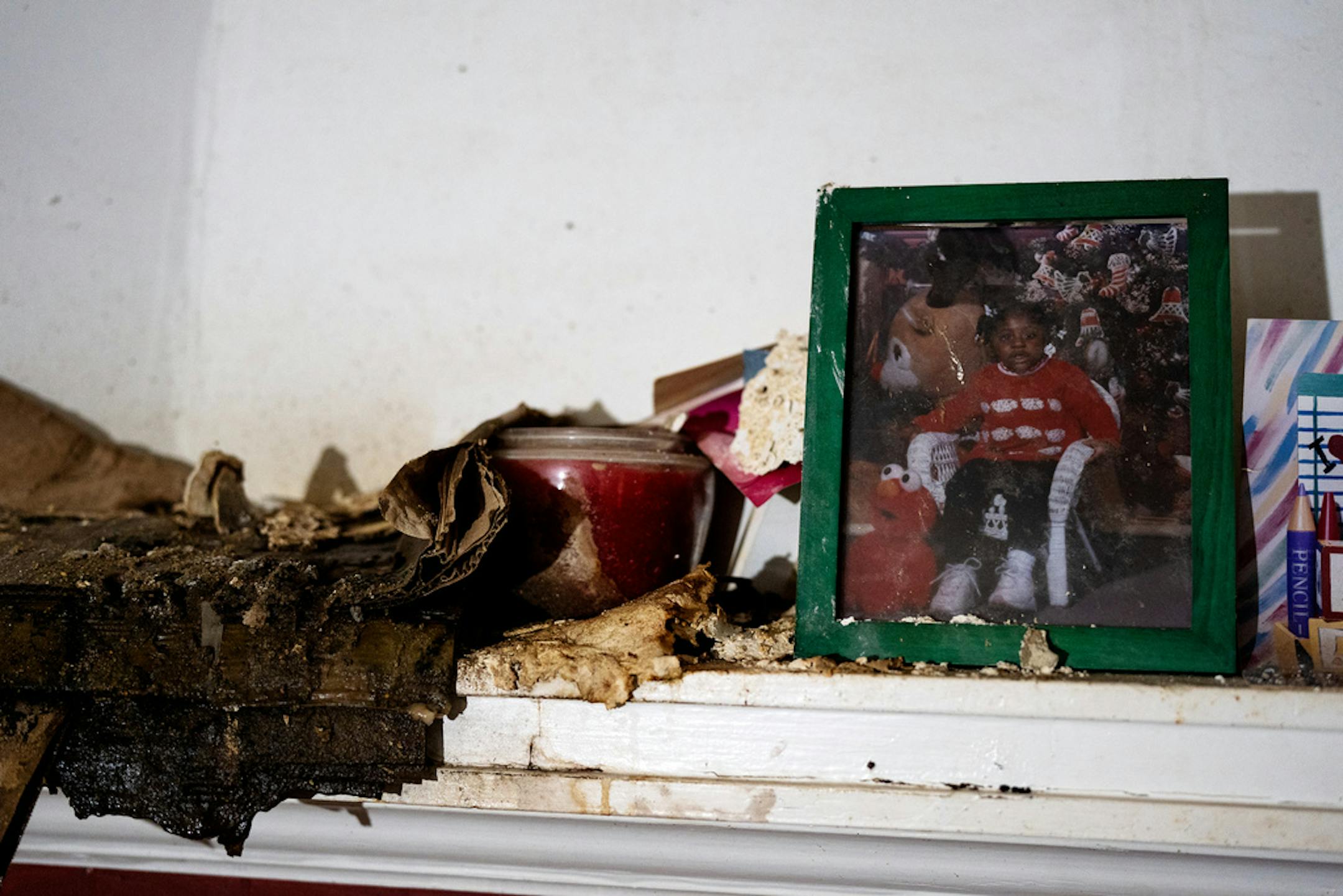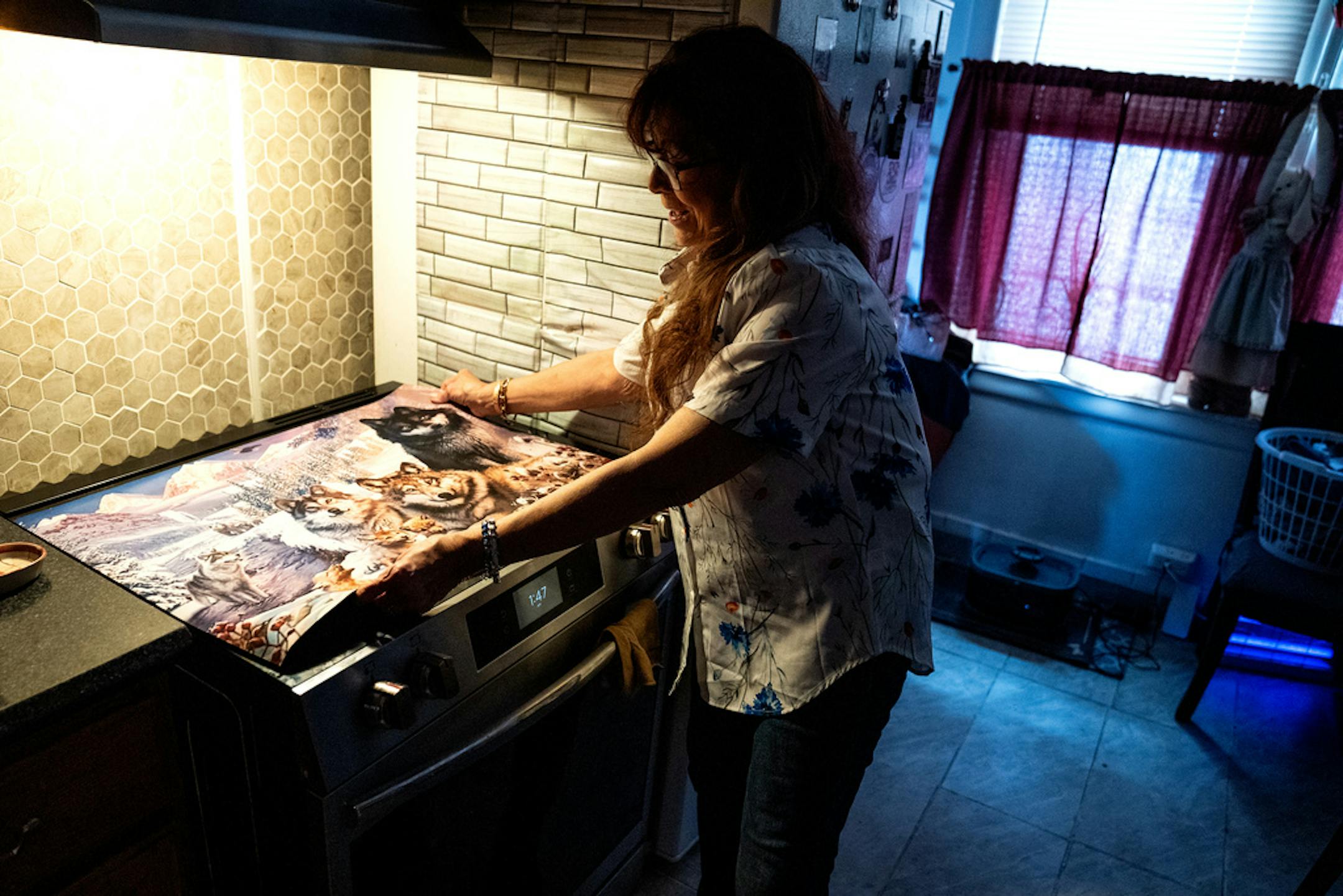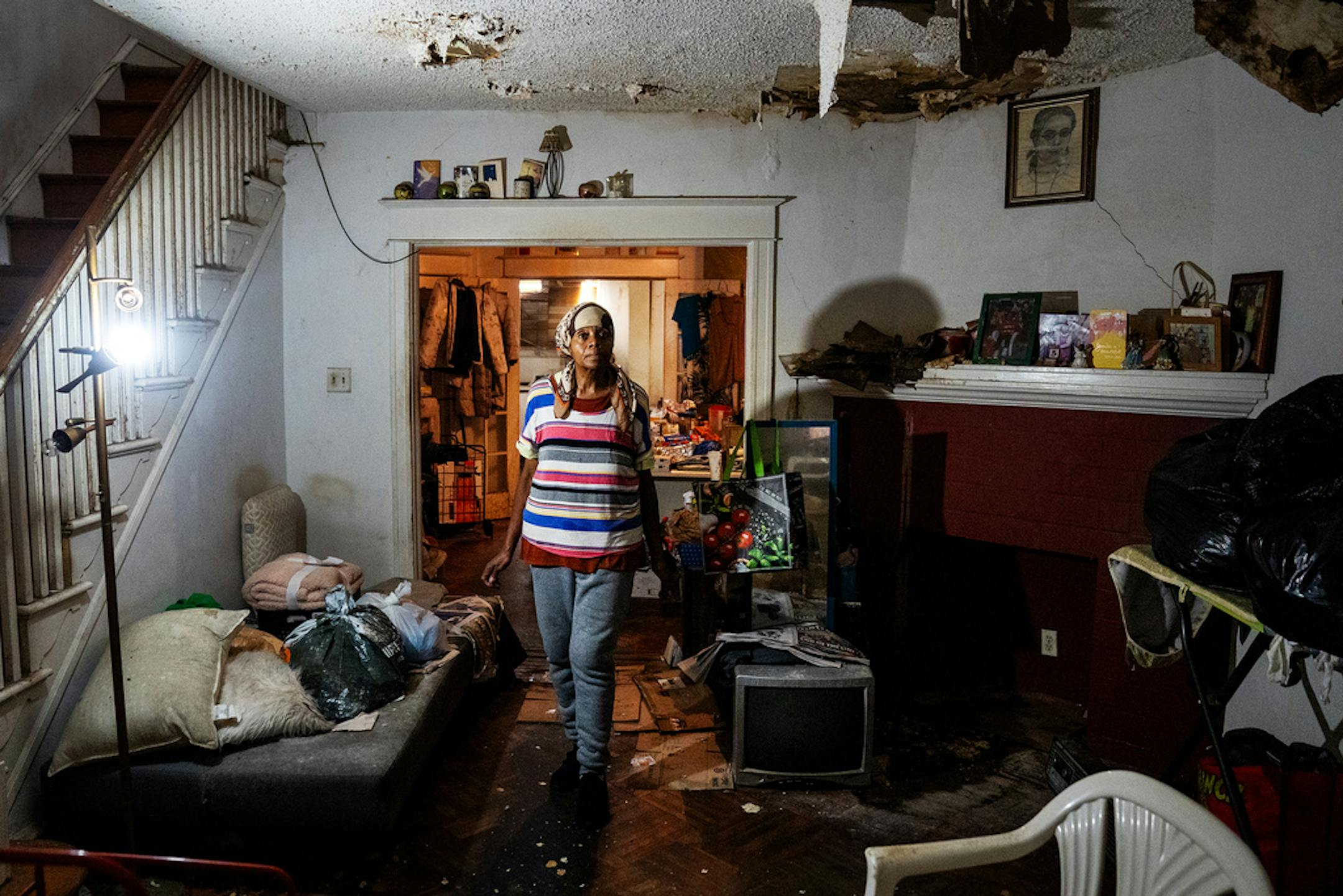
PHILADELPHIA — Even as her pre-World War II-era house falls apart around her, Bernadette Reese-Hobson tries not to feel “like a failure of a homeowner.” Her home is still her refuge, giving her space to sip tea while staring at family photographs that line the walls.
But there is a trash-can-size hole in her living room ceiling, caused by water that continually drips on piles of dank plaster and crumbled wooden beams on the floor. A gaping hole in her basement water heater spills even more water onto her belongings. And when Reese-Hobson steps into her shower, she fears she could fall through the wobbly floor because the pipes underneath her are corroded.
“I’ve tried to keep up the home and pay bills, and I just couldn’t keep up,” said Reese-Hobson, 63, a retired social worker and day care attendant who now lives off a $1,400-a-month Social Security payment. “It became one thing after another, and it’s been like a domino effect in this house.”
Across the nation, and especially here in Philadelphia, homeowners are increasingly struggling to maintain and repair aging homes that are withering, crumbling, and forcing homeowners to exist in near-unlivable conditions.
According to the National Association of Home Builders, the average age of the U.S. home is 40 years old, up from 31 years old 15 years ago. Homes tend to be the oldest in the Northeast, Mid-Atlantic states and along the Appalachian Mountains. Repair costs are rising, and homeowners face $100 billion in needed maintenance, according to the Federal Reserve Bank of Philadelphia.
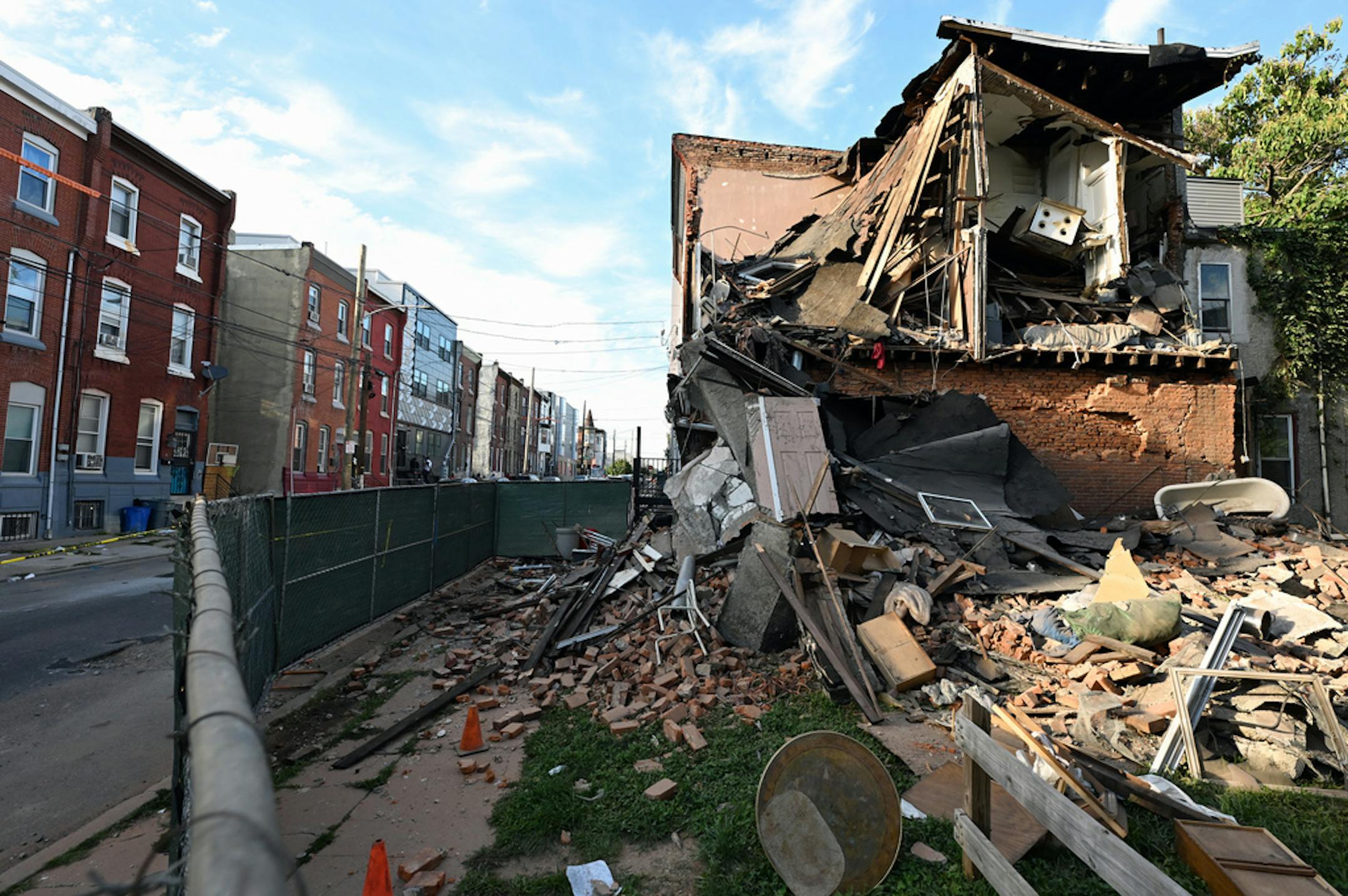
Analysts say the problems associated with deferred maintenance and dilapidated properties span both rural and urban properties, resulting in structure collapses of occupied properties in Pittsburgh; Reading, Pennsylvania; Syracuse, New York; and elsewhere.
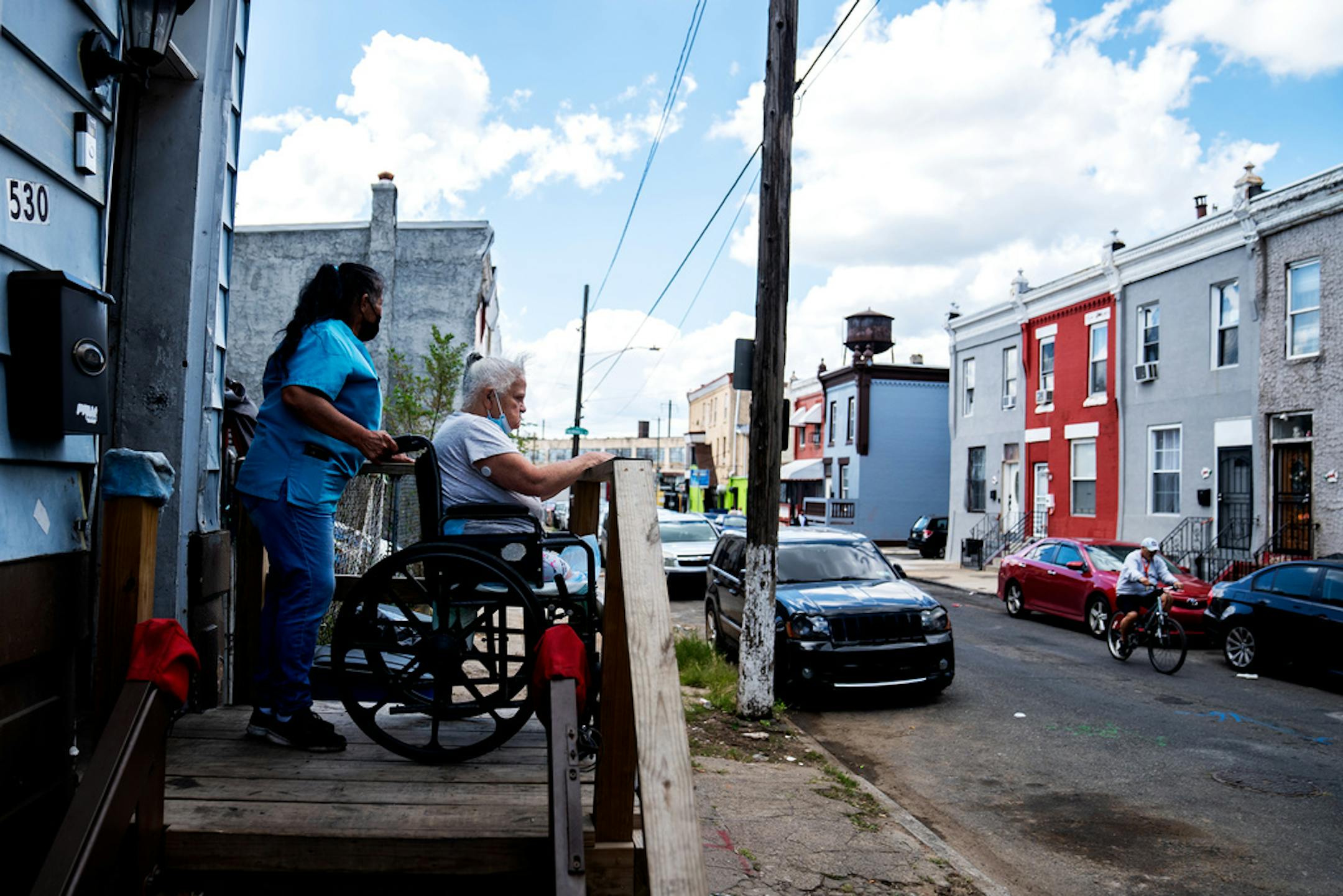
Philadelphia, one of the nation’s oldest cities, has emerged as an epicenter for the problem and the debate about whether government can or should step in. City records show 40 percent of houses in the city were built before 1939 with nearly two-thirds built before 1954.
Philadelphia also has a homeownership rate that far outranks most other major East Coast cities — about 53 percent, according to Pew Charitable Trusts. But Philadelphia ranks as the “poorest big city” in the nation with about one in five residents living in poverty.