

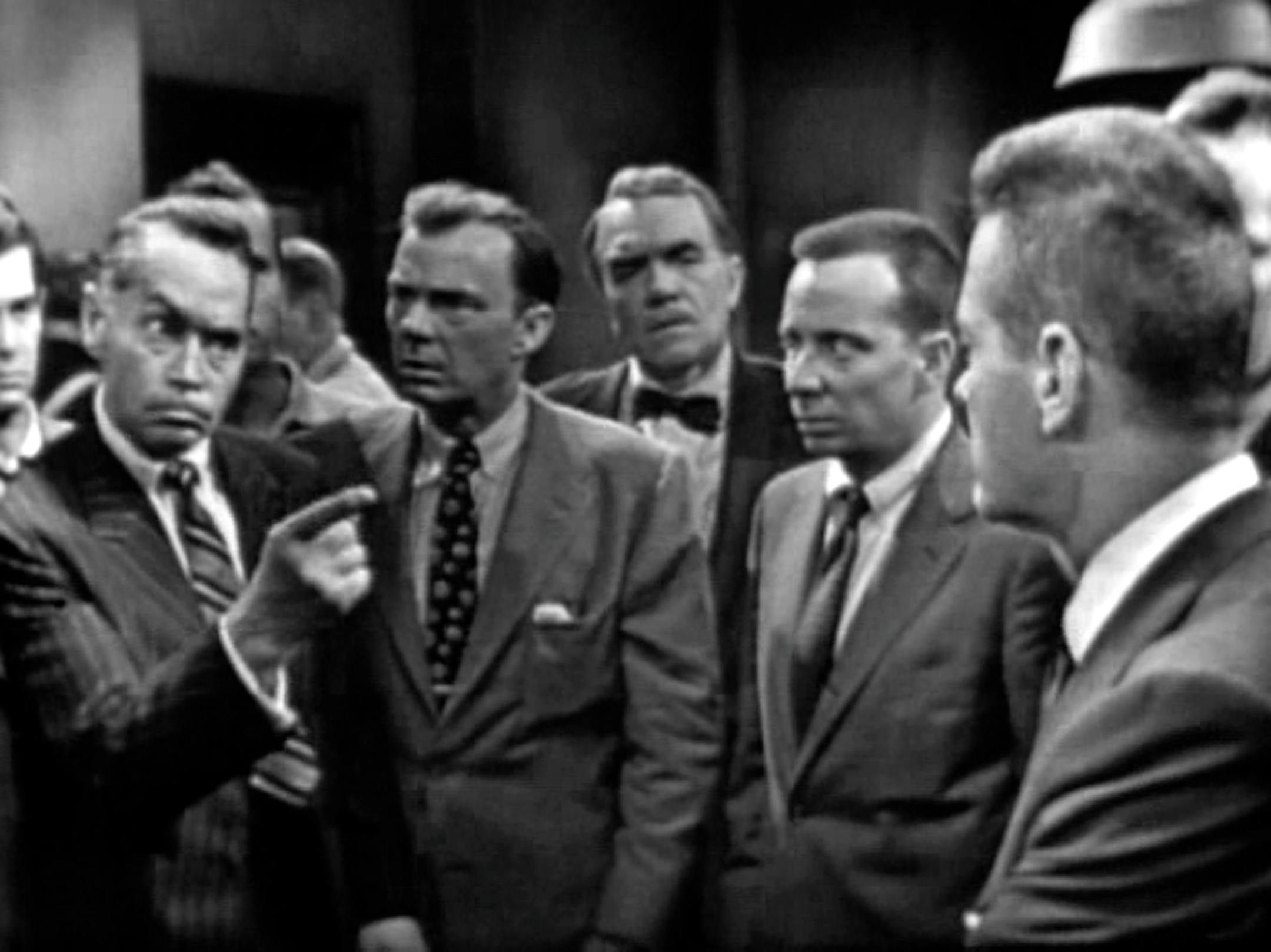
Tuesday's release of the "Studio One Anthology" won't be the biggest TV DVD of the year, but it's arguably the most important.
The six-disc set presents 17 episodes of the Emmy-winning "Studio One," which ran on CBS from 1948 to 1958 and has been hailed as one of the most innovative and prestigious shows in TV history. Because the series' dramatic presentations were done live, most of the set's contents are being seen for the first time since their original broadcasts.
The $100 set, a cooperative project of Koch Vision and the Archive of American Television, is filled with landmarks. They include "Twelve Angry Men," the famous courtroom drama that was written for "Studio One" and later made into an Oscar-nominated film, and one of the earliest televised operas, Gian-Carlo Menotti's "The Medium." Viewers who tuned in each week were just as likely to see an original production, such as Gore Vidal's gothic "Dark Possession," or an adaptation such as "1984," which aired in 1953, five years after George Orwell's novel came out.
Most fascinating is seeing work by artists at the dawn of their careers. Rod Serling contributed two teleplays several years before he created "The Twilight Zone." Jack Lemmon made his TV debut in the Jazz Age satire "June Moon" in 1949. That same year, Yul Brynner directed "The Storm" nearly a decade before he became famous as an actor in "The King and I."
The episodes exist today on DVD thanks to kinescopes -- films shot of a TV monitor during the live broadcast for later airings on the West Coast. The resulting audio-video quality is below what modern viewers are used to, but typical for the era.
"The challenge is to clean the episodes up as much as possible while still doing it in a way that allows the set to be issued at a fair price," explained Michael Rosenberg, president of Koch. "Some were in better shape than others."
The show's creativity never falters, though.
"The 'Studio One' approach was more of a visual approach than anything that had been done before that," said Karen Herman, director of the archive. "Before that, it was more like radio for television."


