

Following the crash of Asiana Airlines Flight 214, one of the first victims rushed to San Francisco General Hospital and Trauma Center was a teenage girl, unconscious and gravely injured.
Her brain was quickly swelling, with nowhere to go but through the small opening at the base of her skull. Such an event, known as "herniation," crushes the brainstem and can be rapidly fatal.
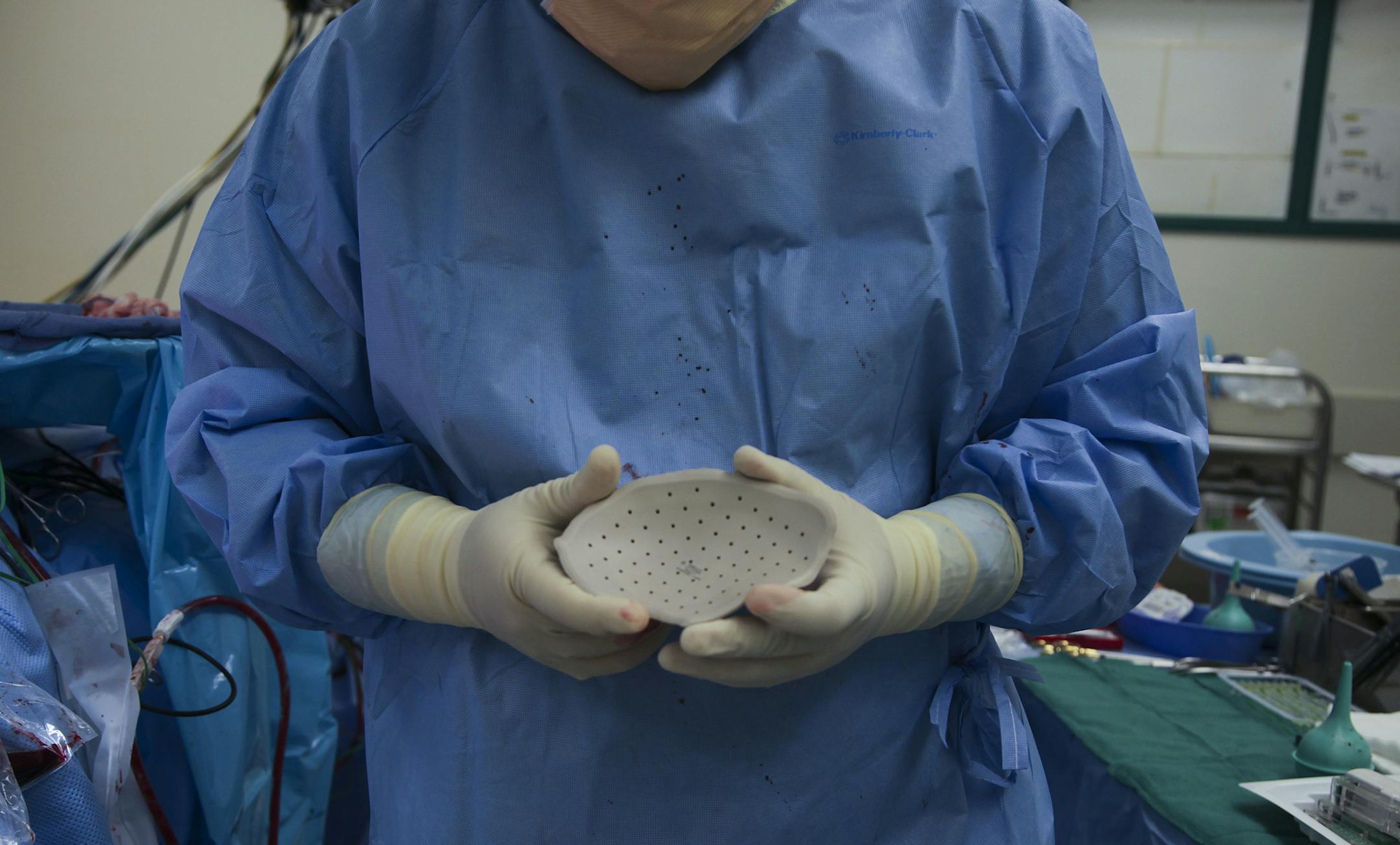
Unable to reduce the swelling with medications, neurosurgeons decided to remove a large portion of the girl's skull. Once they had done so, her brain bulged through the opening. The operation relieved the pressure and saved her brain, but it was not enough to save her life. The girl died of the other injuries she suffered in the crash.
The operation, called decompressive craniectomy, is a remarkable but controversial feat, increasingly used to treat victims of head trauma who once might not have been saved. Malala Yousafzai, the 16-year-old Pakistani schoolgirl targeted by the Taliban, and Gabrielle Giffords, the former Democratic congresswoman from Arizona, each underwent decompressive craniectomies after being shot in the head.
The procedure raises difficult questions regarding trade-offs between quantity and quality of life. Despite many successful recoveries, significant numbers of patients who receive the operation die, or are left profoundly disabled. Some are minimally responsive; others have impaired cognitive and motor function.
"What we need to work out better with more trials and research is, 'Can we predict the patients who will do well with craniectomy and those who won't?' " said Dr. Jeffrey V. Rosenfeld, a neurosurgeon at the Alfred Hospital in Melbourne, Australia. "We have a rough idea, but we still get surprises."
New York Times
First scan is approved to diagnose ADHD
The Food and Drug Administration has approved the first medical scan that can help diagnose attention deficit hyperactivity disorder in children by measuring brain waves.


