
Health beat: Xbox may help kids lose weight

March 10, 2014 at 3:19PM
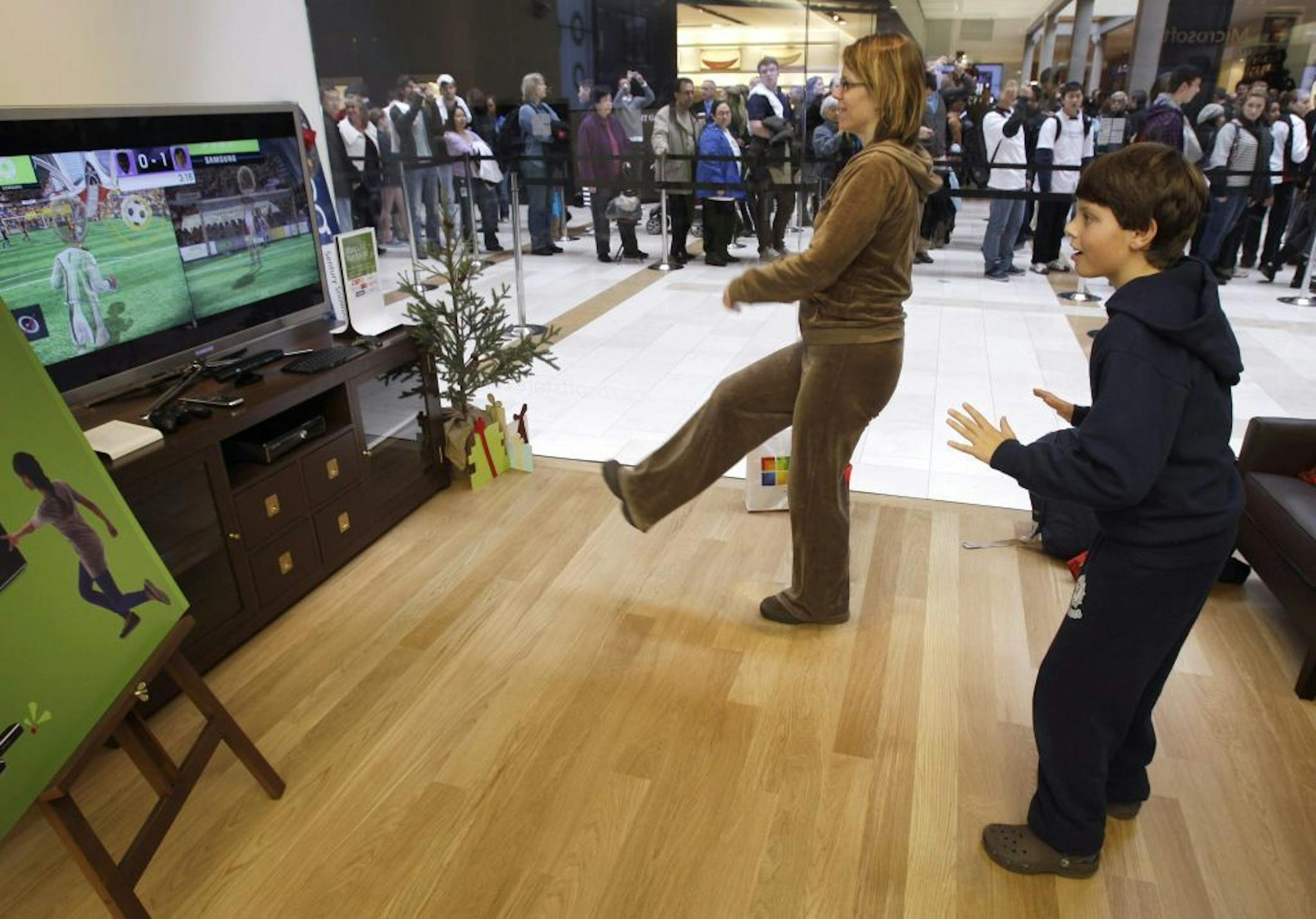
Aidan Bullard, 9, right, plays soccer on an Xbox 360 Kinect with his mother, Molly Bullard, second from right, at the grand opening of a Microsoft Store, Thursday, Nov. 18, 2010, in Bellevue, Wash. The store is the seventh Microsoft Store to open in the U.S., but the event garnered extra attention due to Microsoft's nearby headquarters in Redmond, Wash.
Aidan Bullard, 9, right, plays soccer on an Xbox 360 Kinect with his mother, Molly Bullard, second from right, at the grand opening of a Microsoft Store, Thursday, Nov. 18, 2010, in Bellevue, Wash. The store is the seventh Microsoft Store to open in the U.S., but the event garnered extra attention due to Microsoft's nearby headquarters in Redmond, Wash. (Associated Press - Ap/The Minnesota Star Tribune)

Video games and kids go together like biscuits and gravy, but health researchers are trying to figure out whether "active" games can help combat childhood obesity.

A study published last week in JAMA Pediatrics indicates that they can, especially when combined with counseling that teaches young people to make healthier food choices and step up their physical activity.

"What we noticed in working with all these kids is that they didn't have access to physical activity or they didn't have the confidence to join and play in sports," said Deborah Sundal, a UnitedHealth Group senior vice president and co-author of the study. "But many of these kids came back and said, 'But I love video games.' "

The randomized study followed 75 overweight children, ages 8 to 12, during a 16-week period. All took part in a weekly weight-management class at YMCAs and schools. But one group was given an Xbox Kinect game console and full body motion tracker, plus a couple of video games.

All the children ended up losing weight. But those given games where they jumped around, swung their arms and pumped their bodies lost more than twice as much body mass as those who only attended weight-loss classes, and their fitness levels improved, as well.

The video game study used participants in a UnitedHealth program called JOIN for ME, which is offered at YMCAs and schools in six states (none in Minnesota).

The researchers concluded that while the differences might be small, they're not "trivial," because even slight changes in activity can have a big effect over time.

Brian Landwehr, who heads a department that develops health gaming at UnitedHealth Group, said it's important to note that success in the video game study depended on the counseling sessions.

"There's still a lot of debate as to whether active video games outside of the context of the weight management program will make that kind of impact," he said, but schools may now try to find new ways to motivate kids, such as using games to get them more interested in gym class.

"They're a little more interactive and a little less intimidating," he said.

about the writer

about the writer

Jackie Crosby

Reporter

Jackie Crosby is a general assignment business reporter who also writes about workplace issues and aging. She has also covered health care, city government and sports. 

See Moreicon

More from Minnesota Star Tribune

See More
card image
J. SCOTT APPLEWHITE, ASSOCIATED PRESS/The Minnesota Star Tribune

The "winners" have all been Turkeys, no matter the honor's name.

In this photo taken Monday, March 6, 2017, in San Francisco, released confidential files by The University of California of a sexual misconduct case, like this one against UC Santa Cruz Latin Studies professor Hector Perla is shown. Perla was accused of raping a student during a wine-tasting outing in June 2015. Some of the files are so heavily redacted that on many pages no words are visible. Perla is one of 113 UC employees found to have violated the system's sexual misconduct policies in rece