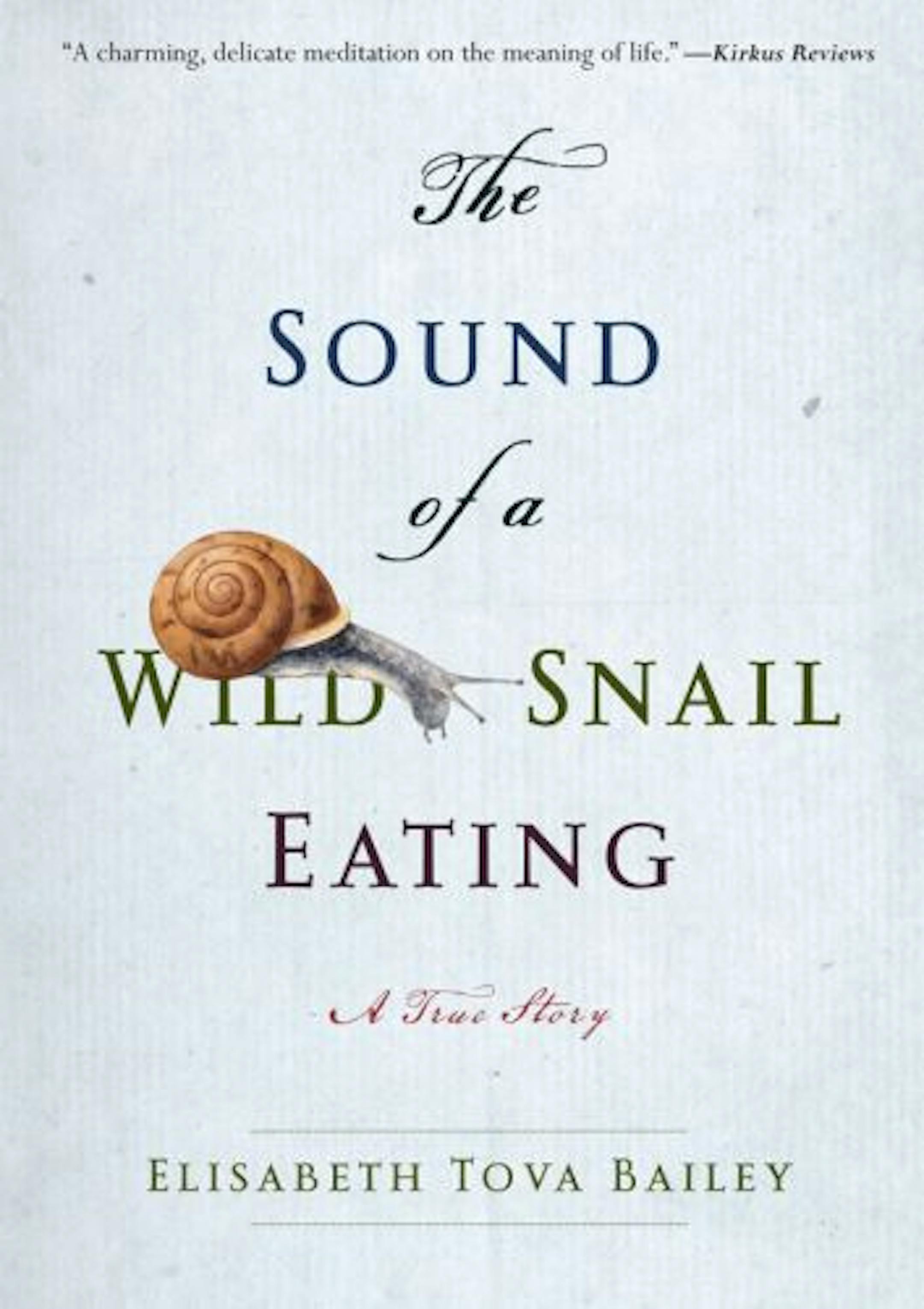
"A small pet is often an excellent companion," Florence Nightingale wrote in her 1912 "Notes on Nursing." Her words, along with those of Edward O. White -- "The natural world is the refuge of the spirit ... richer even than the human imagination" -- open Elisabeth Tova Bailey's sweet, quirky "The Sound of a Wild Snail Eating," a memoir of how observing a tiny wild snail in a terrarium next to her sickbed helped her recover from a life-threatening illness.
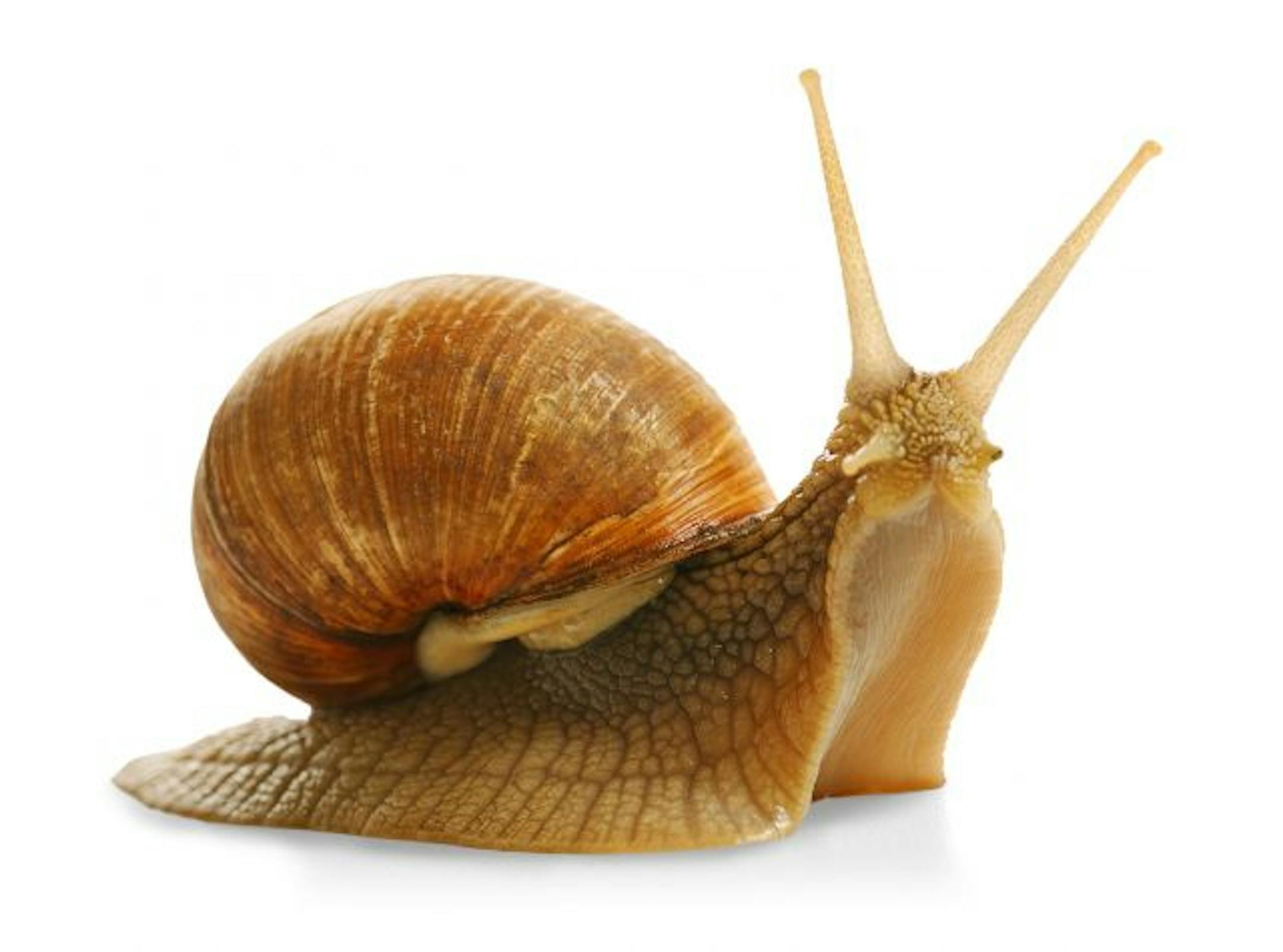
How interesting can a snail be? Entirely captivating, as it turns out. Watching the wee gastropod (stomach-footed one) explore its world -- like hers, a truncated one -- and pass its days "with curiosity and grace" not only was an absorbing science lesson for Bailey, but it also helped her craft the metaphors, patience and insights that contributed mightily to her survival and recovery.
After returning her snail (and its offspring -- one of the book's liveliest chapters is about these hermaphrodite creatures' reproductive lives) to the wild and regaining her vigor, Bailey immersed herself in the science of snails. When she wrote an essay about her snail, it was so eagerly received that she expanded it in this small, charming book.
The snail came to her purely by chance. Early in her illness, friends struggled to find ways to express their sympathy over her shocking state, a then-mysterious malady so severe that she could not lift her head from a pillow and required full-time caretaking. (The eventual diagnosis: autoimmune problems triggered by a rare virus.) While ferrying her a pot of violets, a friend spotted the snail and on a whim set it amid the flowers. "I thought you might enjoy this," she told Bailey.
"Why, I wondered, would I enjoy a snail?" Bailey thought at the time.
Slowly, the tiny creature, whose "leisurely pace was mesmerizing," became a companion. It fed on mushrooms, eggshells, flower petals and paper with its diminutive, raspy teeth. It waved its eye-tipped tentacles. It slept, explored, hid, reappeared. Months passed. It thrived, even laid eggs.
Bailey is eloquent about why such a strange relationship could be valuable: "Survival often depends on a specific focus, a relationship, a belief, or a hope balanced on the edge of possibility. Or something more ephemeral: the way the sun passes through the hard, seemingly impenetrable glass of a window and warms the blanket, or how the wind, invisible but for its wake, is so loud one can hear it through the insulated walls of a house."
As that lovely passage illustrates, she is a marvelous writer, and the marriage of science and poetic mysticism that characterizes this small volume is magical. It's a book to treasure in this high-tech, high-energy era, a reminder that the things we overlook are sometimes the things that can save us.