Poetry has two kinds of music. There is the sound it makes when read aloud, and then it has an inner composition, too -- that strange, occult rhythm that verses make when your mind, not your lips, mouths the words.
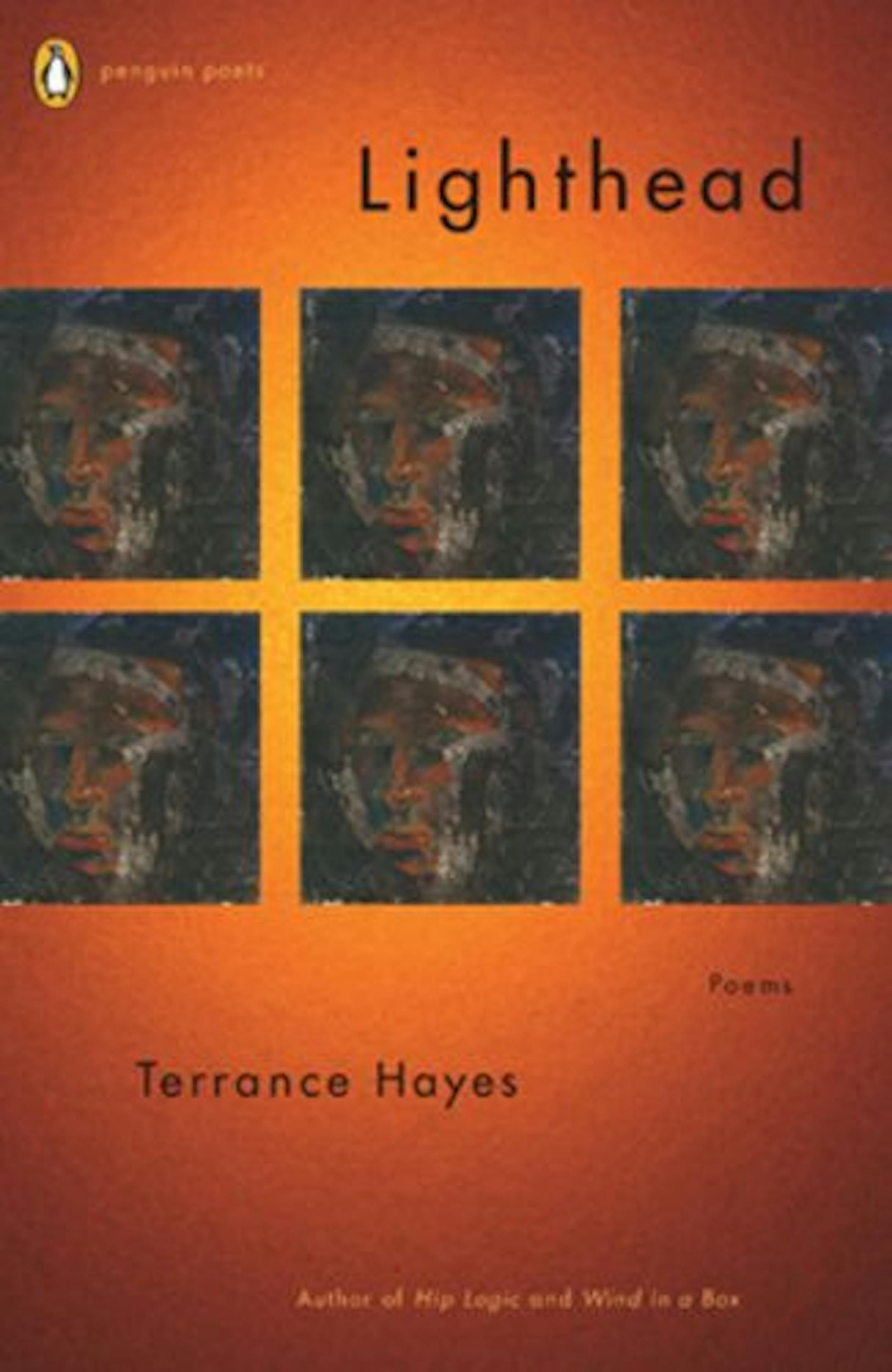
Terrance Hayes is one of the rare poets who can braid these two sounds into a kind of harmony. "Lighthead," his fourth volume, and winner of the National Book Award, shakes and jives with a loose associative whimsy.
The book features poems about war and drunkenness. They riff on everyone from Wallace Stevens to Fela Kuti, whose rich tribal beats would be this book's soundtrack, if it had one. But Hayes isn't simply jive-talking. The battle between darkness and light -- and all their metaphorical associations -- gives the poems' brisk, alliterative sounds a depth that makes you read them twice. "A Plate of Bones," a poem about the complicated inheritance of a relative's racism, begins "My slick black muscular back-/talking uncle drawing me and a school/of fish corpses to church."
As the poem continues, and the poet's uncle rages about his cousin's date with a white man, we come across the surprising line. "I let him feed me/the anger I knew was a birthright,/a plate of bones thin enough to puncture/a lung."
Subverting what we expect, talking to the reader as if she were sitting next to him on a bar stool, Hayes makes poems that flatter our subtlety and make unfussy the business of turning on the imagination's light.
The book is structured in four parts, all of which feature poems inspired by a Japanese presentation form that encourages the writer to narrate on 20 images on a single theme.
As a result, "Lighthead" is rich from line to line, even when its tongue is in its cheek, as it is in the following lines:
"I remember my tongue sandpapered against vowels in a mouth named Yolanda in the dark of a yellow bus long ago, and I tell Yoyo how that girl may still be somewhere thinking fondly of our tangle."