

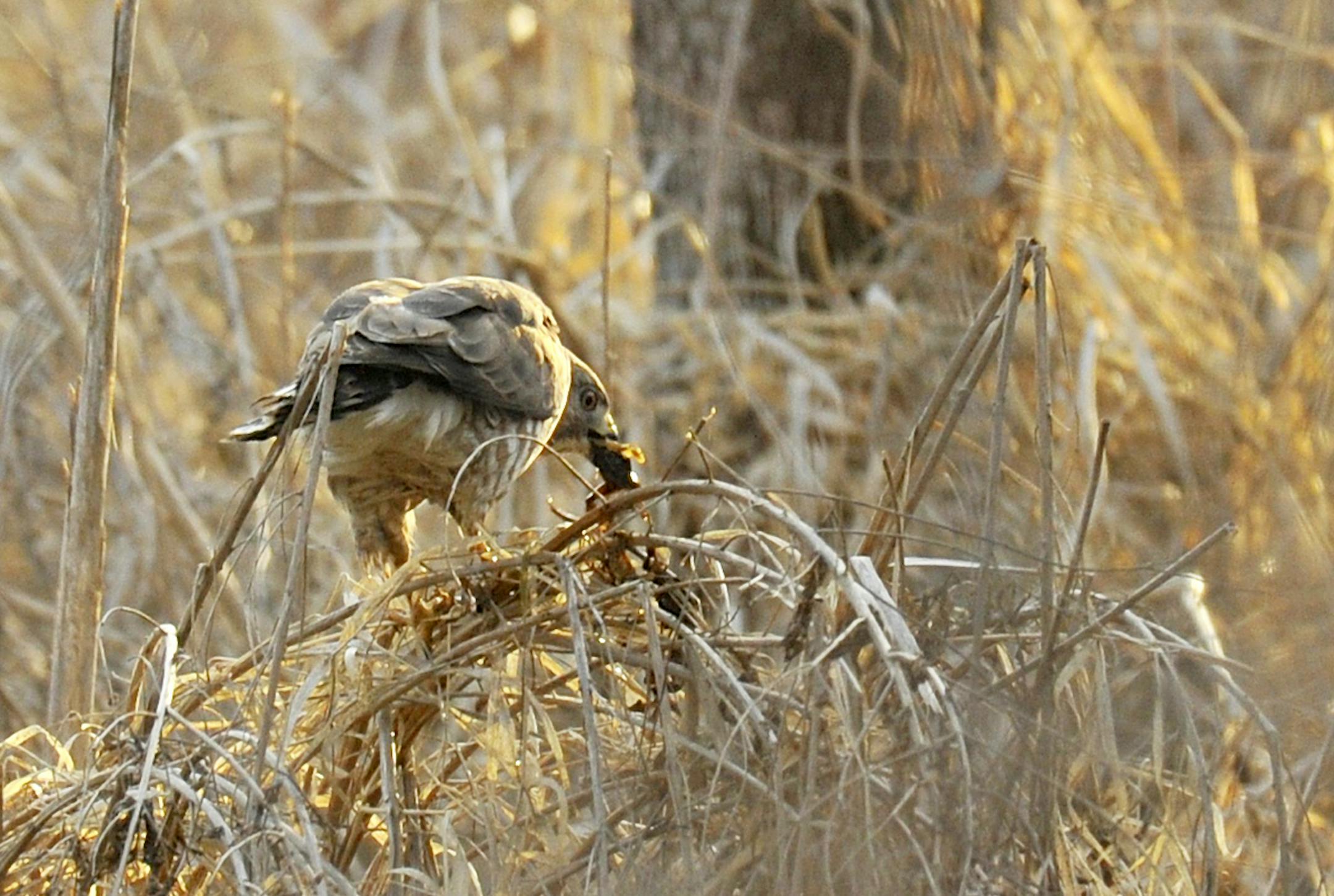
In a bird-eat-bird world, what's for dinner is a big deal. Eight species of hawks and owls are major predators in and around the Twin Cities. While their prey choices overlap in many cases, they manage that competition by being just different enough.
We host three species of owls here: barred, great horned and Eastern screech-owl, the latter two year-round. Cooper's, red-shouldered, broad-winged and red-tailed are our common hawks, with red-tails around all year. We also have osprey.
If you were to invite them all for dinner, serving their usual diet, the menu should include birds from the size of fledglings to herons, rabbits, rodents, muskrats, squirrels, skunks, opossums, chipmunks, bats, house cats, snakes, frogs, toads, crayfish and various insects. And fish for the osprey.
Physical differences dictate food choices. Or perhaps it's the other way round. These birds are built to hunt by day — perching, soaring, swooping, diving, hovering — or by flying silently through the night.
Cooper's hawks are slim with narrow wings for fast flight, their long tails acting as rudders. They swoop into the yard, often low, always fast, scattering our feeder birds. Prey most often are robins, jays, starlings and flickers, all commonly ground feeders.
Red-tails and red-shouldered hawks hunt from perches or in flight. The difference? Red-tailed hawks are birds of open areas, red-shouldered are woodland hunters.
Broad-winged hawks also are woodland hunters, perching below the tree canopy, choosing amphibians as food more often than their hawk brothers.
Screech-owls, being small, often feed on bird nestlings and fledglings. They also take small mammals and insects.


