

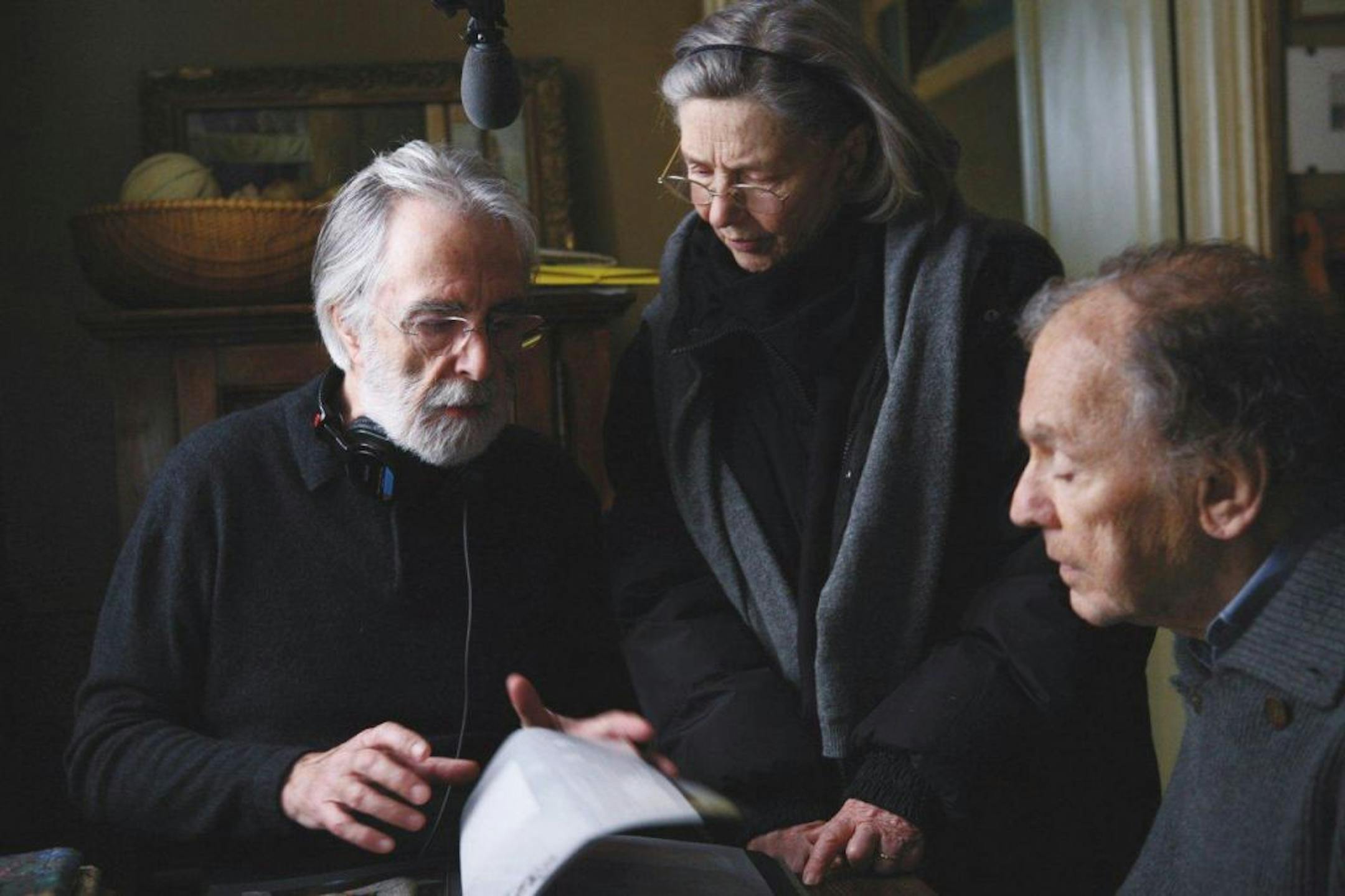
Before this year, only three films have received a double Academy Awards nomination for best picture and best foreign film. Now the Austrian director Michael Haneke's "Amour" joins "Z," "Crouching Tiger, Hidden Dragon" and "Life is Beautiful" in that distinction. Haneke's bleak and disturbing body of work, from his harrowing examination of media violence "Funny Games" to his allegorical study of religious extremism "The White Ribbon," has earned him a reputation for terrifying veracity, but not so much for compassion.
With "Amour," he reveals a spellbinding new depth of feeling. The film describes with delicate melancholy the aftermath of a stroke on the marriage of two devoted, cultured octogenarians. In scenes of alarming realism Georges (Jean-Louis Trintignant, "A Man and a Woman") tends to his infirm wife Anne (Emmanuelle Riva, "Hiroshima, Mon Amour") through her inevitable decline. As man and wife become caregiver and patient, "Amour" refutes the cliché that time heals all wounds.
The film, based on Haneke's experiences with his own parents, hit the foreign awards circuit like a hurricane, and made a huge impression among Oscar voters. Riva received a best actress nomination, and Haneke is in the running for best direction and best original screenplay. Though Haneke is famously averse to interviews, we met after the Toronto International film festival, speaking through an interpreter. It should be noted that while his films are dour, Haneke smiles easily and laughs often.
Q: This is a challenging, realistic portrayal of the end of life. Do you think American films that insist love conquers all, and death is always followed by some kind of symbolic resurrection, do us a disservice?
A: It's not up to me to judge other films, but I think the theme I'm dealing with is a challenging one. It's a question of finding an appropriate level to deal with that theme. And the danger of course is that you betray the nature of this theme, through cheap sentimentality or miserabilism.
Q: American end-of-life films often center around a hospital where there are heroic efforts to save the patient. Why is there so little medical intervention in your film, which presents Anna's decline as an inescapable stage of life?
A: This misery we see in hospital rooms is something we've all seen a hundred times on television. My film is more about how I cope with the suffering of someone I love. And can't help. It's true that the medical questions have their place, they're relevant to the story, but I don't think it's necessary for me to define them or point them out with my finger.
Q:Why is the film titles "Love" rather than "Death"?


