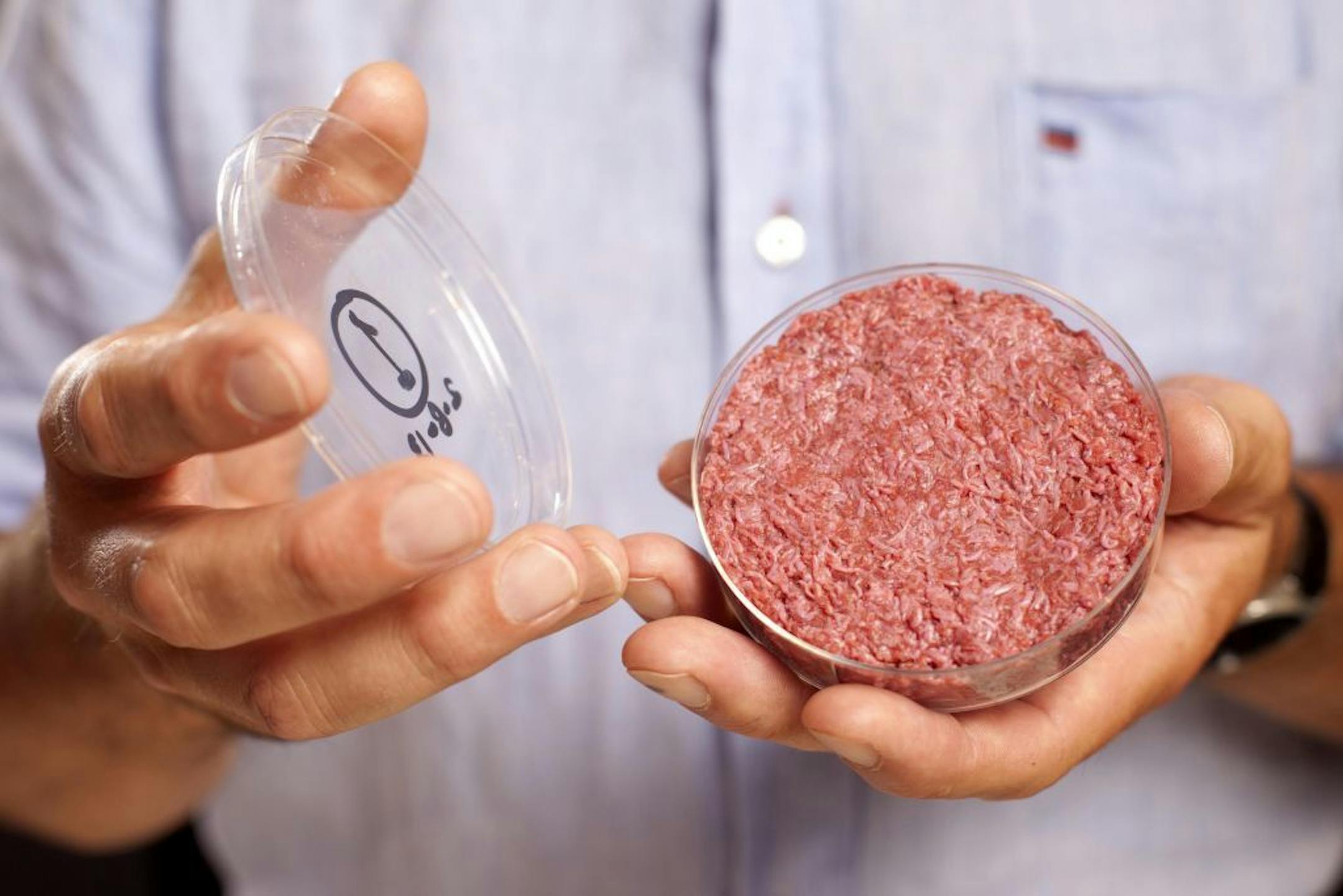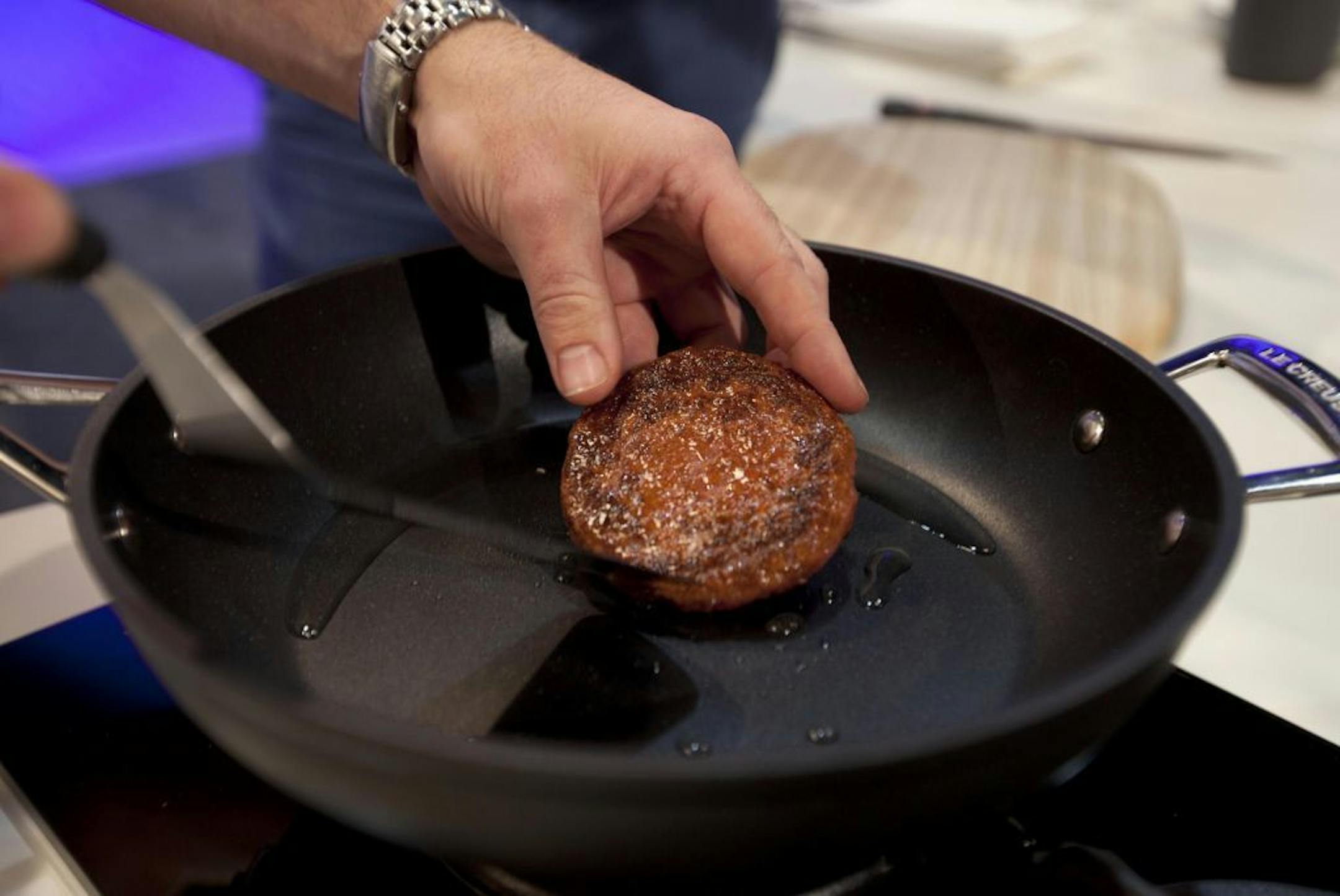
LONDON — The food of the future could do with a pinch of seasoning — and maybe some cheese.
Two volunteers who took the first public bites of hamburger grown in a laboratory gave it good marks for texture but agreed there was something missing.
"I miss the salt and pepper," said Austrian nutritionist Hanni Ruetzler. U.S. journalist Josh Schonwald confessed to a difficulty in judging a burger "without ketchup or onions or jalapenos or bacon." Both tasters shunned the bun, lettuce and sliced tomatoes offered to them to concentrate on the flavor of the meat itself.
Mark Post, the Dutch scientist who led the team that grew the meat from cattle stem cells, regretted having served the patty without his favorite topping: aged gouda cheese.
"That would have enhanced the whole experience tremendously," he told The Associated Press. He said he was pleased with the reviews: "It's not perfect, but it's a good start."
Post, whose team at Maastricht University in the Netherlands developed the burger over five years, hopes that making meat in labs could eventually help feed the world and fight climate change — although that goal is probably a decade or two away, at best.
"The first (lab-made) meat products are going to be very exclusive," said Isha Datar, director of New Harvest, an international nonprofit that promotes meat alternatives. "These burgers won't be in Happy Meals before someone rich and famous is eating them."
Sergey Brin, a co-founder of Google, announced that he funded the 250,000-euro ($330,000) project, saying he was motivated by a concern for animal welfare.