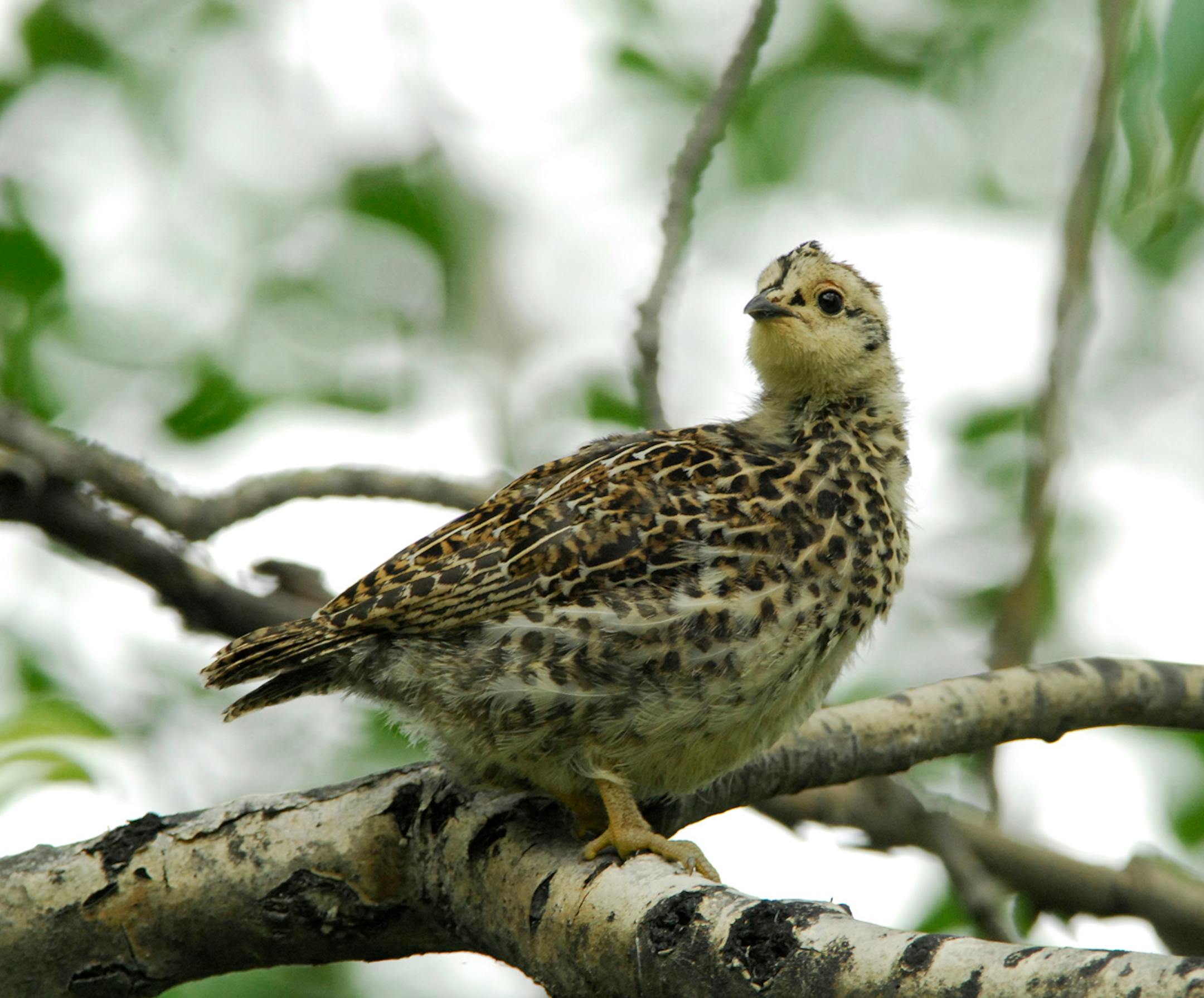
The hen spruce grouse was going to take a bath beside a gravel road in Alaska. There she was, getting ready to snuggle down in a dusty wallow.
Sometimes you want dirt instead of water -- if you're a bird.
Her bathing partners cautiously followed her, six chicks not as certain as she was about the world outside their woods.
As soon as the hen had settled in, wriggling around a bit and tossing dust into the air with several wing flaps, the chicks took cover beneath her. She lifted a wing. They disappeared. Once in a while, one or more of them peeked out. For them, it was bathing by proxy.
Dust baths, by the way, are used by many species of birds. Experts think they help deter pests on the feathers and skin of birds.
A friend and I watched these bathing beauties on the Kenai Peninsula in southern Alaska. This was in July, not exactly high season for birds. Courtship was finished, most of the eggs had been incubated, the young fledged. Birds were harder to find, but if you like fuzzy and cute, the time was right.
We saw grouse chicks, tern chicks and three species of gull chicks as well as juvenile thrushes, sparrows and juncos. Because gulls and terns nest in the open, we also saw nests and, in some cases, eggs.
Someone once told me that you haven't really seen a bird species until you've seen the males and females in their breeding plumage and their nonbreeding plumage, juveniles, chicks, nests and eggs. So now, I have really seen several bird species.