

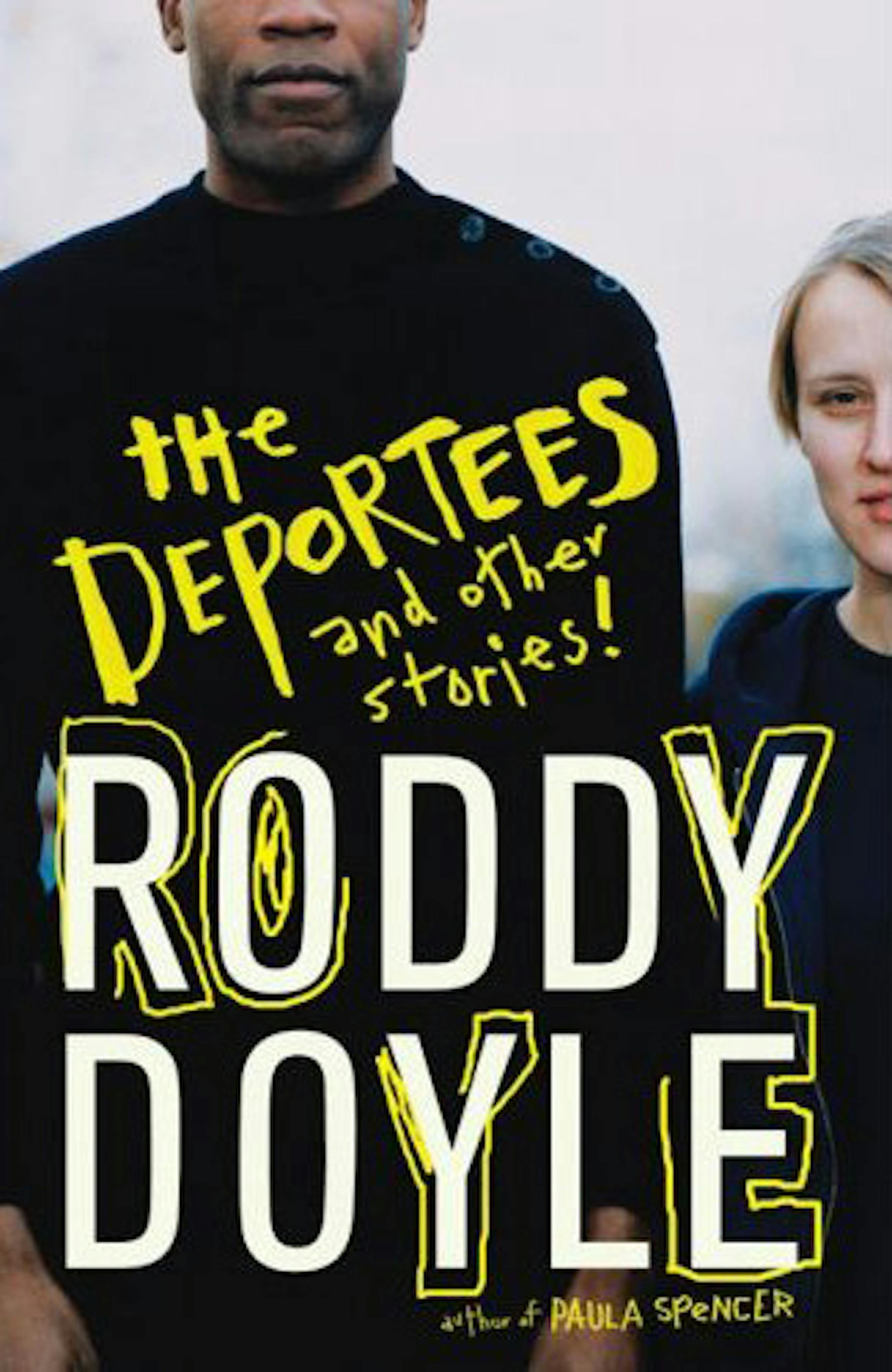
Thank goodness for Roddy Doyle. Just when it seemed that the only author left who gives a pig's whistle about writing superb short stories is Alice Munro, along comes Doyle with this superlative book of short tales to pick up the slack.
The eight stories in this collection (novelist Doyle's first) are connected in that they all deal, in one form or another, with the immigrant experience in Ireland -- or to put it more accurately, Ireland's experience with immigrants. In his foreword, Doyle comments on the famous line from his 1986 novel "The Commitments," in which a working-class young man says, "The Irish are the niggers of Europe." Doyle writes: "If I was writing that book today, I wouldn't use that line. It wouldn't actually occur to me, because Ireland has become one of the wealthiest countries in Europe and the line would make no sense."
The stories all reflect the changed face of Ireland and do so with an abundance of grace, humor and unselfconsciously first-rate writing. Doyle's prose is dialogue-driven; there are very few descriptions of people and places (a bit like Elmore Leonard with an Irish accent and fewer guns). What descriptions there are are succinct and perfectly rendered. Someone's smile is "as sharp as corners"; an impressionable au pair pushing a stroller on a gloomy day stops at an old wooden bridge: "She would never bring the pram onto the bridge. She looked at its frail wooden legs rising out of the sludge. The mutual contact, of old wood and old pram; they would all collapse into the ooze below. She could smell it -- she could almost feel it, in her hair and mouth. She walked quickly back along the promenade."
And here's how an adolescent boy describes his African girlfriend's father coming to get them from a police station: "Her da's arrived and he looks the business. His suit is blue and serious looking. But the really serious thing about him is his face. He's the most serious looking man I've ever seen. I'd say Ireland's overall seriousness went up at least 25% the day he got here from Nigeria. Like, the situation was pretty serious before he came into the station. But now -- Jaysis -- it's an international crisis."
But it's in the dialogue that these stories truly and vividly come to life. These stories are perfect showcases for Doyle's much-praised sharp wit and acute ear; there is the clear ring of authenticity in every line, and you will no doubt find yourself laughing out loud and often.
The risk in writing eight stories about immigrants, particularly if you aren't one, is obvious: How does one keep them from becoming monotonously similar, or, worse, preachy and sanctimonious?
Doyle finds a huge variance in topic and tone; the works range from harrowing to hilarious, from self-discovery to near oblivion (including a terrific ghost story). The title story is possibly the most exuberant bit of writing to come along in a long time. In it we revisit Jimmy Rabbitte, the aforementioned young man from "The Commitments," now happily married and looking to form a multicultural band (to sing the songs of Woody Guthrie, no less!). Doyle understands that music is a miracle and family a delightful headache; he manages to wonderfully convey those ideas through the sheer joyfulness of his characters and the honesty of his writing.
It might be tempting to criticize these stories for their overall hopeful tone; things turn out well for the protagonists in most of them. But Doyle is right to be hopeful. As residents of a magnificent country built by immigrants, we Americans are fully aware of the advantages and difficulties of an influx of different faces. We coped, are coping still and are better for it. Doyle beautifully expresses his hope and certainty that the Irish will do the same.


