

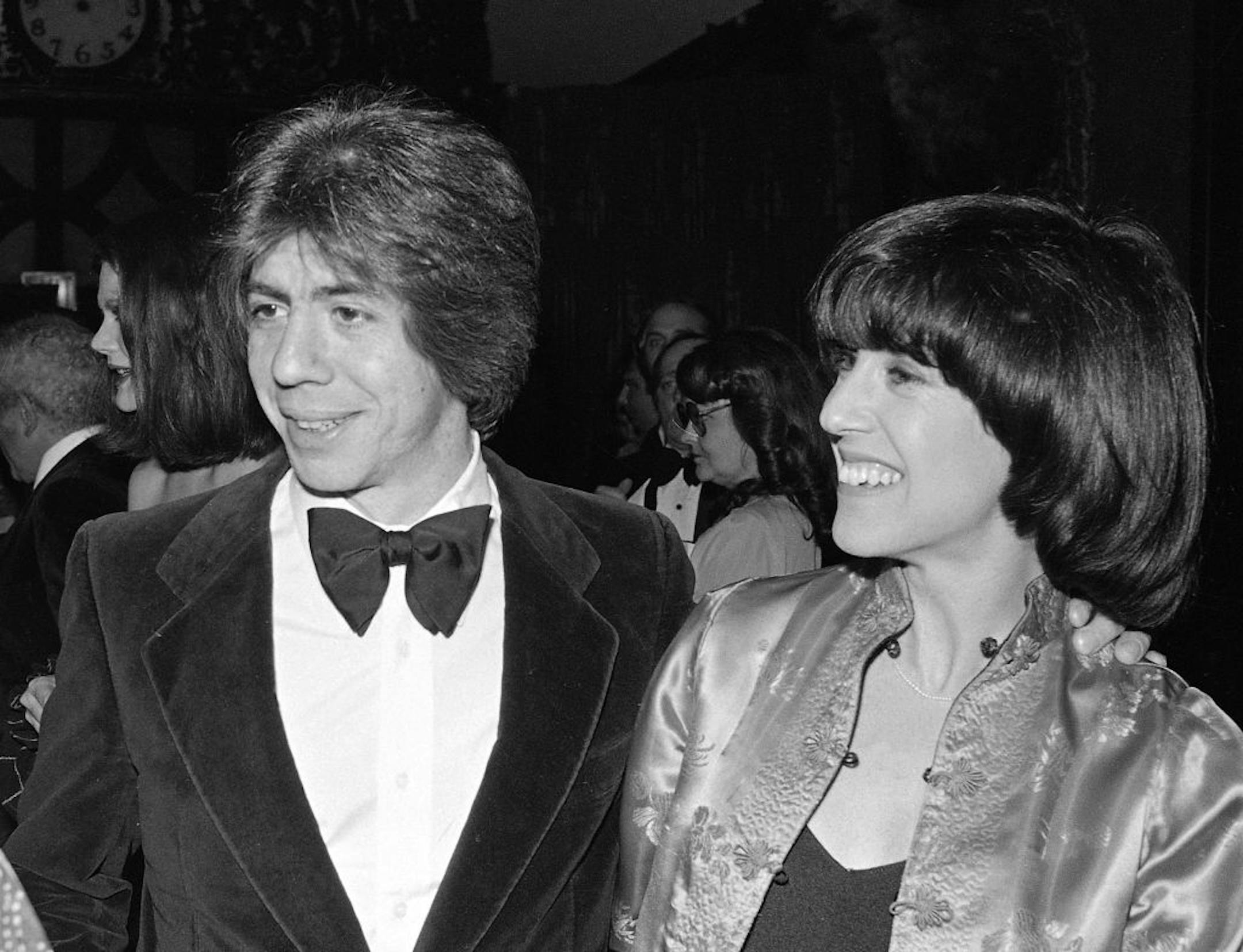
When I was in high school in the 1970s, I would steal my parents' copy of Esquire before they could get it, turn to the table of contents, and reconfirm my fervent desire to be Nora Ephron.
Ephron had a column in the magazine and wrote regularly about media and women. She was a feminist when that was a bold thing to be, and her work was a rebuke to those who liked to claim feminists had no sense of humor. She was already famous and becoming more so -- I used to see her on talk shows and think how glamorous her life sounded, and that I would like a glamorous life like that. But what really thrilled me was Ephron on the page. Oh, that inimitable voice: sly, dry, witty, devastating, personal, hilarious.
Of course the point of worshiping Nora Ephron was not to be her second-rate imitator but to try to learn from her the art of writing sentences that could come from only one person. Even so, for my entire career, I've tried to develop my own voice with her voice in my head as an inspiration, a wheel-greaser. When I'm stuck trying to write, I'll pick up one of her collections, hoping some of that Ephron magic can nudge my own words out.
And even though journalism is the most ephemeral of arts, her pieces haven't aged. Here's the introduction to "Wallflower at the Orgy" from 1970: "Some years ago, the man I am married to told me he had always had a mad desire to go to an orgy. Why on earth, I asked. Why not, he said. Because, I replied, it would be just like the dances at the YMCA I went to in the seventh grade -- only instead of people walking past me and rejecting me, they would be stepping over my naked body and rejecting me." She goes on to explain that being a journalist is like being a wallflower at the orgy, "standing on the side taking notes on it all."
Just as I was applying to college in 1972, Ephron wrote of her class of 1962 reunion at Wellesley, and how irrelevant the college -- which had decided not to go coed -- seemed: "This college is about as meaningful to the educational process in America as a perfume factory is to the national economy." I ended up going to Wellesley, and Ephron's critique hung heavily over my years there, although I was also buoyed to think that we wrote for the same college newspaper, maybe even sat at the same desk.
In 1996, Ephron -- who had a complicated, affectionate relationship with the college -- gave the commencement address. I'll quote her wise remarks: "Maybe young women don't wonder whether they can have it all any longer, but in case any of you are wondering, of course you can have it all. ... It will be a little messy, but embrace the mess. It will be complicated, but rejoice in the complications. It will not be anything like what you think it will be like, but surprises are good for you. And don't be frightened: You can always change your mind. I know: I've had four careers and three husbands."
• • •
I came to Washington right after my own graduation, struggling to get my career started at the same time that Ephron was having her Washington years, immortalized in the most delicious of revenge novels, "Heartburn," about the dissolution of her marriage to Carl Bernstein. I ended up going to dinner parties where she and Carl were also guests, and there I was, trading conversation with my idol. Ephron treated me gently, and as if I were an equal. We talked about our different experiences at Wellesley, she told me not to get discouraged when journalism seemed hard. She talked about writing screenplays and how anxiety-provoking it was to start a new career.


