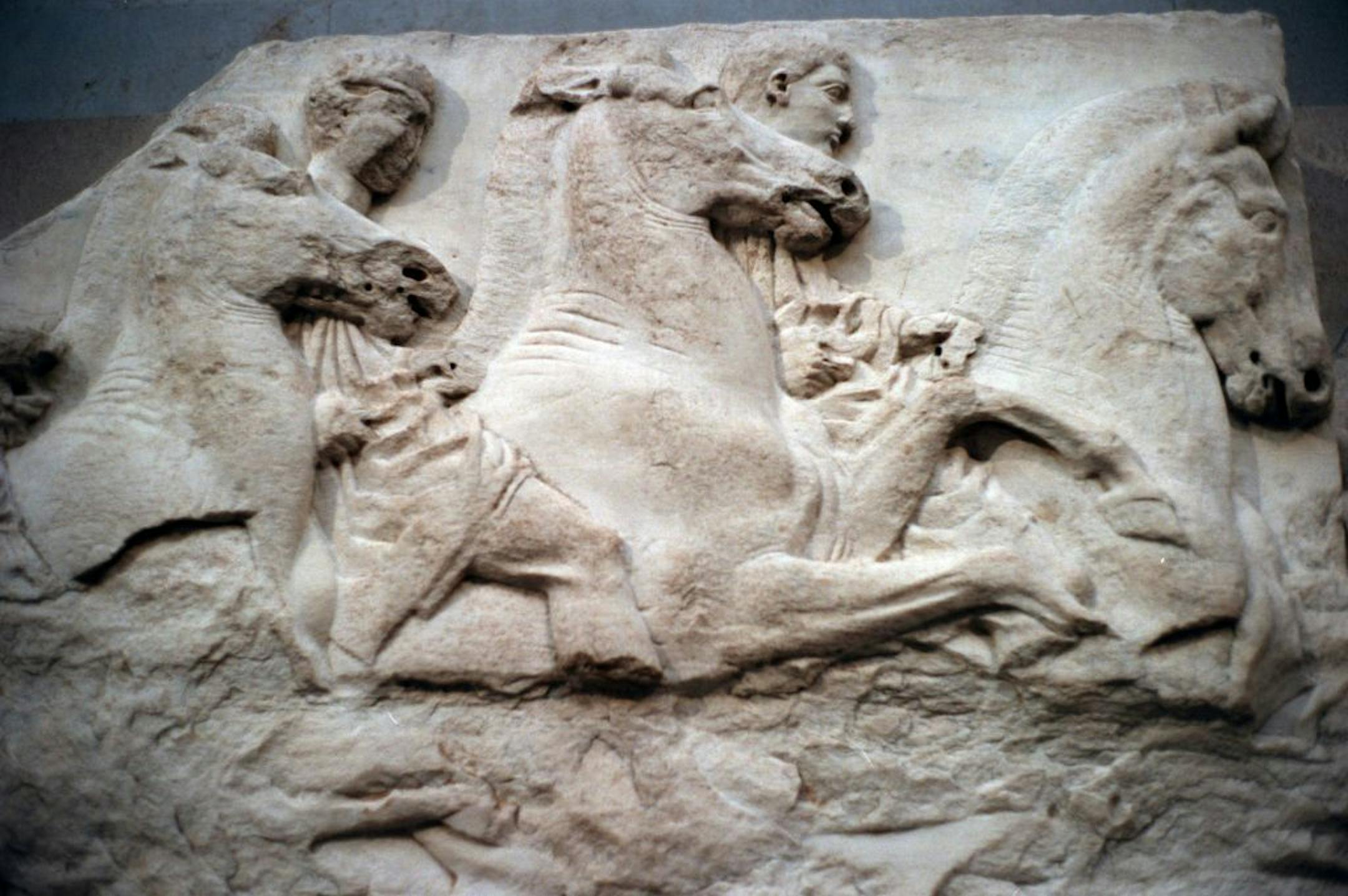
LONDON — One of the British Museum's much-disputed Parthenon Marbles was unveiled Friday after being sent in secret to Russia — a surprise move that outraged Greece, which has long demanded the return of the artifacts.
The loan of the piece, an elegant depiction of the Greek river god Ilissos, was the first time in two centuries that any of the contested sculptures has left Britain — and raised questions of timing amid growing tension between Russia and the West over Ukraine and other disputes.
Greece reacted with fury.
"Greeks identify with our history and culture! Which cannot be sliced up, loaned or given away!" Greek Prime Minister Antonis Samaras fumed in a sharply worded statement punctuated with exclamation points. He described the British Museum's move as a provocation.
The museum announced the loan only after the sculpture — a headless Ilissos reclining amid exquisitely carved drapery evoking river water — had been spirited to Russia's Hermitage Museum in St. Petersburg. It will be on display Saturday through Jan. 18 as part of a major exhibition to celebrate the 250th anniversary of the museum, Russia's most renowned.
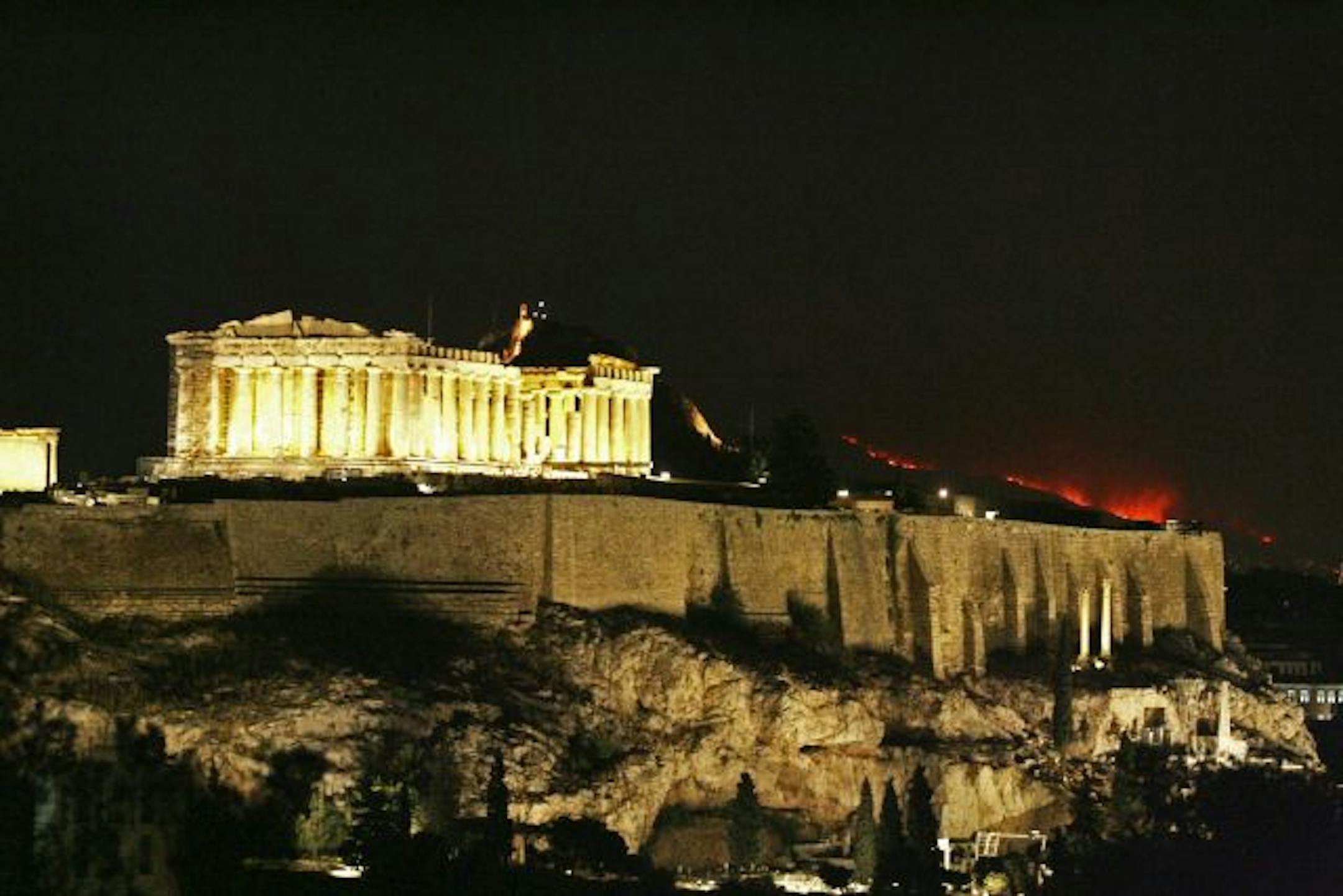
The sculptures are at the heart of one of the world's most famous cultural heritage disputes. The marbles graced the Parthenon temple on the Acropolis for more than 2,000 years, until they were removed at the beginning of the 19th century by Scottish nobleman Thomas Bruce, the 7th Earl of Elgin, when it was fashionable for the aristocracy to collect ancient art.
Greece contends they were looted illegally while the country was under Turkish occupation. The British Museum has long rejected their return, arguing that the pieces, sometimes known as the Elgin Marbles, can be seen in London by a global audience, free of charge.
In announcing the loan, the museum's trustees described the sculpture as a "stone ambassador of the Greek golden age," whose loan should continue despite the tensions between Britain and Russia.