

It had been a rabbit, I was certain of that. Rabbit fur was blown evenly in a circle that extended widely in each direction across a cross-country ski track.
I was looking at a bunny explosion.
The answer was on the far side of the circle: wing marks in the snow, feather tips engraving evidence as the cause of the explosion pumped hard for lift.
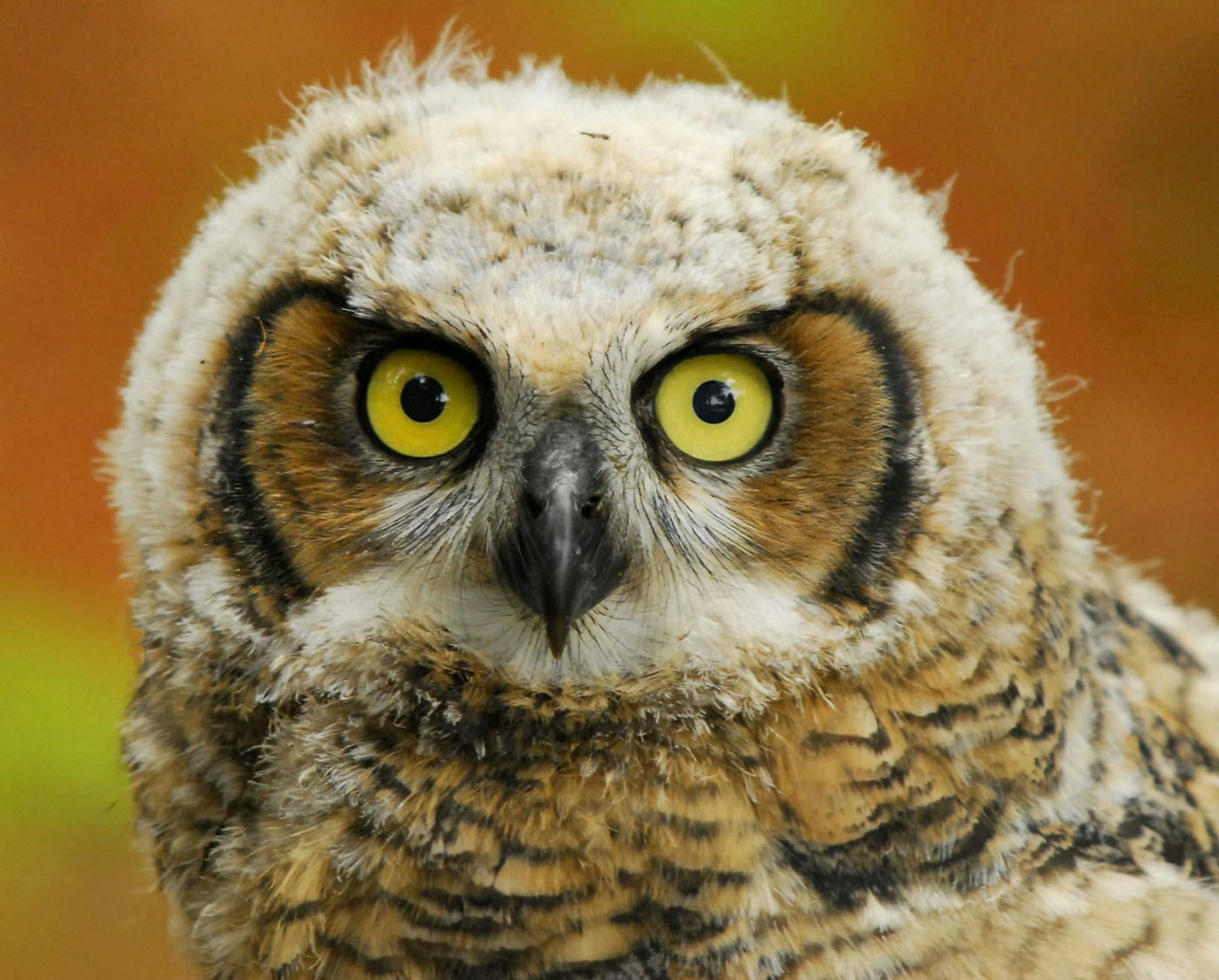
It had to be a great horned owl.
It had come silently from the darkness of the previous night, hitting the rabbit hard with extended talons. Fur blew with the impact. The owl flew off with the rabbit impaled beneath it, talons instantly squeezing hard enough to break the backbone.
If ever it was true, the victim never knew what hit it.
This was in February, and my guess is that the hunter was a male owl hunting to feed its mate. She would already have been on their nest, incubating eggs, two or three. These owls nest very early in the year, months ahead of other Minnesota birds.
They do so to provide as much time as possible for the hatchling owls to mature, to acquire hunting skills. The young owls will be on their own when their first winter arrives. They'll either successfully jerk prey out of the snow or, as is said, die trying.


