
Graying of AIDS offers hope and new challenges

Experts say they need to focus on what pioneering survivors can expect as they reach their 60s and beyond.

The Associated Press
July 27, 2012 at 12:32AM
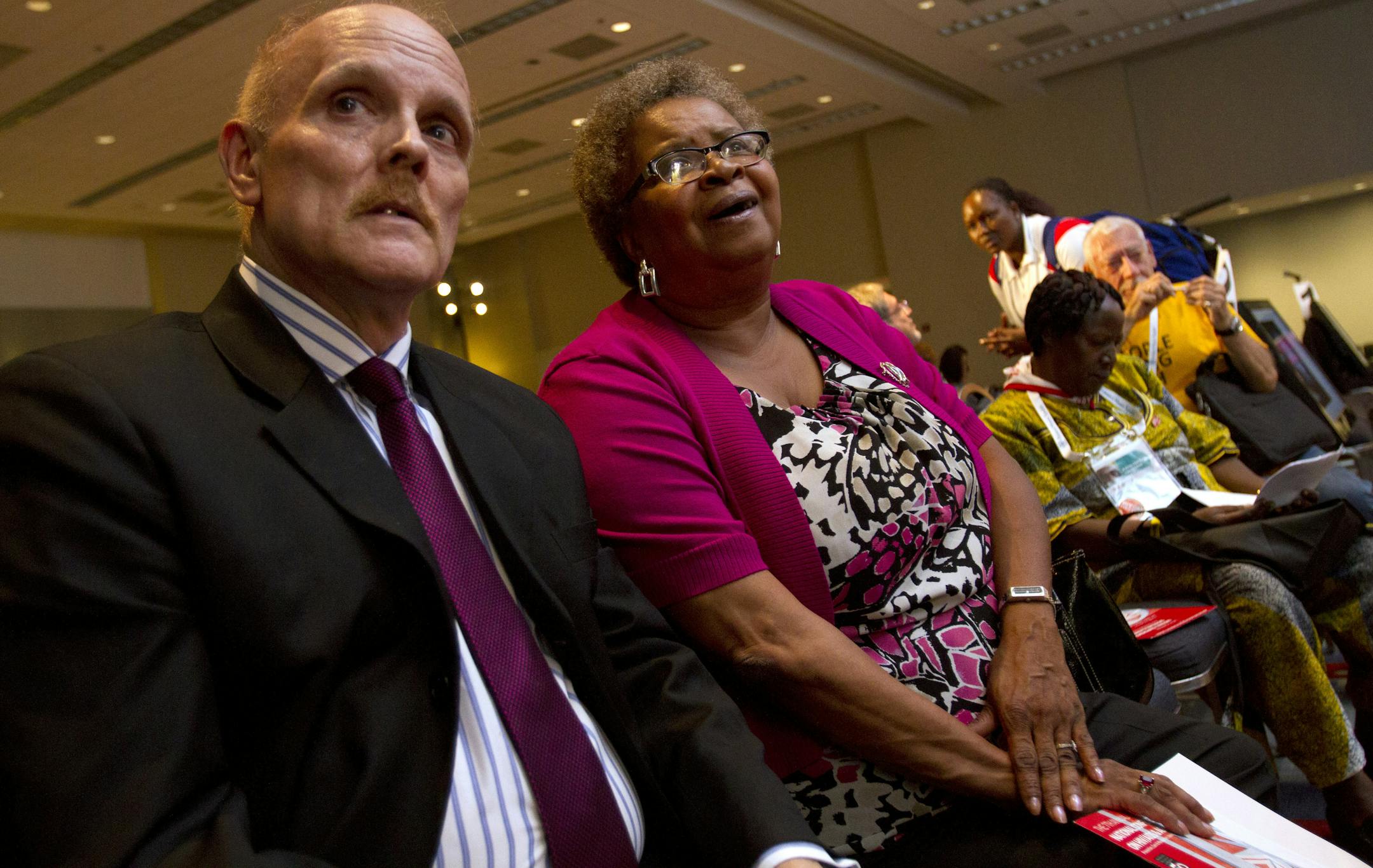
Stephen Karpiak of the AIDS Community Research Initiative of America and Carolyn Massey, 54, of Laurel, Md., waited to speak at the panel, "Aging With HIV," at the International AIDS Conference in Washington.
Stephen Karpiak of the AIDS Community Research Initiative of America and Carolyn Massey, 54, of Laurel, Md., waited to speak at the panel, “Aging With HIV,” at the International AIDS Conference in Washington. (Stan Schmidt — Associated Press/The Minnesota Star Tribune)

WASHINGTON - AIDS is graying: By the end of the decade, the government estimates, more than half of Americans living with HIV will be older than 50. Even in developing countries, more people with the AIDS virus are surviving to middle age and beyond.

That's good news -- but it's also a challenge. There's growing evidence that people who have spent decades battling the virus may be aging prematurely. At the International AIDS Conference in Washington, numerous studies are examining how heart disease, thinning bones and a list of other health problems typically seen in the senior years seem to hit many people with HIV when they're in their 50s.

"I'm 54, but I feel older," said Carolyn Massey of Laurel, Md., who has lived with HIV for nearly 20 years. "When I hear young people talk about, 'Well you get HIV and you take your drugs and you'll be all right' -- that's just not the truth. This is a lifelong thing we're talking about, and it unfolds every day on you."

The graying isn't just because people like Massey are surviving longer. Some of it comes from older adults being newly diagnosed, a trend U.S. health officials say is small but slowly growing. Yes, grandparents still have sex -- and that's an age group missed by all those hip safe-sex messages aimed at teens and 20-somethings.

"They let down their guard," is how Dr. Kevin Fenton of the Centers for Disease Control and Prevention puts it.

Already, a third of the nearly 1.2 million Americans living with HIV are older than 50, and by 2020 half will be, Fenton said at one of numerous sessions on aging at the world's largest AIDS meeting. People 50 or older accounted for 17 percent of new HIV diagnoses in 2009, according to the CDC's latest data. That's up from 13 percent in 2001.

'50 is not old'

There aren't as good counts in poor regions of the world, where access to life-saving medications came years later than in developed countries.

But even in hard-hit sub-Saharan Africa, home to most of world's HIV-infected population, studies suggest 3 million people living with HIV are 50-plus, said Dr. Joel Negin of the University of Sydney in Australia. By 2040, he said, that could reach 9 million.

As Negin pointedly told the conference, "50 is not old." But for years, world health authorities didn't even measure HIV in people beyond age 49.

Today, people who are diagnosed and treated early can expect a near-normal life-span, said Dr. Anthony Fauci, infectious disease chief at the National Institutes of Health.

The new focus is on what these pioneering survivors can expect as they reach their 50s, 60s and beyond. They're now getting chronic illnesses such as heart disease, diabetes, kidney disease and osteoporosis -- some of the common ailments when anyone gets old. But studies suggest people with HIV may be at higher risk for some of those illnesses, or get them earlier than usual.

Perhaps the strongest evidence links HIV and an increased risk of heart disease. Some medications raise that risk. But in research published for the AIDS meeting, scientists at Massachusetts General Hospital uncovered another reason.

Risk for clots

They scanned the arteries of people with and without HIV, and found the HIV patients had more inflammation inside their arteries, putting them at risk for the kind of clots that trigger heart attacks. That's even though the HIV patients had their virus well-controlled and weren't that old -- their average age was 52, the researchers reported in the Journal of the American Medical Association.

about the writer

about the writer

LAURAN NEERGAARD

More from Minnesota Star Tribune

See More
In this photo taken Monday, March 6, 2017, in San Francisco, released confidential files by The University of California of a sexual misconduct case, like this one against UC Santa Cruz Latin Studies professor Hector Perla is shown. Perla was accused of raping a student during a wine-tasting outing in June 2015. Some of the files are so heavily redacted that on many pages no words are visible. Perla is one of 113 UC employees found to have violated the system's sexual misconduct policies in rece
Associated Press/The Minnesota Star Tribune

We respect the desire of some tipsters to remain anonymous, and have put in place ways to contact reporters and editors to ensure the communication will be private and secure.