

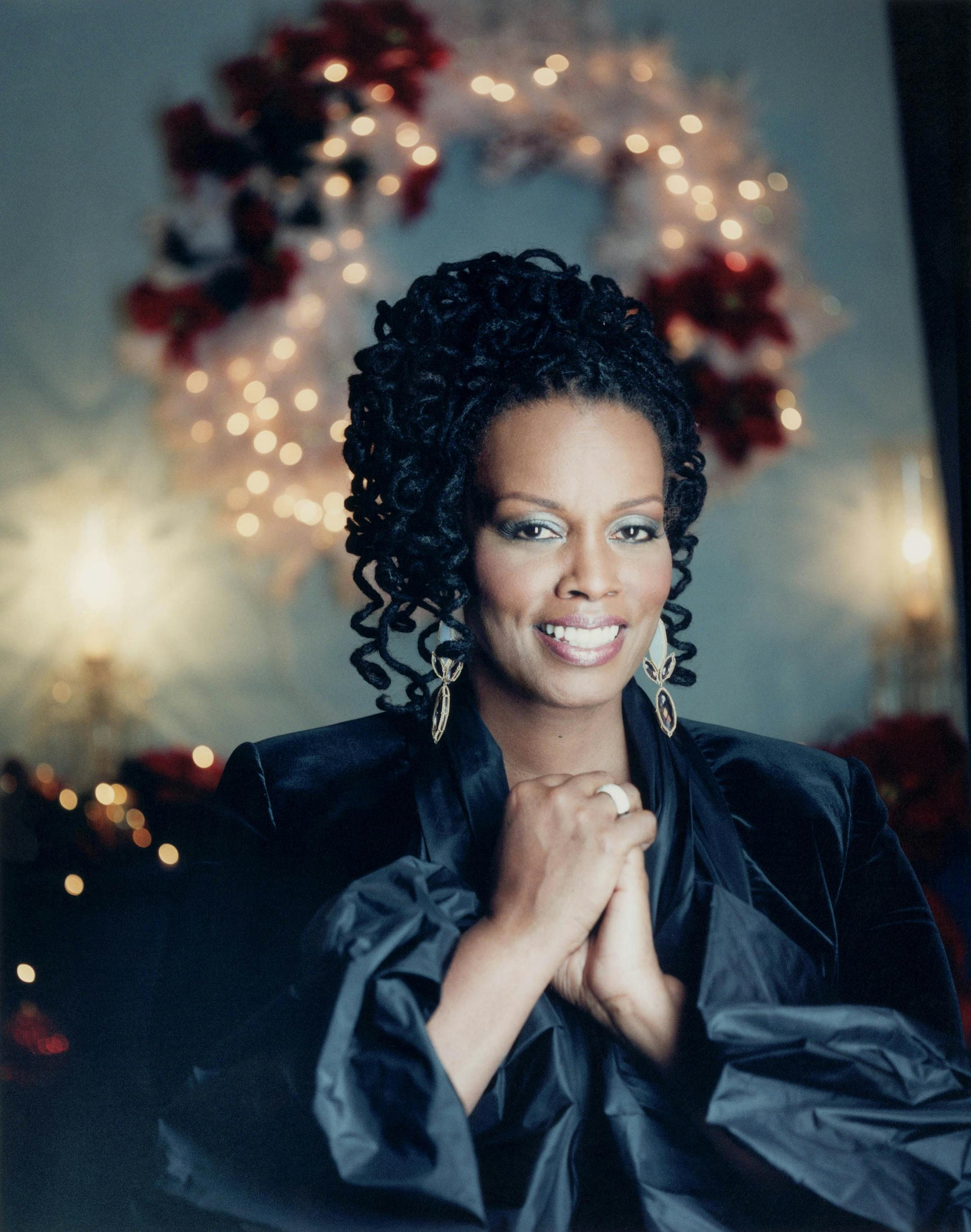
Too rarely in an artist's career, everything falls into line: Luck, hard work, confidence, critical and commercial acclaim and, last but not least, personal satisfaction. So it is with Dianne Reeves at age 51.
Reeves sports an august résumé, deep respect among her peers, and sufficient fame to feed her ego and bank account without turning her person into a persona. She is the only vocalist to win Grammys for three consecutive recordings: the 2001-03 discs "In the Moment," "The Calling" and "A Little Moonlight." Yet, as her Wikipedia bio notes, she is known more for her live performances than her albums.
All that was before George Clooney called and asked her to appear in his film about journalist Edward Murrow and McCarthyism, "Good Night, and Good Luck." Clooney used frequent scenes of Reeves performing onscreen to evoke the smoky jazz ambience of the film's mid-1950s setting. The movie's soundtrack corralled Reeves her fourth Grammy.
"George called us directly, told me that his aunt [singer Rosemary Clooney] was a big fan, and that he thought I would be perfect for this," says Reeves, who will perform at Orchestra Hall on Friday. "Suddenly this whole new audience was coming to my performances."
She spoke Wednesday from a hotel in Belgium. Although she was born in Colorado and makes her home there after a stint in Los Angeles, Reeves is a frequent visitor to the continent, embarking on a 25-date European tour after the success of "Good Night, and Good Luck," accompanied by just two guitarists.
It was at the Belvedere palace in Vienna that she saw a Gustav Klimt painting that inspired her just-released CD, "When You Know." It depicts various stages of a woman's life, from innocence to maturity. Back home in Denver, Reeves decided to evoke a similar journey using love songs.
Ironically, she views "When You Know" as a continuation of "Bridges," the 1999 record derided by some critics as too pop-oriented, and the last Reeves record (not counting Christmas discs) that didn't capture a Grammy.
"I like the simplicity of the songs," she said. "I want them to be accessible to people, so when they come to the shows they realize how far we can take this music, even though they usually hear it one way."


