

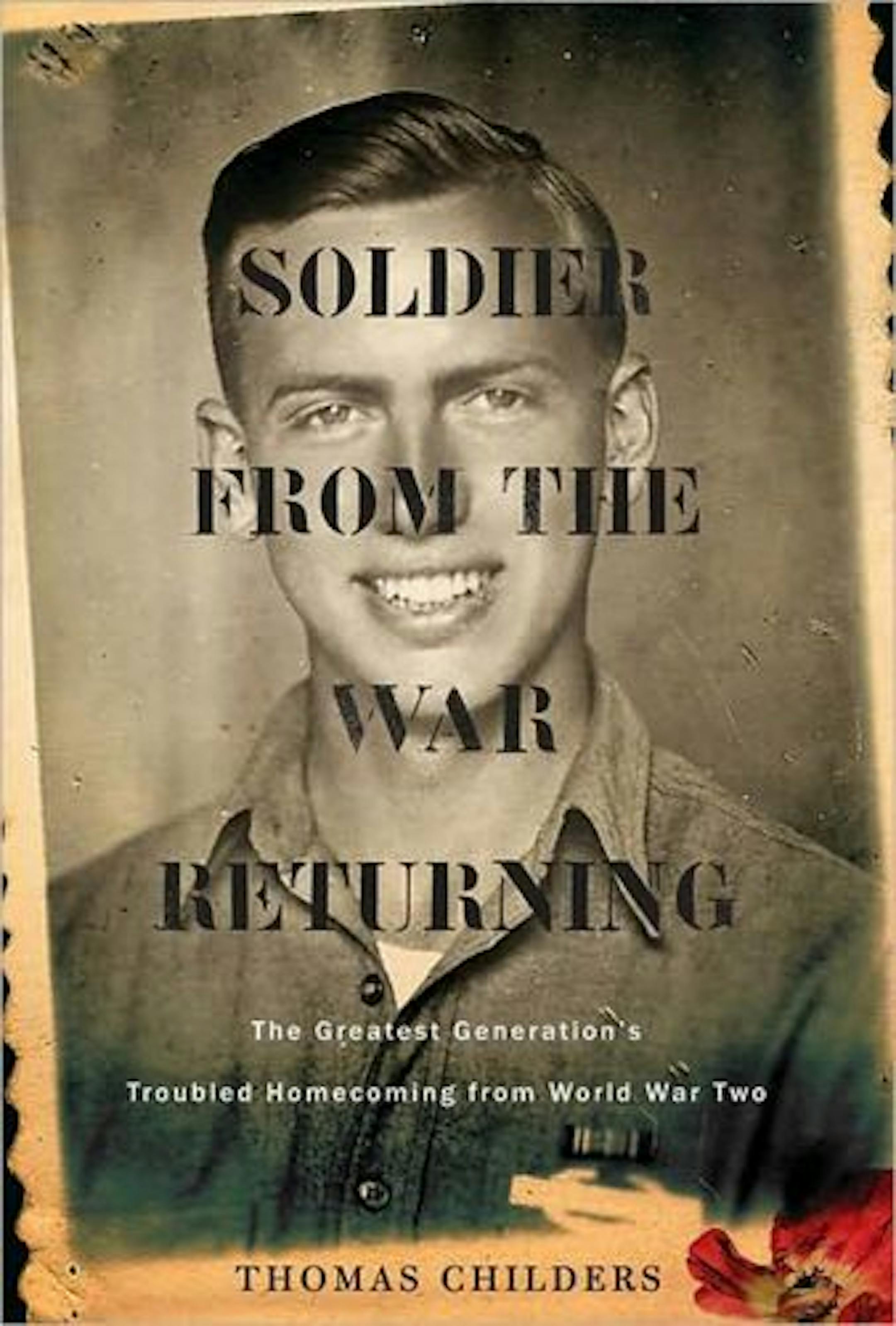
He was never the same after the war.
Those words become a refrain in "Soldier From the War Returning: The Greatest Generation's Troubled Homecoming From World War II," Thomas Childers' haunting history of three GIs, including his father, whose fates were forged by the war.
Lt. Michael Rose, a smart, scrappy kid from New York, nearly starved to death in a Nazi POW camp. Years later, as a physician, he would rattle co-workers and relatives with screaming tantrums, many of them triggered by incidents involving food.
Cpl. Willis Allen, from Tennessee, endured horrific combat in Italy, then lost both legs when German artillery shells slammed into his foxhole in France. After a long, agonizing recovery, he burrowed into a tumultuous family life. Nonetheless, as an old man, he sounded darkly triumphant as he jabbed a finger at Childers and said, "So many boys never came home. But I did. I did."
Childers' father, also named Thomas, like Allen a Tennessee native, "was not even in harm's way" at a British air base. Yet many a jaunty airman he saw down the runway returned as bloody pulp or not at all, and when he went home to his young wife, Mildred, after the war, both were grieving for her brother, shot down over Germany. It must have been painful for Childers, a historian, to dig into their increasingly troubled postwar lives, including the years that encompassed his childhood.
This dark, disturbing book flays the mythology that proclaims that most GIs put "the good war" behind them and enjoyed stable, peaceful lives, "a reassuring, comforting portrait ... more liturgical than historical."
Rather, Childers says, many came home damaged and stayed that way, suffering as much from guilt, grief, flashbacks and altered personalities as soldiers from Vietnam and Iraq have in generations we more readily associate with such vulnerabilities.
In addition to the beautifully written stories of Gold, Allen and the elder Childers, he offers studies and statistics that underline the toll the war took on vets and their families.


