

HARTFORD, Conn. – A team of Yale researchers says it has found a genetic cause of Tourette syndrome, a discovery that could lead to better medications for the hard-to-treat disorder.
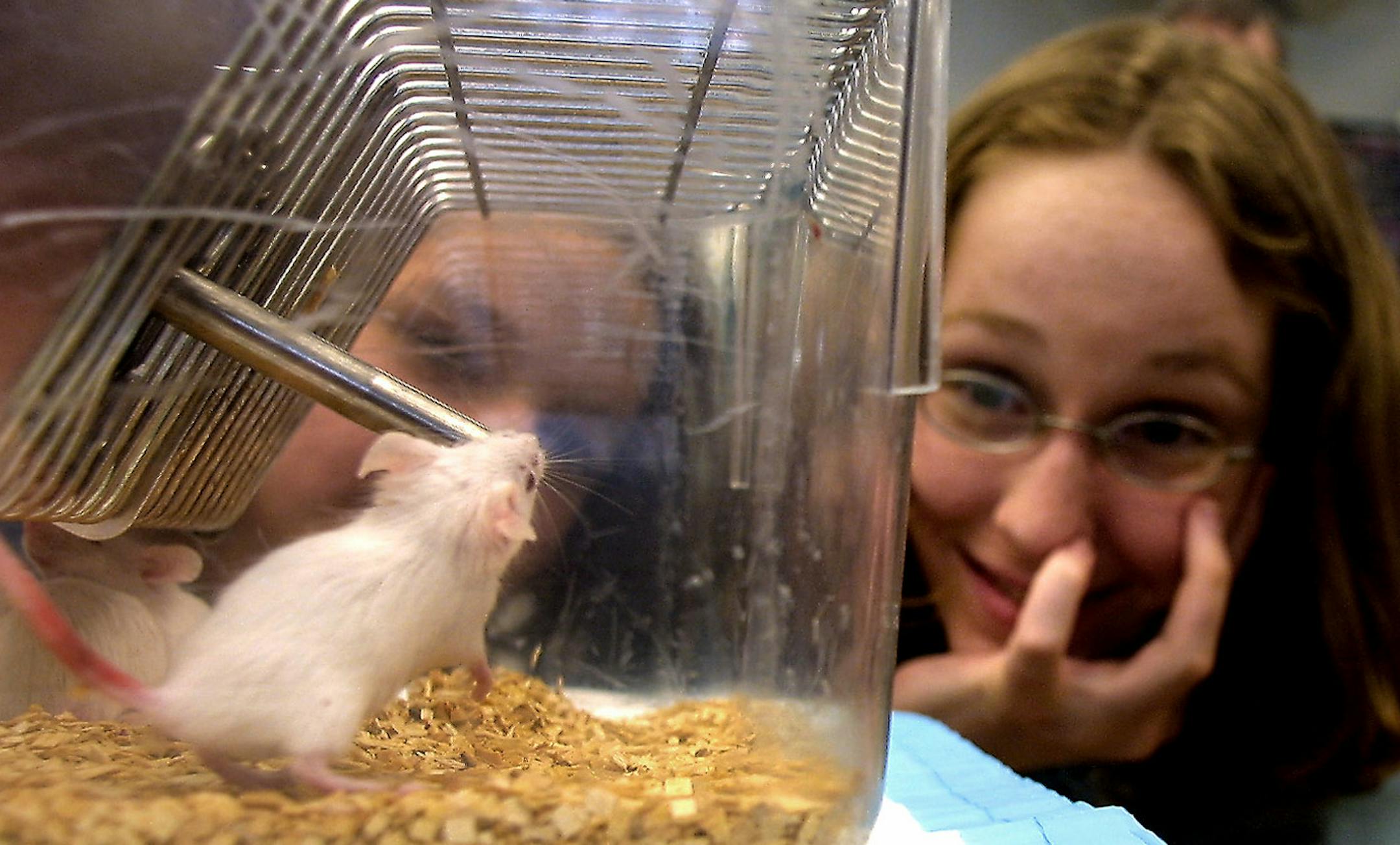
In a study published in the journal Neuron, the researchers say a genetic mutation that blocks histamine also leads to Tourette syndrome, a neurological disorder that can cause various tics, such as repeated motions and involuntary verbal utterances. But experts say that the way the researchers studied the gene mutation — a specially bred mouse — might be the real breakthrough.
In 2010, the researchers studied a family of eight children, all with Tourette's. The father also had the disorder. They all carried a mutation of a gene known as histidine decarboxylase (HDC), which blocks histamine production.
It wasn't until this study, however, that they were able to prove that the gene mutation and the blocked histamine caused Tourette syndrome. Although histamine is a compound most commonly associated with allergies and the immune system, it also serves as a neurotransmitter, a chemical that sends signals throughout the brain. To measure levels of histamine in the brain — and determine what happened when those levels were disrupted — the scientists needed animal models.
The researchers took two groups of mice, one bred to have the disorder, and a control group. They examined the activity of histamine and dopamine — another neurotransmitter that plays a role in Tourette's — in the part of the brain known as the basal ganglia. "We found that the neurons are more active in the animal model [with Tourette's] and that they had a little more … dopamine," said Christopher Pittenger, senior author. But when researchers increased histamine levels in the mice's brains, they found that doing so reduced dopamine levels.
Exactly why increased activity in the basal ganglia can lead to Tourette's isn't understood, Pittenger said. "What I really hope is that this is going to lead us to new insights," he said.
The specific gene mutation is very rare — in fact, it's never been found outside of that one family. But Pittenger said "all causes of Tourette syndrome are likely to be rare," and each one could shed light on how the histamine/dopamine imbalance affects brain function. "That is what this animal model puts us in a position to do," he said.
The Centers for Disease Control and Prevention identifies other possible causes, including smoking and drinking during pregnancy, complications during birth, and streptococcal infection.


