I almost didn't go at all. I had no campsite reservation and was yet to be persuaded that spending the night in a tent in the middle of a gator-filled swamp wasn't pure insanity.
But I'm one of those travelers who can't pass up an opportunity, however life-threatening and soggy it sounds. So when I entered the visitors' center at the Okefenokee National Wildlife Refuge, which straddles the border between Georgia and Florida, and was told they just happened to have a walk-up camping permit for that night, I started loading the canoe.
Ironically, like so much of our public lands, the reason we can access the Okefenokee area at all is because of previous logging activity. Back in the 1800s the Okefenokee Swamp was heavily dredged in an attempt to drain it so loggers could more easily get at the vast cypress groves.
That trick didn't work, but 11 1/2 miles of canals were eventually cleared, and by 1927 the Hebard Cypress Company had removed more than 430 million board feet of timber from the area. Ten years later an executive order designated the area a National Wildlife Refuge, and today its nearly 400,000 acres constitute the largest (and wettest) national wildlife refuge in the eastern United States.
Gator
But I'm not thinking about logging as I slip the tip of my huge rented canoe silently out of the familiarity of my terrestrial world and into the watery unknown of the Okefenokee, stained coffee-brown from tannic acid leaching out of some of the swamp's 621 species of plants, including the towering Spanish moss-covered cypress trees that those loggers wanted so badly.
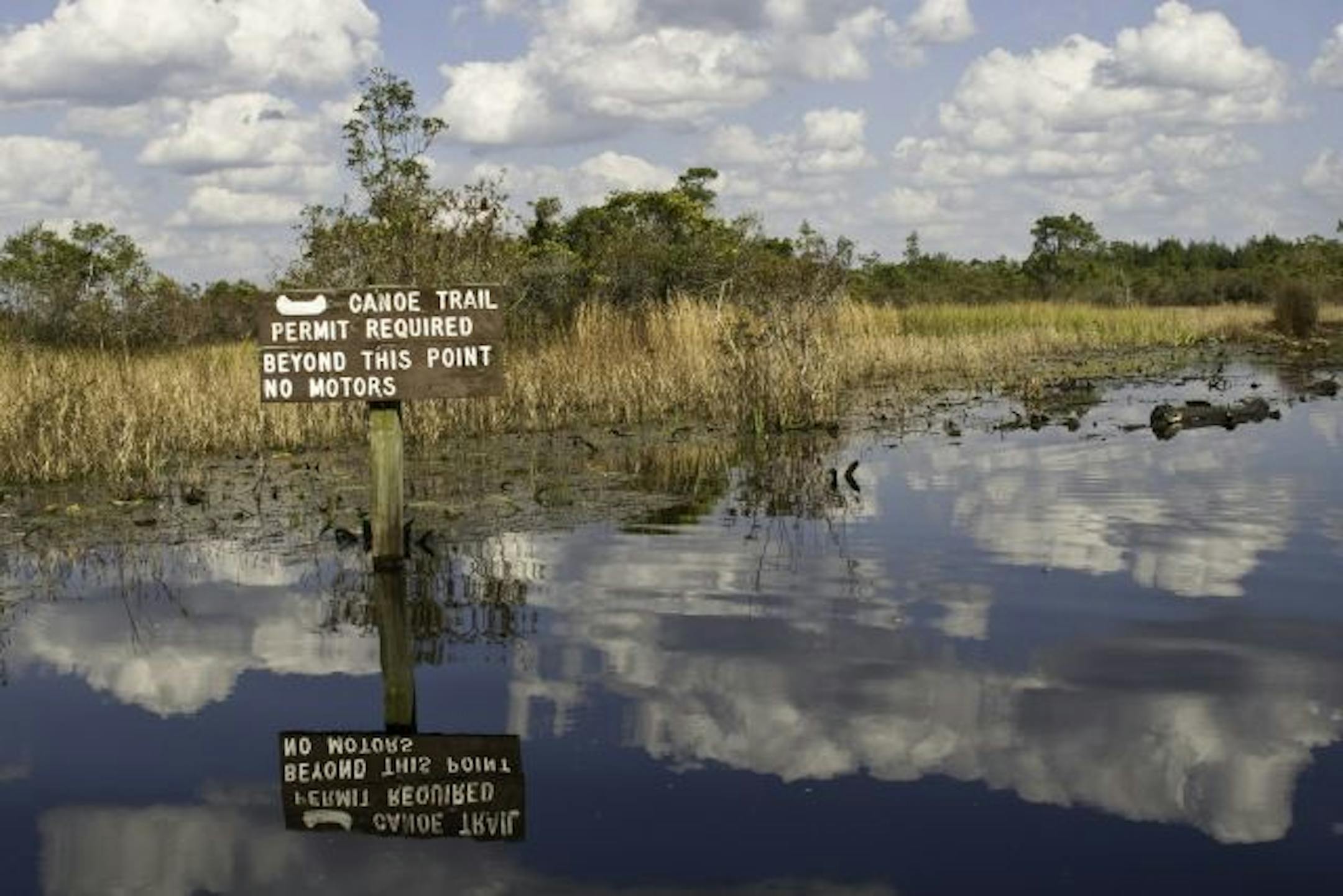
To make a landlubber's entry into this watery world a little easier, the refuge has taken the original 11 1/2 miles of logging canals and expanded them to create 120 miles of easy-to-follow, well-signed and color-coded canoe trails with a series of designated camping areas along the way. I headed out on the Purple Trail toward the Round Top Shelter.
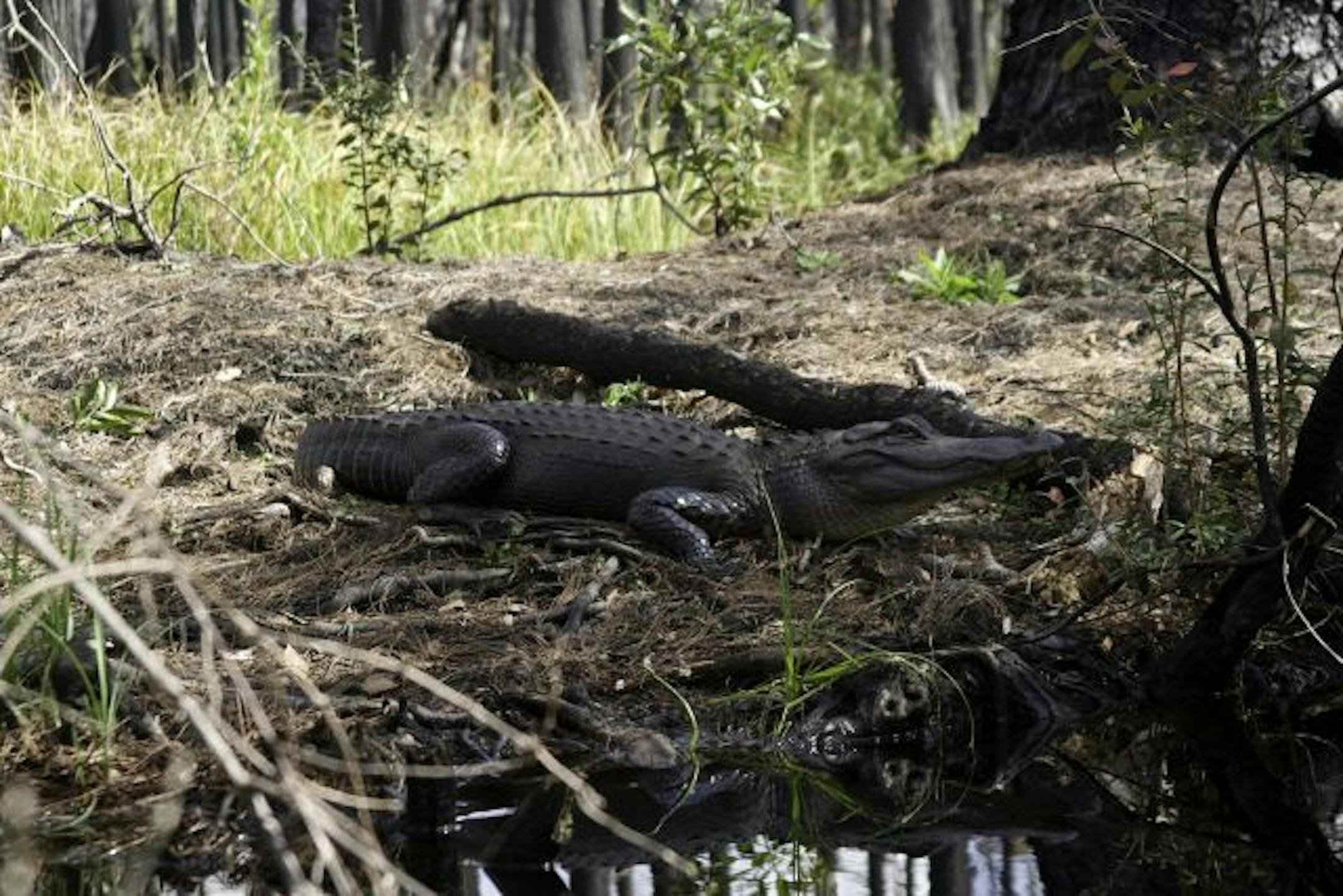
Within half a mile of the put-in, the once-endangered American alligator, one of 64 species of reptiles in the refuge, made it clear that I wasn't in Kansas anymore. They were everywhere -- in the water, under my canoe, sunning on the banks -- often with their massive jaws ajar as if to make sure I could see the rows of certain death inside.