

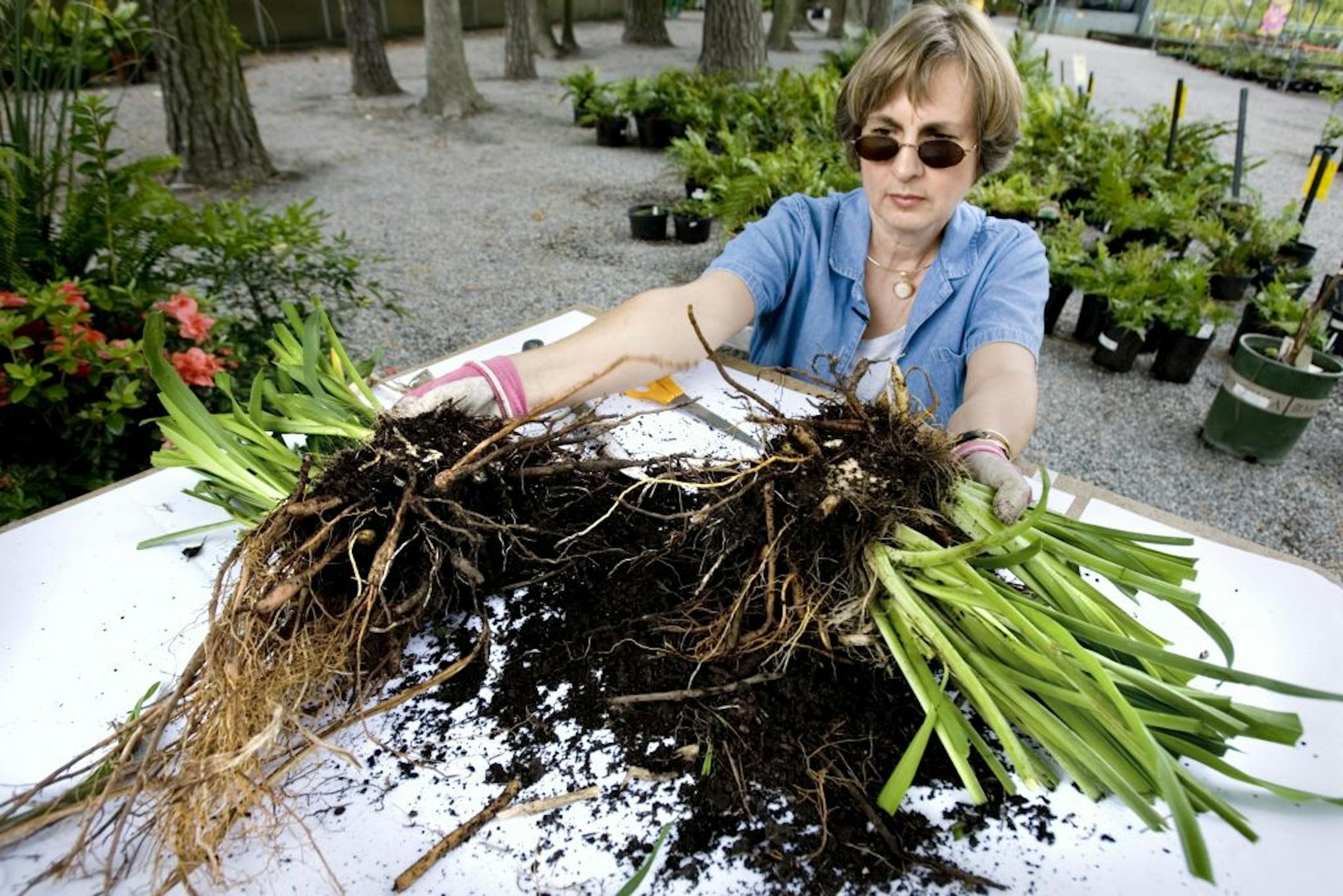
Who doesn't love free plants? While dividing perennials helps to keep your garden neat, healthy and blooming at its best, the prospect of making more plants motivates many gardeners to do the math -- and dig in.
Right now is a great time to expand your landscape without a single trip to the garden center. Many perennials can be divided in early spring, when tender shoots emerge from the ground with lots of stored energy in their root systems. That, combined with abundant soil moisture and cool weather, will allow plants to recover from the dividing process during the growing season.
Recommendations from the University of Minnesota Extension Service call for perennials to be divided about every three years, but your plants may tell you when it's time. Plants that are crowded, showing signs of fungal disease, flopping, dead at the center or producing smaller blooms will benefit from dividing.
How to divide
You can add to your dividing success by doing a little planning:
A few days before, water -- but don't drown -- the plants you intend to divide. If you can, wait for an overcast day. (That will help prevent damage to young leaves from evaporation.)
Have a pail of water handy and keep divisions moist until you can replant them. (You can store divisions for later planting by wrapping them in damp newspaper and keeping them in a cool, shady place.)
When removing the plants, leave plenty of room for the roots by digging at least 4 to 6 inches away from the crown. If you have larger, overgrown plants, you may have to break them into manageable pieces while the plant is still in the ground.


