

Early spring means longer days and rising temperatures, both of which make life a bit easier for our back-yard birds. They don't have to work as hard to stay alive each day, so they can start to court as nesting season approaches.
But don't be fooled by the kinder, gentler weather: Spring is not a time of abundance in nature. In fact, just the opposite is true. By this time of year, resident birds have picked Mother Nature's cupboard bare over the past months.
Finches have pulled all the seeds out of the scruffy flower heads, and cardinals and stay-behind robins have eaten much of the dried fruit on shrubs and trees. Woodpeckers and nuthatches must work harder to find the high-protein spider eggs and larvae that keep them going. Even birds that squirrel food away, such as blue jays and chickadees, find their stockpiles now depleted.
Until nature sets out a feast of buds, insects and plant nectar, birds will have to intensify their food searches. That's why many of them turn to back-yard bird feeders to sustain their high-energy lives. And migrants -- many of them eager for feeder foods to tide them over -- are starting to arrive, too. Conclusion: Keep feeders filled.
Match food to species
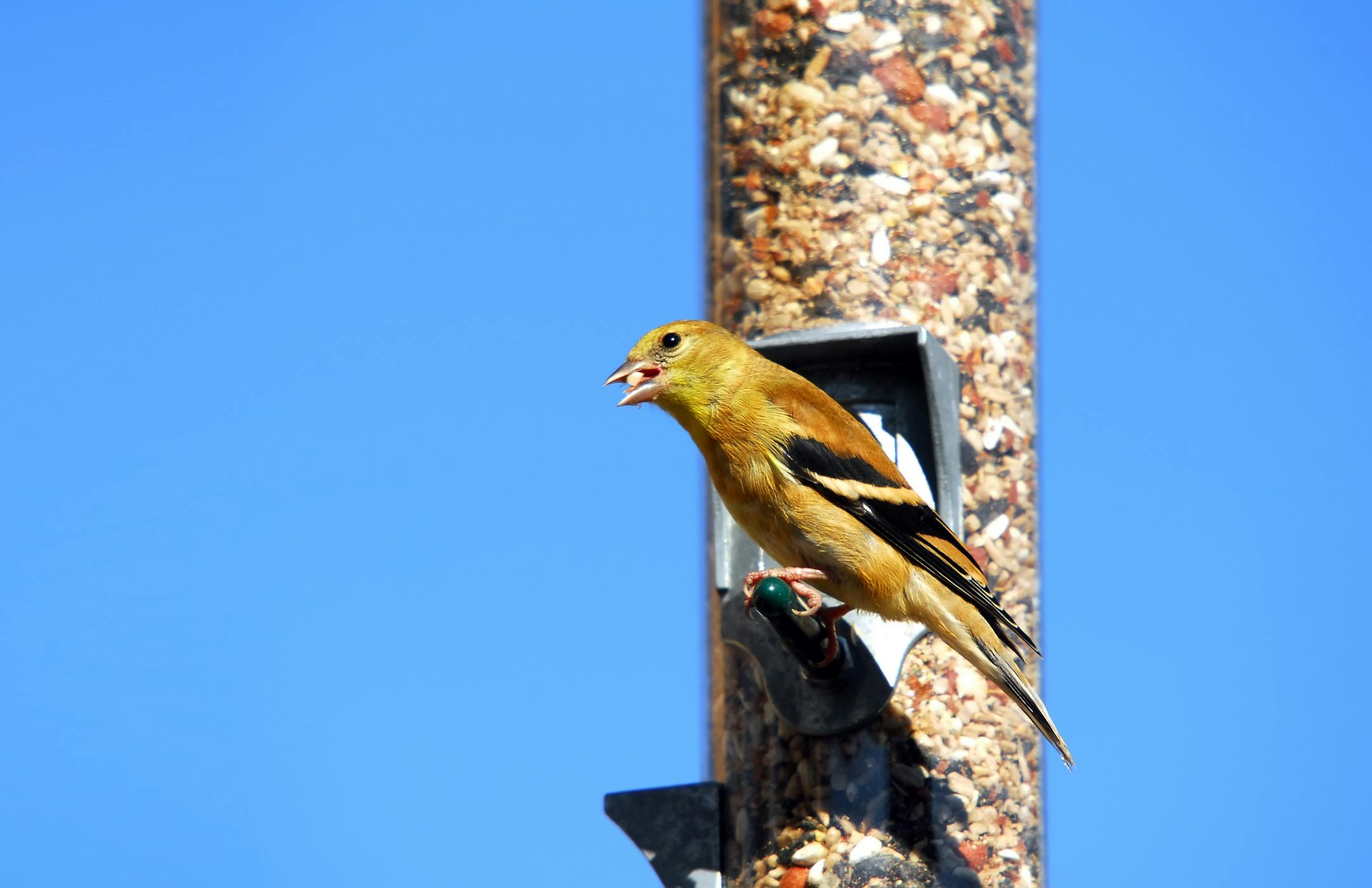
Goldfinches are turning gold again as they slowly molt from their drab winter feathers. They may turn up at feeders in large flocks to feed frenetically on nyjer seed. Tiny nyjer is a great source of fat, carbs and protein for finches.
Black-oil sunflower seed is popular with a broad range of birds. They're just the right size for chickadees, who zip in, snatch a seed, then perch on a branch to tap open the hull with their small but powerful beaks. Cardinals seem to ruminate as they maneuver a black-oil sunflower seed around in their mouths, splitting off the hull for the high-calorie treat inside. These seeds (called oilers by birders) are well-named. Their oil content can reach 49 percent, making them a high-energy food for birds.
Nuthatches and blue jays are fiends for calorie-laden nutmeats. Nuthatches like to perch upside down to peck at shelled nuts in a wire cage, while jays carry off whole peanuts in the shell to eat later. Downy and hairy woodpeckers visit peanut feeders many times a day and like to top off a meal with some pecks at a suet cake.


