

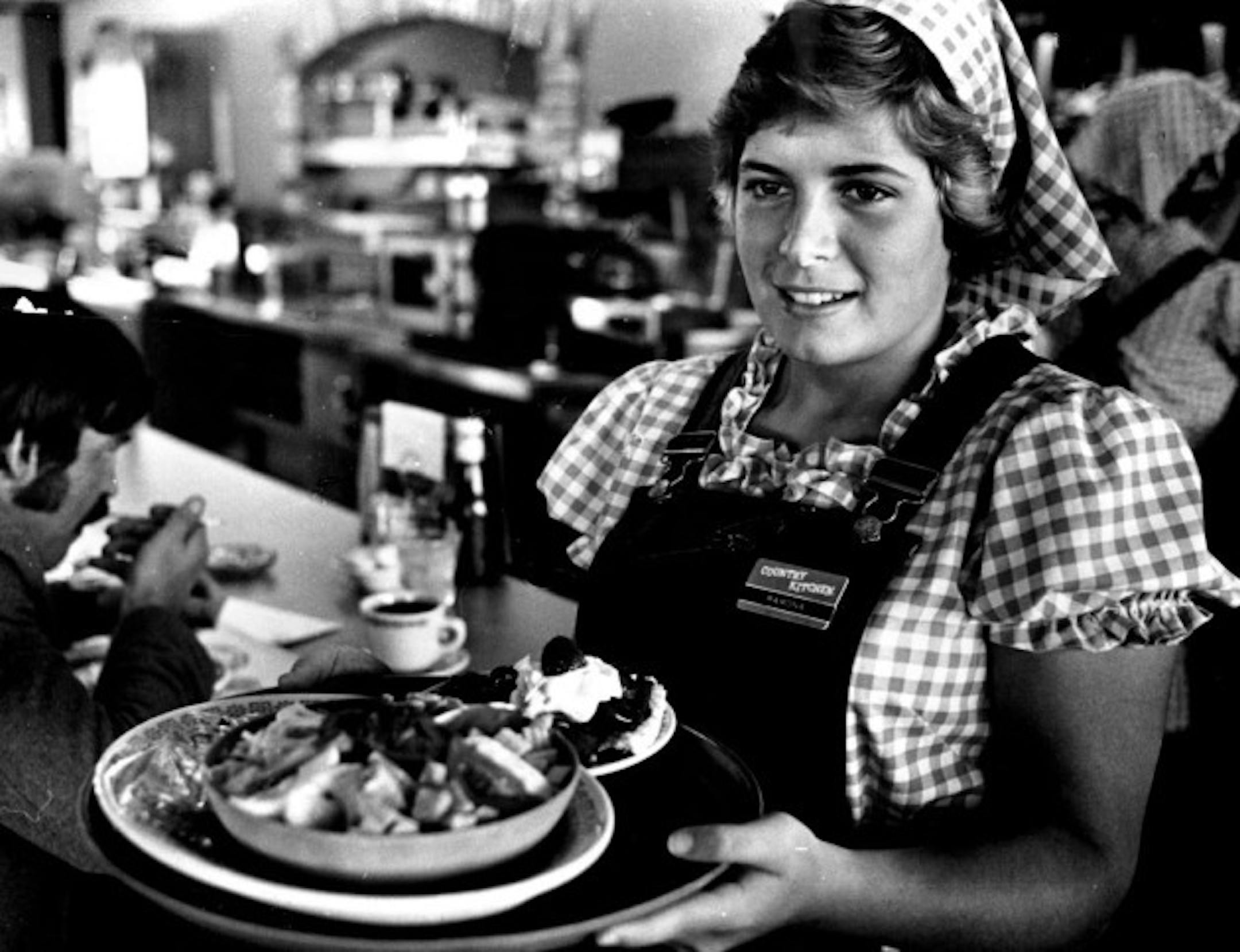
The Minneapolis Tribune's Thursday Food section devoted its Oct. 9, 1975 cover to glimpses inside the lives of Twin Cities restaurant servers. "The only time most of us think about waiters and waitresses is when something is wrong," starts the editor's note. "The coffee cup is empty, the meat undercooked, the side order of fried onions missing. Waiters and waitresses spend their lives smiling even though their feet hurt, being pleasant to cranky customers and husting for tips from people who many leave anything from $50 to 50 cents for a $12 meal. Why do they do it? Staff Writer Irv Letofsky interviewed five of them to find out."
Let's just say that times have changed during the intervening 35 years, but some aspects of the job remain timeless. Letofsky's subjects included:
Eighteen-year-old Ramona Eicher (pictured, above), a senior at Mounds View High School who had just started working at the then-new Country Kitchen in Roseville. "She went through the Bloomington training center, where she studied slides on how to wear the orange-and-white checkered uniforms, when to fill the salt and pepper shakers, the protocol of punching in, etc. 'Opening day we got all hyper,' she remembered. 'On my first table I didn't know if the hostess was supposed to bring the menu or me, whether you bring the water or the coffee first. The first night was a mad crush.'"
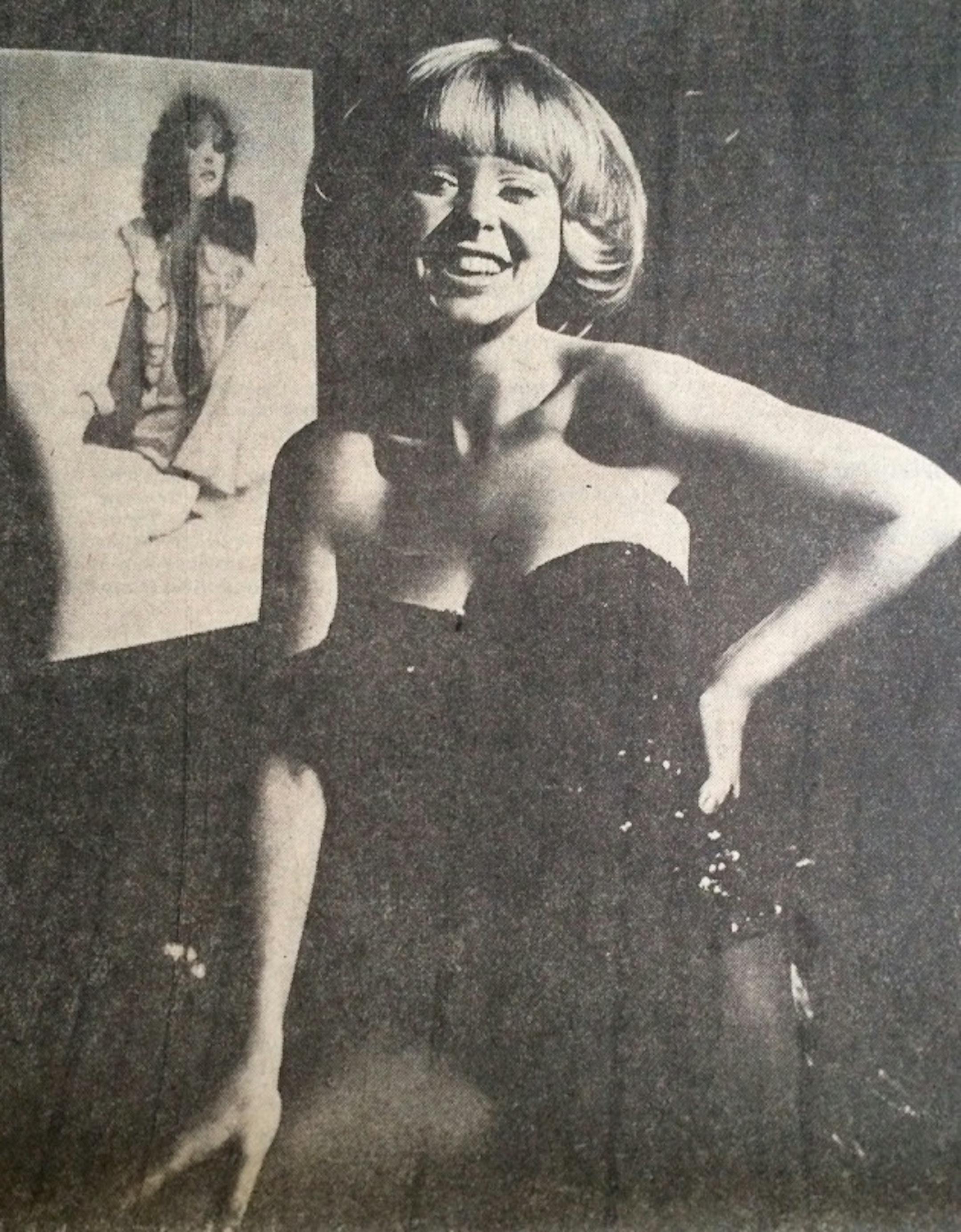
Becky Erbes, 23 (pictured, above), "has a well-organized figure that brings honor to her costume -- a black, low-cut, tights-like, Bunny-type uniform with sequins and the leg-flattering but otherwise foot-pinching three-inch spiked heel shoes. For the noon luncheon in the Apartment, the moody basement retreat at the White House complex in Golden Valley, she circulates in a basic bikini. The management prefers her in the new Rudi Gernreich thong swimsuit and black stockings, but it is 'kind of brief' (she says in understatement) and exposes more backside than is comfortable. Owner Irv Schectman rejects the term 'cocktail waitresses' for the help, preferring 'Bambi Girls.' He looks applicants over for their decorative possibilities, then instructs the successful ones on the rules of the room. For example, you don't sit down with customers. You don't smoke or drink. You don't bend over at the lowly cocktail tables ['You crouch,' Ms. Erbes said. 'Like a deep knee bend. After the first night there I was pretty stiff.'] You maintain decorum by avoiding slang. 'Certainly' is preferred to 'O.K.,' 'gentlemen' to 'guys.' And you never date the customers. 'Mr. Schectman wants a certain type of atmosphere and I think that's approriate. You cold attract the wrong types.'"
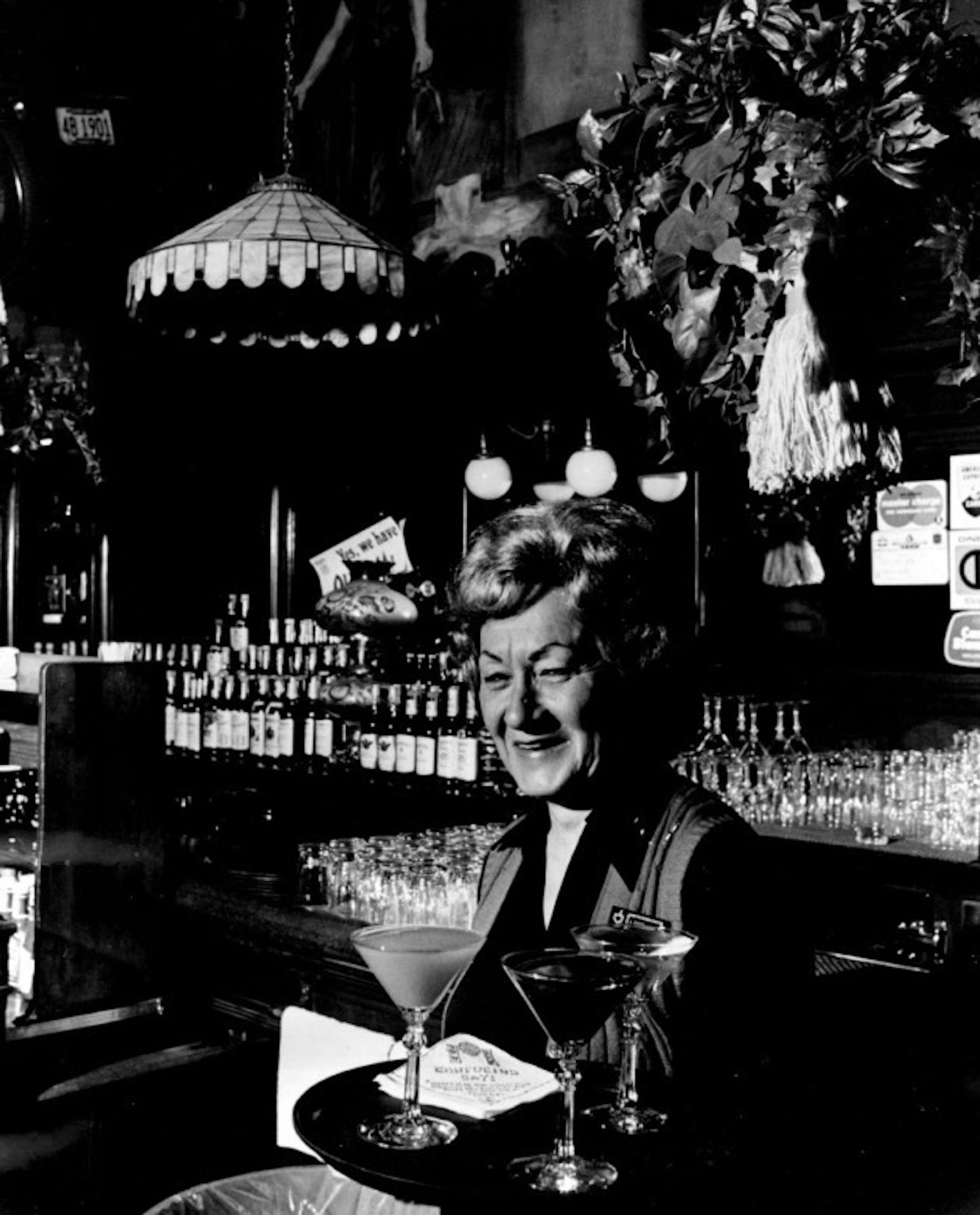
Lorraine Heath of the Gay 90s (pictured, above), who "has spent 38 of her 55 years in the service business." The 15-year veteran of "the relic theater-bar-restaurant that recently turned discotheque" said that she didn't know why she liked her job. "I still get tense every night. But I like meeting people. Even if I could do office work, I wouldn't. It would be too monotonous."
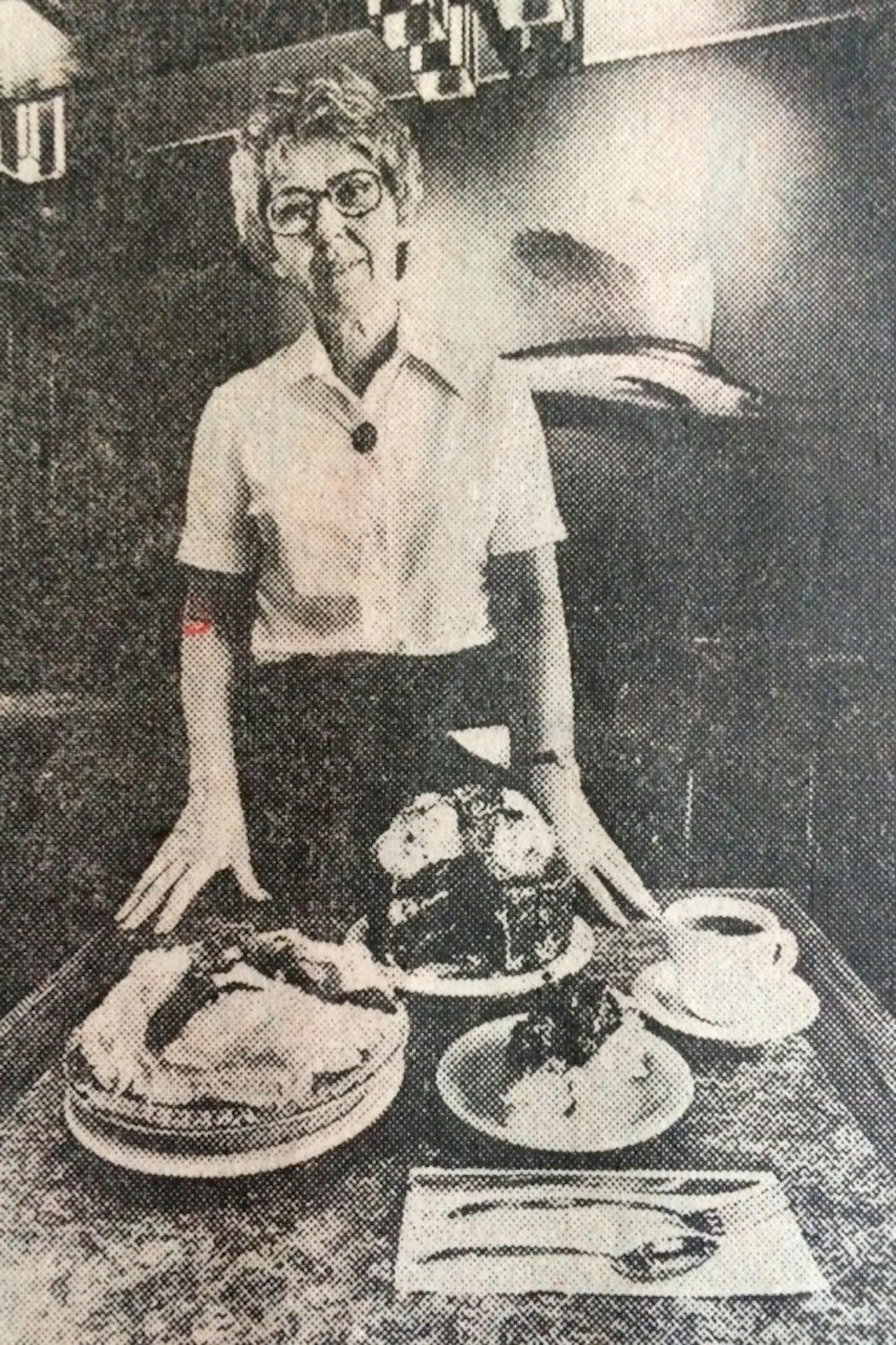
Phyllis Laiderman of Lincoln Del (pictured, above), "who has spent 13 years in and around chopped liver and chocolate pies and has maintained a reasonable girth. It is difficult to comprehend. 'Customers tell me I'm so lucky because I'm thin,' she said. 'Well, first of all, I'm not that thin. But you find that you just eat lighter when you're working. All the waitresses. I don't know why. But there's not a dessert here that I don't love today as much as when I started.'"
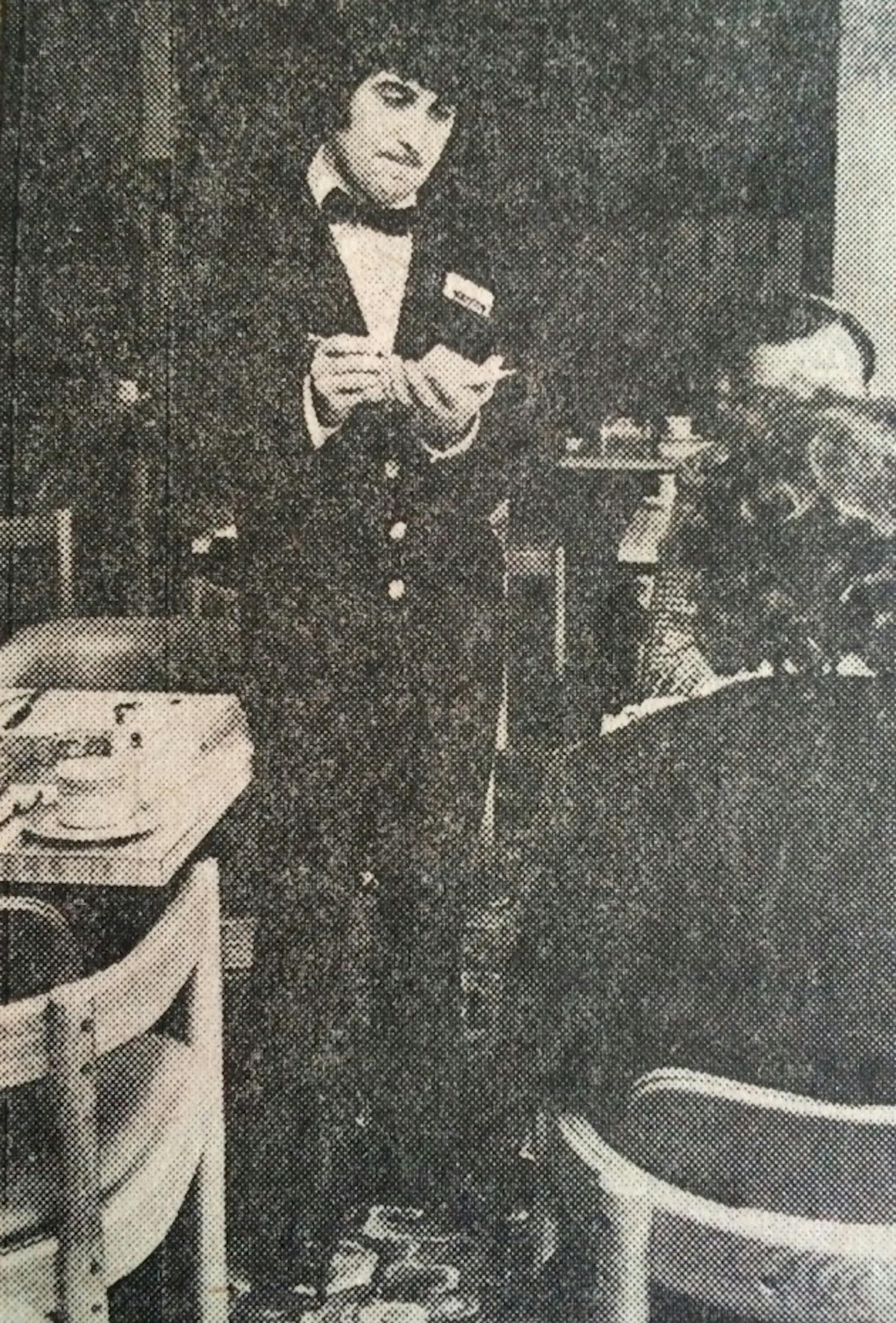
And a 27-year-old Michael Brindisi (pictured, above), who went on to become artistic director at the Chanhassen Dinner Theatre in 1987. Here's his story, in full:
For actor-director Michael Brindisi, 27, his recent debut day as the first waiter among the array of waitresses at the Promenade Room in the Sheraton-Ritz Hotel was socko boffo -- $22 in tips on top of his $1.73-an-hour salary: "I told almost everybody I waited on that this was my first table."


