

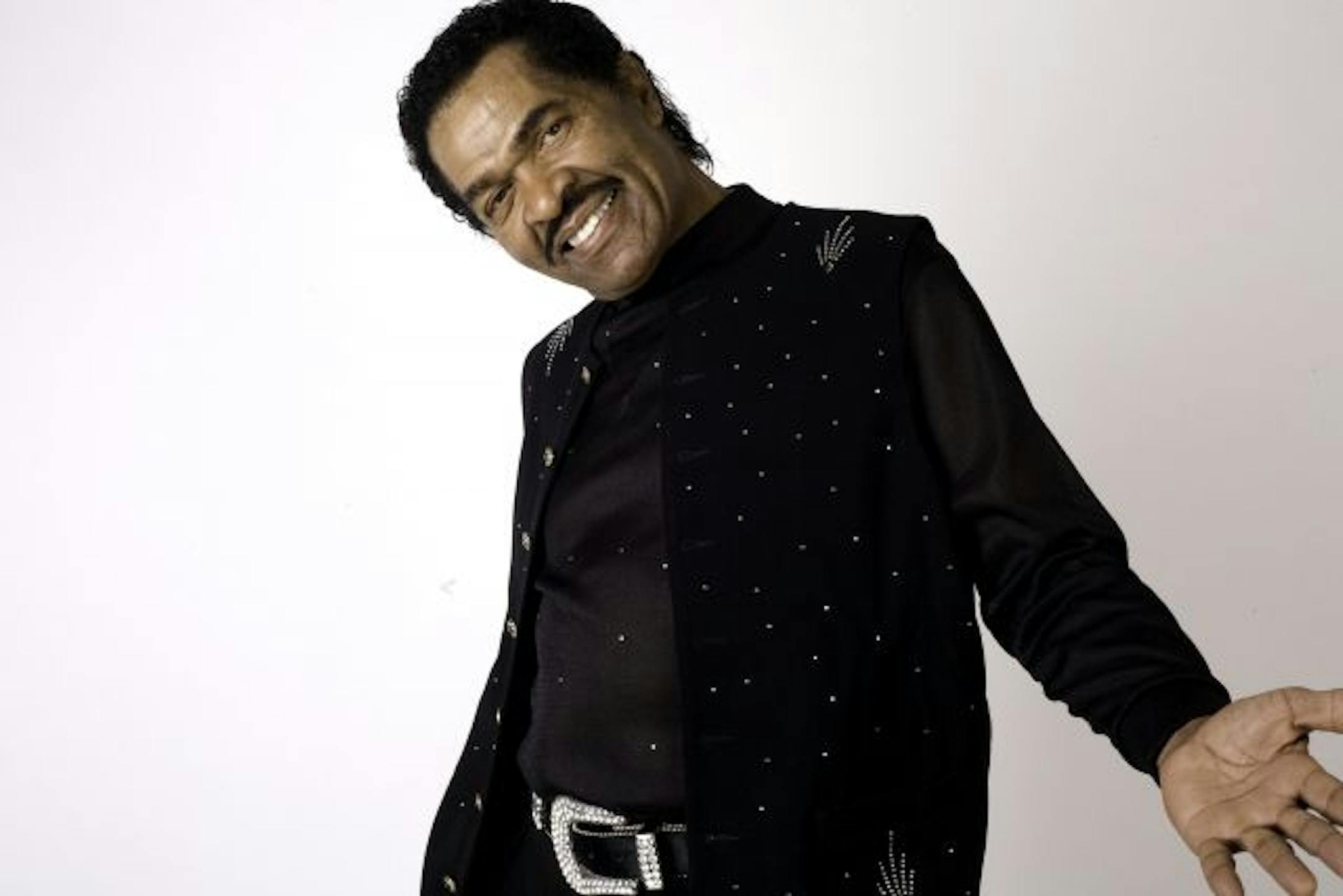
Like many musicians in their 70s who have made their living on the road, Bobby Rush is a memorable storyteller. Cue him with a subject and he's off and running.
Take, for instance, the "chitlin circuit" -- the string of roadside clubs in the Deep South where Rush was a star, thanks to his knack for entwining bawdy humor and picaresque anecdotes around soulful but hedonistic blues in songs such as "Chicken Heads" and "Bow-Legged Woman, Knock-Kneed Man."
"They named it the chitlin circuit because sometimes you got paid with a plate of chitlins, or hot dogs and hamburgers," he said. "Early on, I got so good they'd make me eight hamburgers; I'd eat one and sell seven [to the audience] for 25 cents apiece. That was more than the 15 cents regular price, but coming from me it was like an autograph."
Chicago was the epicenter of the blues in the 1950s, when Rush moved to the city's west side from his native Louisiana. He rubbed elbows with all the major figures, from Muddy Waters, Howlin' Wolf and Little Walter to nascent rockers Chuck Berry and Bo Diddley.
His connections and keen ears helped him land then-young guitarists such as Freddie King and Luther Allison for his bands. And then there was the time, Rush remembered with a chortle, when he got legendary slide guitarist Elmore James to play a half-dozen gigs in his group free of charge by hooking up James with the wife of the local funeral home director.
While many Chicago blues legends cashed in on the attention lavished by young white rockers during the '60s and '70s, Rush stayed loyal to the circuit, eventually relocating to Jackson, Miss., and honing his act to the point where he was emcee, singer, guitarist and harmonica player at different points.
"Sure, I wanted to cross over to the white audience, but I didn't want to cross out the blacks," he said bluntly. "I'm proud to be a blues singer who comes from the clubs where women are shakin' their booties and there's sawdust on the floor. With Bobby Rush, the conversation doesn't change according to where I am. What you see is what you get."
But something did change two years ago, when Rush released "Raw," a stark, solo blues album that relegitimized him in the eyes of some and exposed him -- crossed him over -- to a new audience. It led to a solo tour that eschews the chitlin circuit for tonier clubs such as the Dakota, where Rush will perform Sunday.


