

It's not difficult to imagine dinosaurs prowling the wide-open spaces of the American West. That's especially true in Montana, where the state's plains go on and on and lonely highways weave ribbons through the vastness. At the crest of every rolling hill it wouldn't seem out of place to see a triceratops rumbling along.
Today we call it Montana Big Sky Country, but what has been unearthed down below is just as impressive. Perhaps more so.
My son fell in love with the prehistoric behemoths as a preschooler. It's a common obsession of little kids, and we spent lots of time talking about terrible lizards (T. rex), earth shakers (seismosaurus) and all sorts of raptors (veloci-, pyro- and micro-). He outgrew his dino period quickly; they sank their teeth into me a bit longer.
So on a driving trip through Montana last summer, I grabbed the brochure for the Montana Dinosaur Trail (yes, there is such a thing) and plotted to visit as many of the 15 stops as I could. The goal of getting my "Prehistoric Passport" stamped at each locale was dashed when I was overruled by the other occupant of the car. Pick a couple, he said.
So that's how I ended up plunking down $5 to see one of the world's largest dinosaurs snaking around the inside of a prefab metal building in Bynum, Mont., and then spending a day getting up close and personal with the fossils at the Museum of the Rockies in Bozeman.
Some of the biggest dinosaur discoveries in the world have been in Montana.
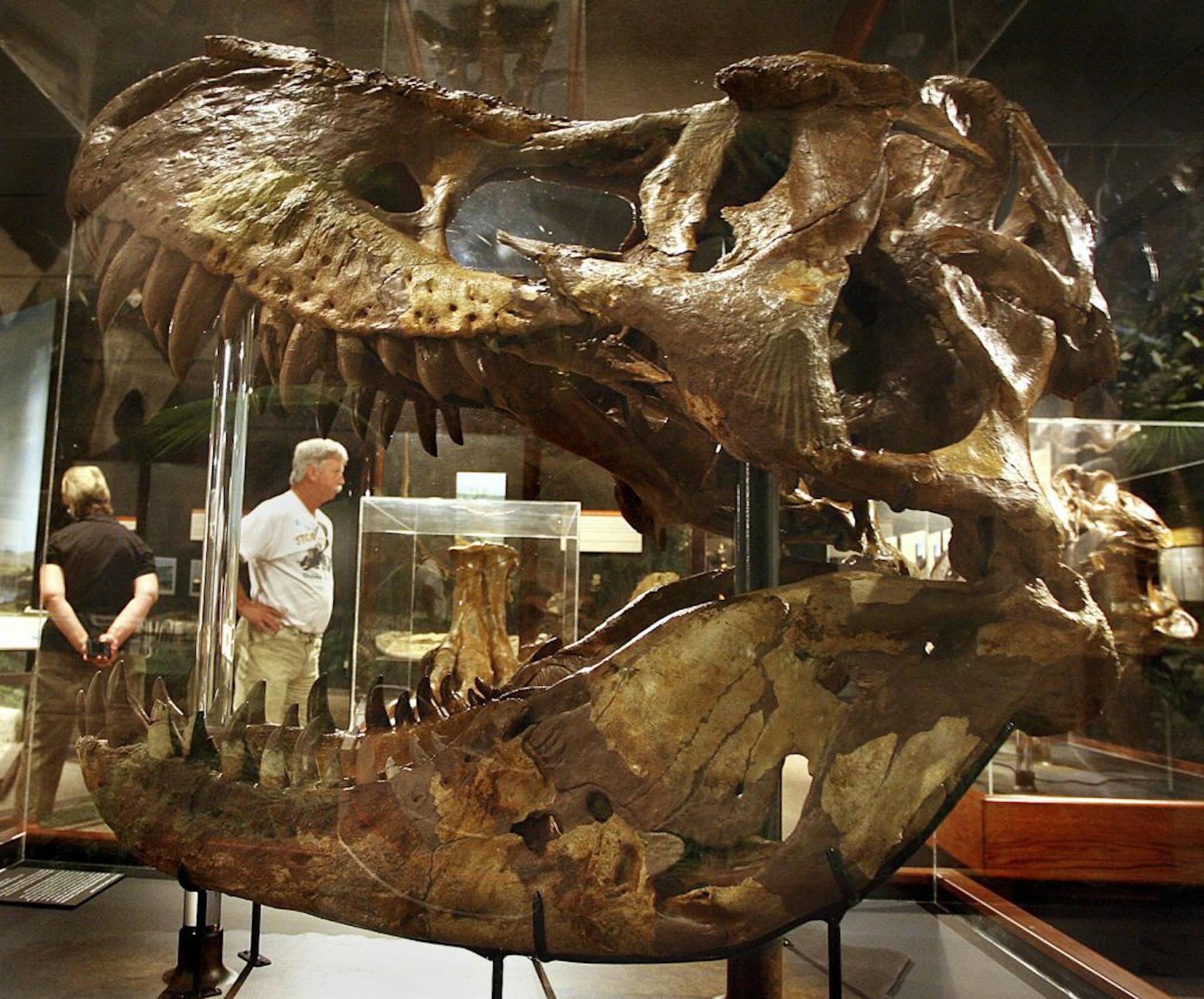
The first Tyrannosaurus rex fossil and the largest T. rex were discovered there. The world's "best preserved dinosaur," Leonardo the Brachylophosaurus, is at the Dinosaur Field Station in Malta, Mont. There's even a state fossil, the maiasaura.
While there are some Dinosaur World elements to the state's celebration of prehistoric creatures, paleontology is a big and serious business. Scientists and graduate students toil on digs in their Indiana Jones hats, and there are summer programs where novices can help excavate prehistory. Some of the state's biggest discoveries have gone to large museums such as the Smithsonian.


