
Ford relies on finance unit to ring up profits

Analyst calls it the "ballast that keeps the ship steady."

Bloomberg News
February 5, 2020 at 12:11AM
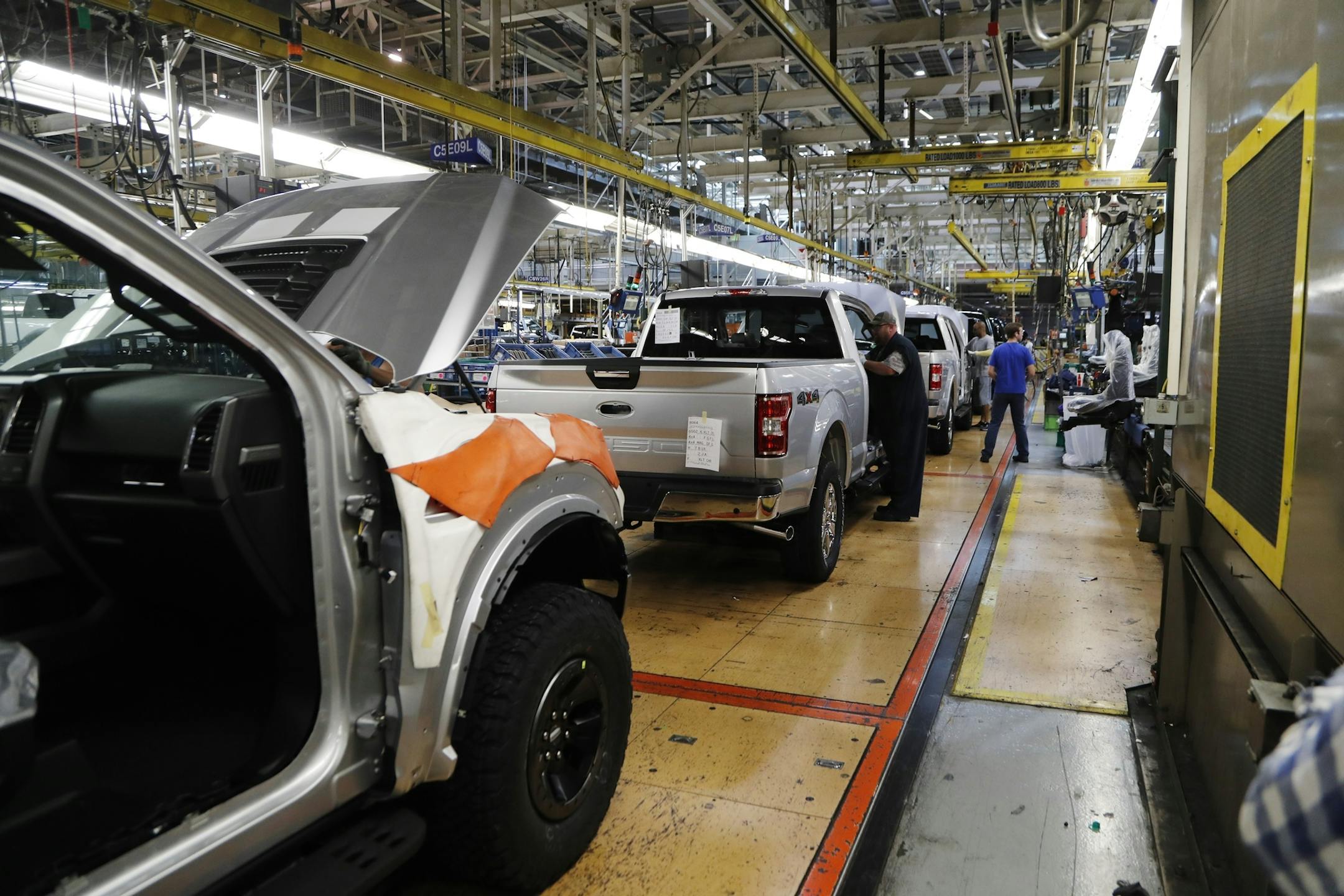
FILE - In this Sept. 27, 2018, file photo a United Auto Workers assemblyman works on a 2018 Ford F-150 truck being assembled at the Ford Rouge assembly plant in Dearborn, Mich. Ford is recalling its popular F-150 pickup truck in Canada to fix a problem with electric tailgate latches, but identical trucks aren't being recalled in the U.S. (AP Photo/Carlos Osorio, File)
FILE - In this Sept. 27, 2018, file photo a United Auto Workers assemblyman works on a 2018 Ford F-150 truck being assembled at the Ford Rouge assembly plant in Dearborn, Mich. Ford is recalling its popular F-150 pickup truck in Canada to fix a problem with electric tailgate latches, but identical trucks aren’t being recalled in the U.S. (AP Photo/Carlos Osorio, File) (The Minnesota Star Tribune)

Aside from F-Series pickups hauling in gobs of profit, Ford Motor Co.'s automotive business isn't carrying much weight lately.

Thank goodness for the finance guys.

Ford Credit, the lending arm that has become accustomed to propping up the company in good times and bad, now generates about half the automaker's profit, up from 15% to 20% in the past.

Ford Credit is designed to perform a relatively simple task: make loans to the dealers stocking vehicles, then the consumers who buy them. Now, Ford is relying on its finance unit to help fund multibillion-dollar outlays on electric and self-driving cars while it simultaneously racks up $11 billion in charges from a restructuring that could take years.

"It's like the ballast that keeps the ship steady," said Lawrence Orlowski, an analyst at S&P Global Ratings. "It's a balancing act."

Ford's been selling fewer and fewer U.S. vehicles for the last three years, and it's losing billions overseas, including in China, where its annual vehicle deliveries fell by half during that time span.

On Tuesday, the company reported that profit last year plunged by more than $3.6 billion, weighed down by slowing U.S. sales, the cost of a botched SUV launch and some big pension expenses.

The Dearborn, Mich., automaker said it made $47 million in 2019, down from a $3.68 billion profit a year earlier. For the fourth quarter the company lost $1.7 billion, or 42 cents per share, hit by $2.2 billion in one-time pension costs.

The second-largest U.S. automaker would be far worse off without its Ford Motor Credit Co. unit, which is effectively funding turnaround efforts by routinely borrowing in the debt markets and paying a dividend back to the parent company. The credit unit is expected to contribute almost $3 billion annually to Ford over the next two years, according to Benchmark Co. analyst Mike Ward. That's up from just a $400 million contribution in 2017.

Ford Credit borrowed around $10 billion in the U.S. investment-grade bond market in the past year, apart from funds raised in other currencies and securitized debt. By contrast, it has been more than three years since Ford Motor last issued bonds, according to data compiled by Bloomberg News, as investors fretted about the company's high debt load and slowing sales.

Credit graders are responding to Ford's poor automotive performance, with Moody's Investors Service the most aggressive so far. It downgraded Ford to junk in September, casting doubt on Chief Executive Jim Hackett's turnaround plan in the process.

S&P then cut Ford to the lowest investment-grade rating in October after the carmaker lowered its full-year profit forecast. Another downgrade by S&P would take Ford out of major high-grade indexes, which investors and analysts have contemplated for more than a year. If cut, Ford would be the largest U.S. nonfinancial high-yield issuer, which could add near-term pressure to its funding costs. It has about $35 billion of debt in the Bloomberg Barclays U.S. investment-grade index.

It's not going to get any easier for the carmaker. Amid growing fears of an industry wide downturn, Ford is rolling out a critically important series of new sport-utility vehicles and redesigning the F-150, its most profitable and best-selling model. Analysts are already flagging cost and execution risk tied to those introductions, especially after Ford botched the launch of its Explorer SUV last year.

"It's quite clear Ford is not where it should be, but the finance arm is a bright spot," said David Whiston, an equity strategist with Morningstar in Chicago who rates the automaker's shares the equivalent of a buy. "Obviously you want the whole company operating at full power, which you don't have right now."

The Associated Press contributed to this report.

about the writers

about the writers

Molly Smith

Keith Naughton

More from Minnesota Star Tribune

See More
card image
J. SCOTT APPLEWHITE, ASSOCIATED PRESS/The Minnesota Star Tribune

The "winners" have all been Turkeys, no matter the honor's name.

In this photo taken Monday, March 6, 2017, in San Francisco, released confidential files by The University of California of a sexual misconduct case, like this one against UC Santa Cruz Latin Studies professor Hector Perla is shown. Perla was accused of raping a student during a wine-tasting outing in June 2015. Some of the files are so heavily redacted that on many pages no words are visible. Perla is one of 113 UC employees found to have violated the system's sexual misconduct policies in rece