For would-be Reagan assassin, freedom only days away

The Associated Press
July 28, 2016 at 12:35AM

WASHINGTON — For the past decade, the man who shot President Ronald Reagan has quietly spent a growing number of his days living with his 90-year-old mother in a gated community in Williamsburg, Virginia. On Wednesday, a judge finalized John Hinckley Jr.'s transition to freedom, ordering that Hinckley can permanently leave the psychiatric hospital where he was confined after the assassination attempt.

The order, which cannot be appealed, has been in the works for years, despite opposition by prosecutors, who sought numerous restrictions on Hinckley's freedom, most of which were agreed to by Judge Paul Friedman. Hinckley could leave St. Elizabeths Hospital as early as Aug. 5.

Hinckley, now 61, was found not guilty by reason of insanity in the March 30, 1981, shooting fueled by his obsession with the movie "Taxi Driver" and its teenage star, Jodie Foster. He used a pawn-shop revolver to fire six shots at Reagan, the president's aides and his protective detail outside a Washington hotel, wounding the president and three others.

Doctors have said for many years that Hinckley's mental illness was in remission, and Friedman concurred in his ruling. Hinckley was a "profoundly troubled 25-year-old young man" when he shot Reagan, the judge wrote, but has not exhibited symptoms of major depression or a psychotic disorder for more than 27 years.

"Mr. Hinckley, by all accounts, has shown no signs of psychotic symptoms, delusional thinking, or any violent tendencies," Friedman wrote. "The court finds that Mr. Hinckley has received the maximum benefits possible in the inpatient setting (and) that inpatient treatment is no longer clinically warranted or beneficial."

Hinckley was first allowed to leave St. Elizabeths in 2003 to visit his parents in Washington, and he began staying with them at their Williamsburg home overlooking a golf course in 2006. For the past two-plus years, he has been allowed to spend 17 days a month with his mother.

Many of the restrictions attached to Hinckley's temporary release will remain in place. He must attend individual and group therapy sessions and is barred from talking to the media. He can drive alone, but only within a 30-mile radius of Williamsburg, and the Secret Service will periodically follow him.

He also must return to Washington once a month so doctors can check on his mental state.

He will have to reside with his mother for a year. After that, he can live on his own, with roommates or in a group home in the Williamsburg area. If his mother is unable to monitor him in another setting, his brother or sister, both of whom live in the Dallas area, have agreed to stay with him until other arrangements are made. Hinckley's father died in 2008.

The government could not persuade the judge to order Hinckley to wear an electronic ankle bracelet and install a tracking device on his car.

Hinckley's longtime attorney, Barry Levine, said he and his client were gratified by the order, and that Hinckley has thrived under his new liberties.

"Mr. Hinckley recognizes that what he did was horrific. But it's crucial to understand that what he did was not an act of evil," Levine said in a statement. "It was an act caused by mental illness, an illness from which he no longer suffers."

Reagan's press secretary, James Brady, suffered debilitating injuries in the attack and died in 2014. Also wounded were police Officer Thomas Delahanty and Secret Service agent Timothy McCarthy.

Hinckley will be barred from trying to contact Foster, Delahanty, McCarthy or any of his victim's families.

Reaction to his release was mixed.

The late president's son, Michael Reagan, tweeted that others should forgive Hinckley the way his father did. But Reagan's daughter, Patti Davis, wrote on Facebook that "forgiving someone in your heart doesn't (mean) that you let them loose in Virginia to pursue whatever dark agendas they may still hold dear."

The foundation that honors Reagan's legacy said Hinckley should remain in custody, noting his responsibility for Brady's death, which was later ruled a homicide. Prosecutors declined to charge Hinckley with murder, in part because they would be barred from arguing he was sane at the time of the shootings.

"We believe John Hinckley is still a threat to others and we strongly oppose his release," the Ronald Reagan Presidential Foundation and Institute said in a statement.

McCarthy, now the police chief of the Chicago suburb of Orland Park, says he is a bit perturbed he didn't get a notification of the judge's decision and hopes it's the right one.

Dan Gross, president of the Brady Campaign to Prevent Gun Violence, declined to offer an opinion on Hinckley's release but used the occasion to call for background checks for all gun sales, which Reagan supported. He noted in a statement that it would be "just as easy" for a would-be assassin to buy a gun today as it was for Hinckley.

Some of his mother's neighbors in Williamsburg have long been wary of Hinckley.

Tom Campbell, who lives in the same gated community, has seen him strolling on a nearby walking trail.

"From a mental illness perspective, I just have some reluctance about having him roam free like this," said Campbell, 77, a retired manager at NASA. "How can he be allowed to roam the streets as if nothing happened?"

His wife, Mary Margaret Campbell, added: "I don't think a lot of these mental illness issues go away. One never knows what a mentally ill person will do."

In an April 2015 story , The Associated Press delved into Hinckley's attempts to integrate himself into the gated Kingsmill community and greater Williamsburg area. The story noted that he wore a visor or cap over his graying hair when he drove around the city in a Toyota Avalon, going to movies and eating at fast-food restaurants. It also found that he plays guitar, paints and cares for feral cats.

Hinckley, for his part, has been frustrated at times by people's reaction to him. According to court records, many of his attempts to do volunteer work have been rebuffed, although he has volunteered at a church and a local mental hospital. He also has applied for jobs at Starbucks and Subway, without success, saying he was dismayed by having the Secret Service tail him as he sought employment.

"It made me feel awkward and uncomfortable," he said.

But he said he also enjoyed meeting people outside St. Elizabeths, noting of his group therapy sessions: "It's really refreshing to be in a group with people who aren't completely out of their minds."

Prosecutors cited what they called a history of deceptive behavior in arguing against more freedom for Hinckley. In July 2011, prosecutors said, Hinckley was supposed to go see a movie and instead went to a bookstore, where Secret Service agents saw him looking at shelves that contained books about Reagan and the assassination attempt, though he didn't pick any of them up.

Some of the conditions of Hinckley's leave could be eliminated or reduced within 12 to 18 months, but he still could be taken back to the hospital if he violates the remaining conditions.

Reagan died in 2004 at age 93.

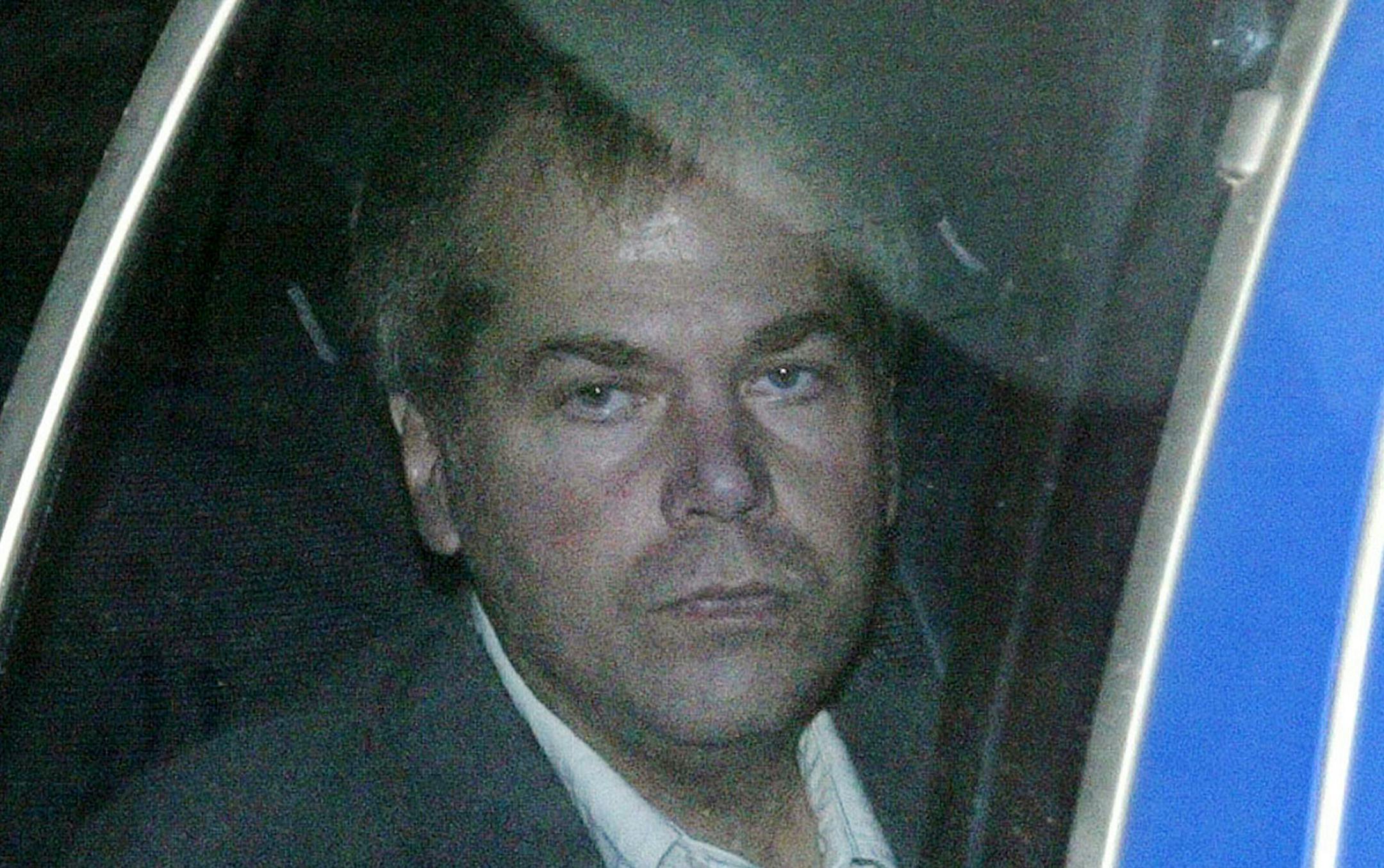
FILE - In this Nov. 18, 2003 file photo, John Hinckley Jr. arrives at U.S. District Court in Washington. The last man to shoot an American president now spends most of the year in a house overlooking the 13th hole of a golf course in a gated community. He takes long walks along tree-lined paths, plays guitar and paints, grabs fast food at Wendy’s. He drives around town in a silver Toyota Avalon, a car that wouldn’t attract a second glance. Often, as if to avoid detection, he puts o
FILE - In this Nov. 18, 2003 file photo, John Hinckley Jr. arrives at U.S. District Court in Washington. The last man to shoot an American president now spends most of the year in a house overlooking the 13th hole of a golf course in a gated community. He takes long walks along tree-lined paths, plays guitar and paints, grabs fast food at Wendy’s. He drives around town in a silver Toyota Avalon, a car that wouldn’t attract a second glance. Often, as if to avoid detection, he puts on a hat or visor before going out. (AP Photo/Evan Vucci, File) (Evan Vucci/The Associated Press)
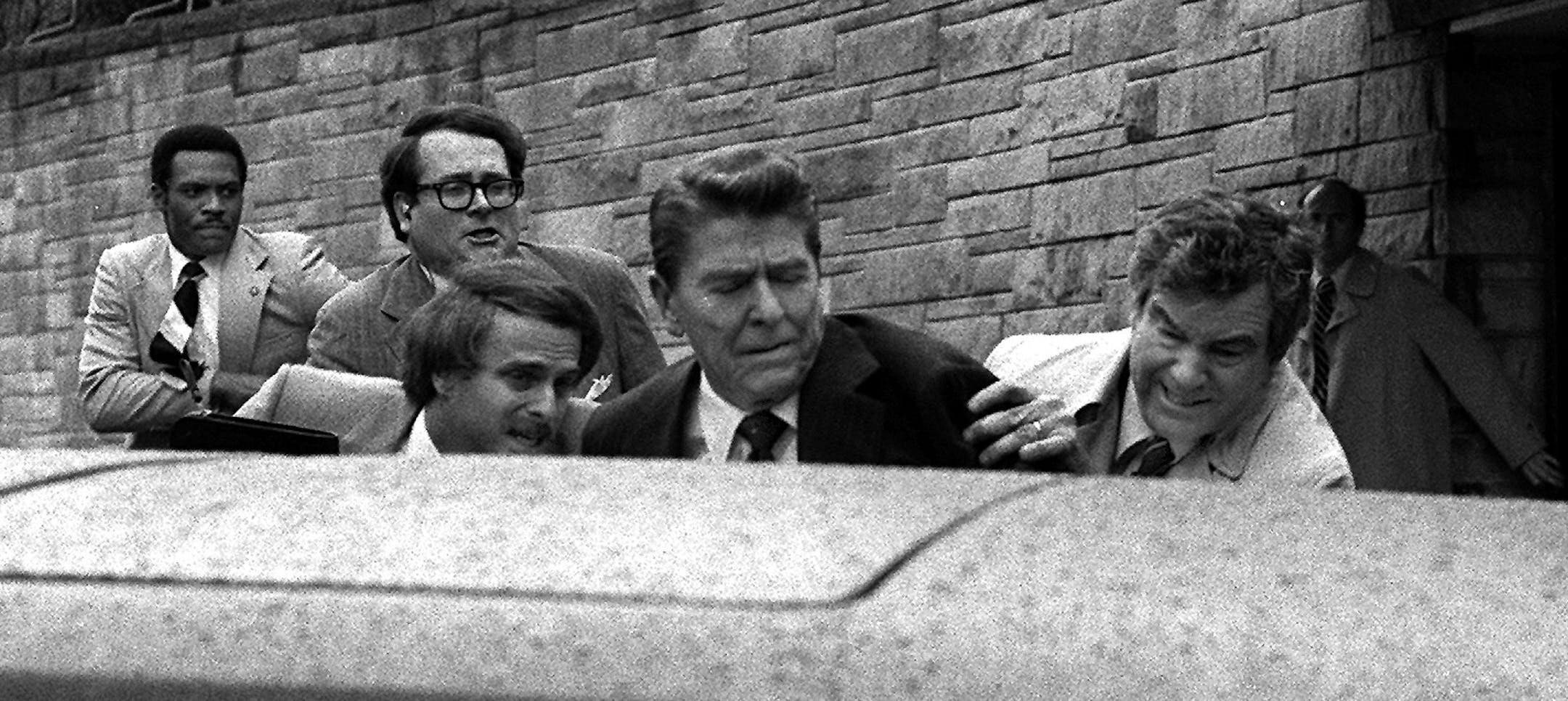
FILE - In this March 30, 1981 file photo, U.S. President Ronald Reagan is shown being shoved into the President's limousine by secret service agents after being shot outside a Washington hotel. Secret service agent Jerry Parr, in raincoat to the right of Reagan, who pushed Reagan into the limousine, was credited with saving President Ronald Reagan’s life.
FILE - In this March 30, 1981 file photo, U.S. President Ronald Reagan is shown being shoved into the President's limousine by secret service agents after being shot outside a Washington hotel. Secret service agent Jerry Parr, in raincoat to the right of Reagan, who pushed Reagan into the limousine, was credited with saving President Ronald Reagan’s life. (AP/The Minnesota Star Tribune)
about the writer

about the writer

BEN NUCKOLS

More from Minnesota Star Tribune

See More
card image
Provided/Sahan Journal

Family members and a lawyer say they have been blocked from access to the bedside of Bonfilia Sanchez Dominguez, while her husband was detained and shipped to Texas within 24 hours.

card image