

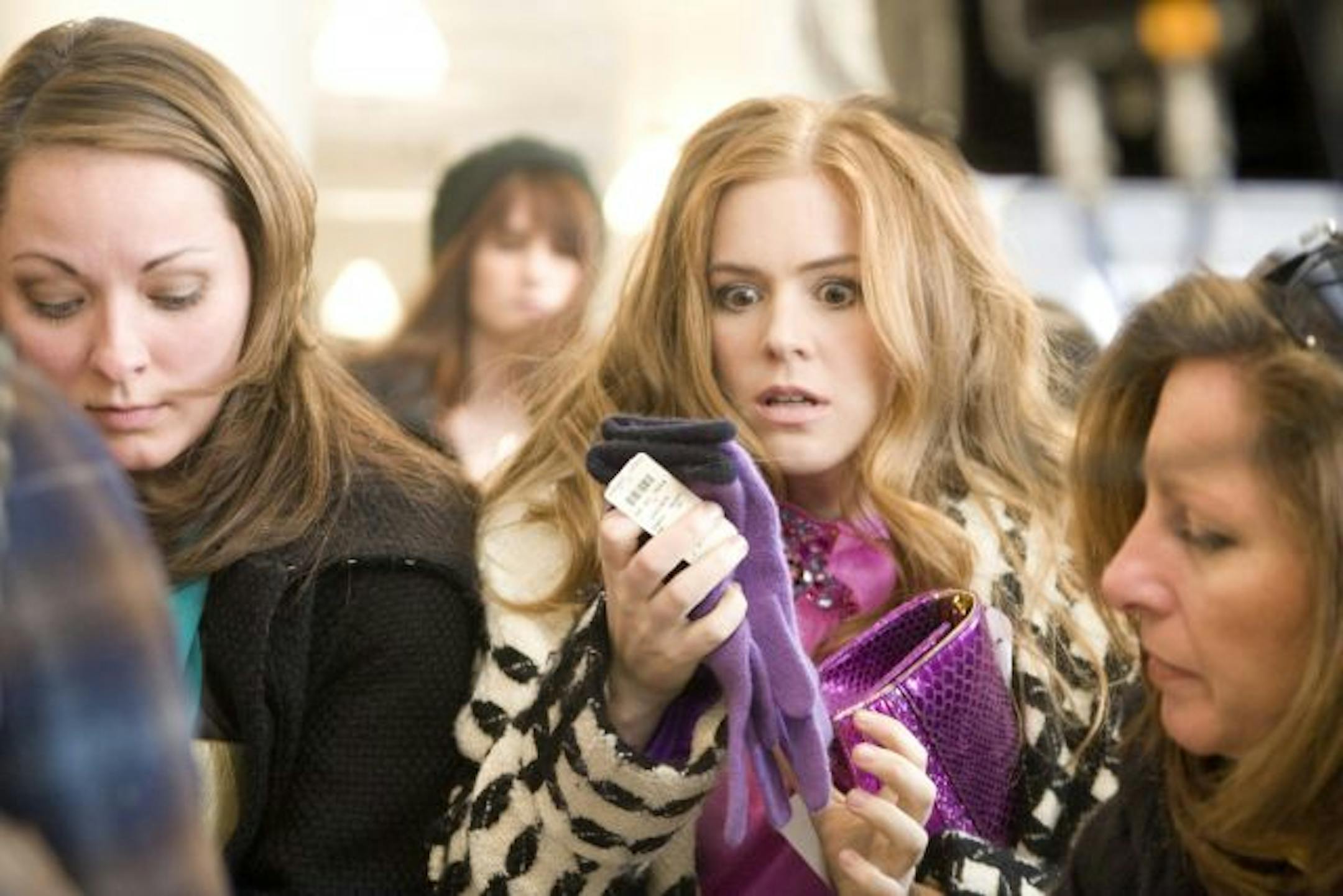
Becky Bloomwood has a closet filled to overflowing. In the movie "Confessions of a Shopaholic," opening Friday, she's always laden with sacks from high-end department stores. She has the newest "it" bag and shoes, and she can't afford any of it. Becky's drowning in debt.
Of course, this all plays out in a Hollywood reality, where Becky (played by Isla Fisher) wakes up, realizes her heels are in way too deep and fixes her life, easy as pie.
But compulsive shoppers are far more common -- and less glamorous -- than you might think. Legions of "shopaholics" like Becky incur millions in credit card debt each year; some soak countless tissues on TV talk shows.
As many as 25 million Americans are shopaholics, according to the Journal of Consumer Research. And while the recession may force some to curtail their spending, for others the plentiful discounts available now make shopping even more irresistible.
Shopaholism is diagnosed as an impulse-control disorder, much like kleptomania or obsessive-compulsive disorder. It can be an outlet for depression, seasonal affective disorder or loneliness.
"Many people shop because of problems with depression or anxiety," said Dr. Jon Grant, associate professor of psychiatry at the University of Minnesota Medical School. "The hypothesis is that people are psychologically and biologically primed for a range of addictive disorders. For some, that's drug and alcohol addiction, and for others it is addictive behavior."
In some cases, shopaholism stems from an obsession with conspicuous consumption. It can also serve as a fantasy fulfiller, helping the buyer feel like a different person.
Compulsive shoppers often suffer from something called "escape theory," said Ronald Faber, a professor of mass communication and advertising at the U who has worked extensively on the subject.


