

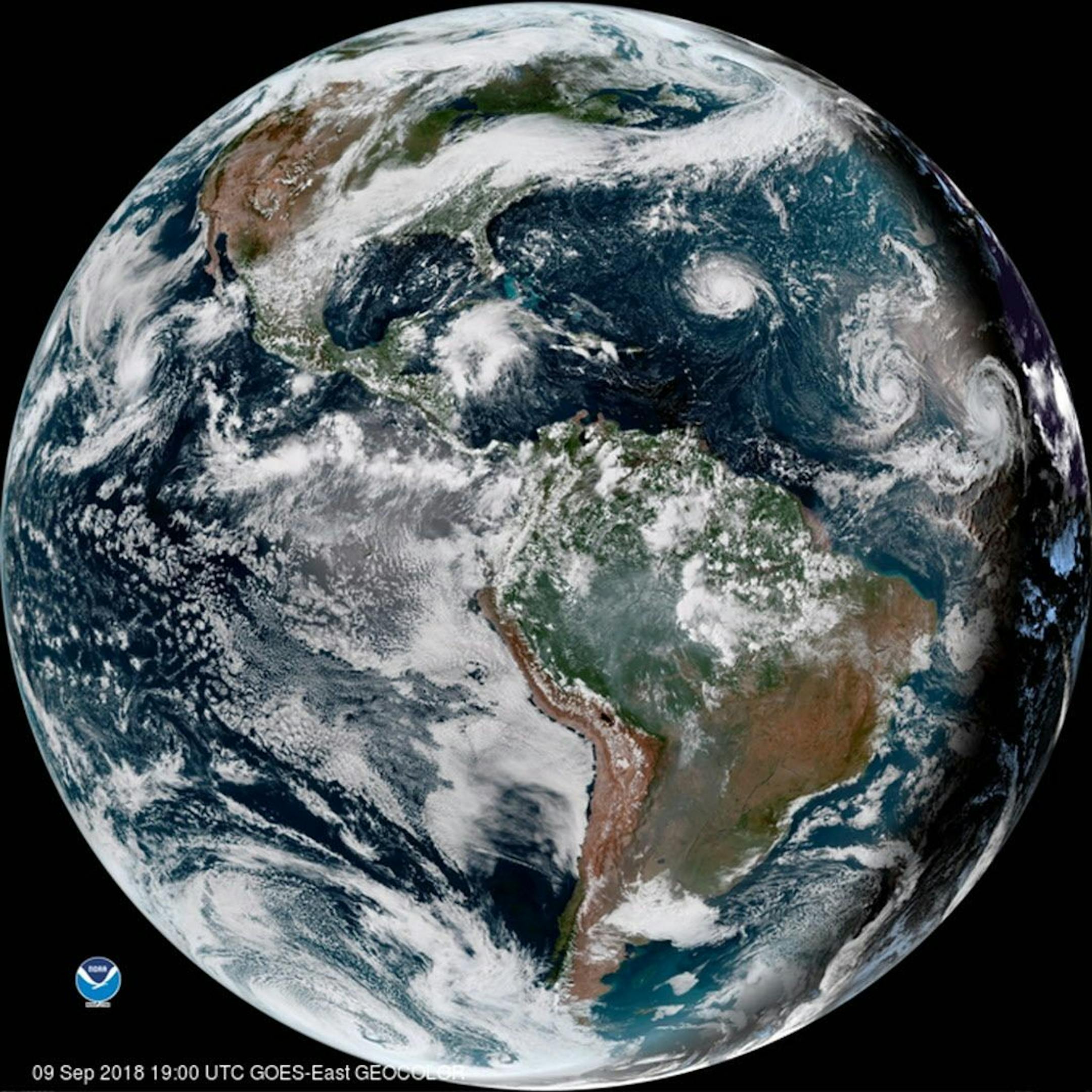
RALEIGH, N.C. — Florence exploded into a potentially catastrophic Category 4 hurricane Monday as it closed in on North and South Carolina, carrying winds up to 140 mph (220 kph) and water that could wreak havoc over a wide stretch of the eastern United States later this week.
Communities along a stretch of coastline that's vulnerable to rising sea levels due to climate change prepared to evacuate the storm, which forecasters expect to be close to Category 5 strength by Tuesday. The South Carolina governor ordered the state's entire coastline to be evacuated starting at noon Tuesday and predicted that 1 million people would flee. And Virginia's governor ordered a mandatory evacuation for some residents of low-lying coastal areas.
The storm's first effects were already apparent on barrier islands as dangerous rip currents hit beaches and seawater flowed over a state highway.
For many people, the challenge could be finding a safe refuge: If Florence slows to a crawl just off the coast, it could bring torrential rains to the Appalachian mountains and as far away as West Virginia, causing flash floods, mudslides and other dangerous conditions.
The storm's potential path also includes half a dozen nuclear power plants, pits holding coal-ash and other industrial waste, and numerous hog farms that store animal waste in massive open-air lagoons.
Airlines, including American and Southwest, have started letting passengers change travel plans that take them into the hurricane's possible path.
National Hurricane Center Director Ken Graham warned that Florence was forecast to linger over the Carolinas once it reaches shore. People living well inland should prepare to lose power and endure flooding and other hazards, he warned.
"It's not just the coast," Graham said. "When you stall a system like this and it moves real slow, some of that rainfall can extend well away from the center."


