

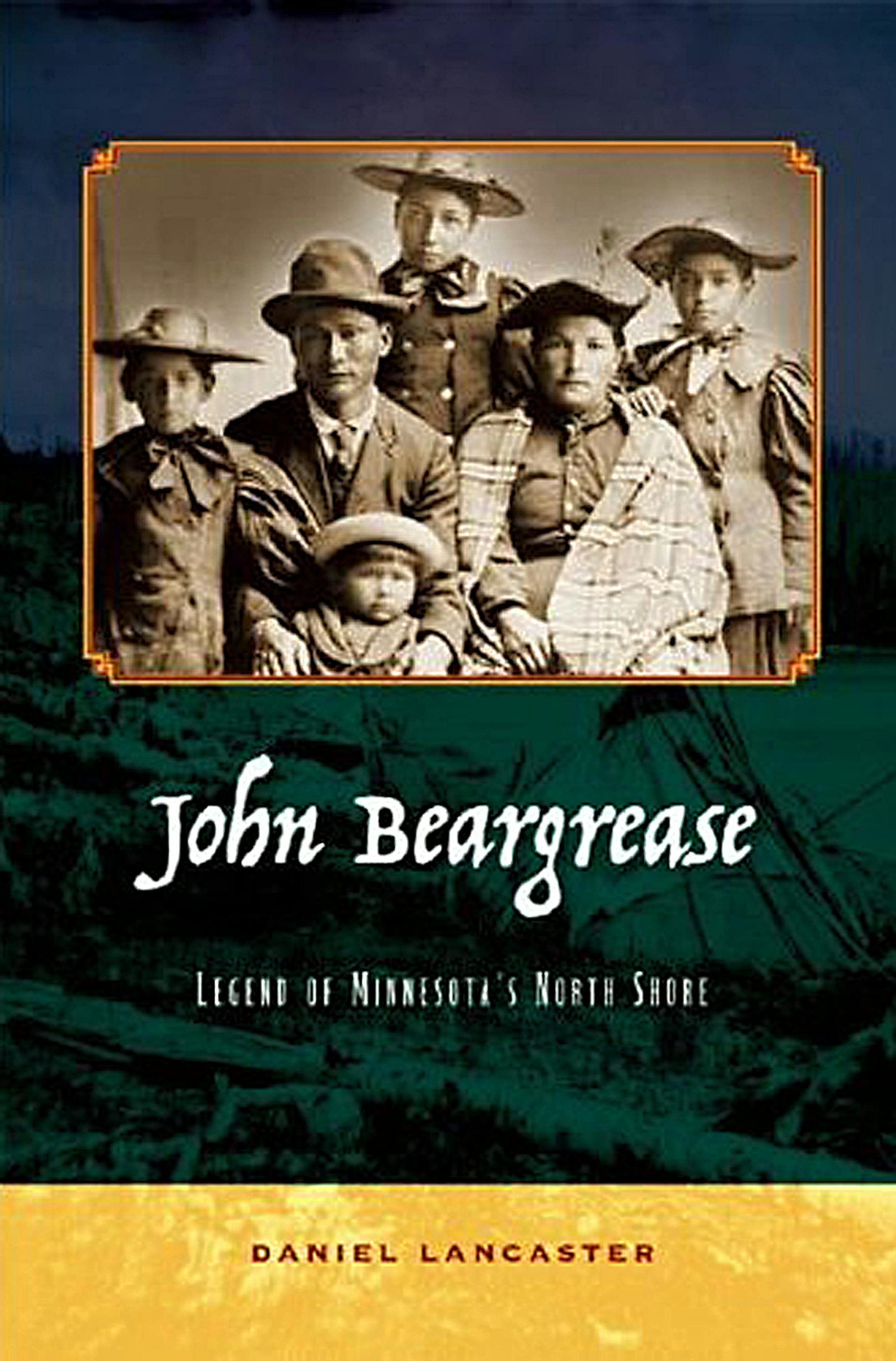
To most Minnesotans, John Beargrease is the obscure guy for whom they named the 390-mile dogsled marathon that mushes into high gear today between Duluth and Grand Portage along Lake Superior's North Shore.
Thanks to St. Paul author Daniel Lancaster's new comprehensive biography, lovers of northern Minnesota now not only have a chance to meet the man who began delivering the mail on the North Shore 130 years ago, but they also get to understand how Beargrease helped bridge the cultural gap between the Ojibwe community and white settlers of the late 1800s.
In "John Beargrease, Legend of Minnesota's North Shore," Lancaster introduces us to Eshquabi, the oldest son of Ojibwe chief Moquabimetem, who moved from the Cloquet area to Beaver Bay in the 1870s. Moquabimetem's name translates as "bear grease," a valuable commodity the Ojibwe used for cooking, conditioning hides, grooming hair, waterproofing, repelling bugs and protecting against frostbite.
One of the strengths of Lancaster's book is the rich telling of Ojibwe lore. As the legend goes, Ojibwe forebear Nanaboozhoo tried to catch the Fish King in Lake Superior, only to be swallowed, Jonah-like. The crafty Indian lodged his canoe in the Fish King's gullet, causing it to choke to death. The carcass was fed to a bear, which guzzled down so much fish oil that its body was layered for-ever with the vital bear grease.
Eshquabi, who later became known as John Beargrease, followed his father on early mail runs on the schooner Charley before spending about 20 winters hauling the mail between Two Harbors and Grand Marais. Lancaster points out the irony that Beargrease was illiterate, so he couldn't read the sacks of mail or newspapers that he lugged through vicious winters. And while Beargrease has become synonymous with sled dogs, we learn that he preferred a rowboat, sailing the mail up the rocky coastline from April to December.
The biography paints Beargrease, warts and all -- literally. One anecdote recalls how a boy who was plagued with warts turned to Beargrease for help. Beargrease sprinkled some gray powder on the boy's hand, chanted and bowed to the moon. To the amazement of doctors, the man remained wart-free for his last 71 years. Lancaster doesn't shy away from mentioning Beargrease's penchant for alcohol, noting a $3 fine after a guilty plea that was later waived because of, as a 1908 newspaper reported, "the good character of this lineal descendant of royal Indian blood."
Lancaster tracked down details of Beargrease's extended family, even scouring records at the Fergus Falls State Hospital to fill in some admittedly rough spots.
By the end, you'll see Beargrease as more than a mailman for whom a race was named. As Lancaster proves, "He was the perfect middleman between Anishinabe fur trappers and white traders." Truly, a pivotal character in a fascinating era of Minnesota history.


