

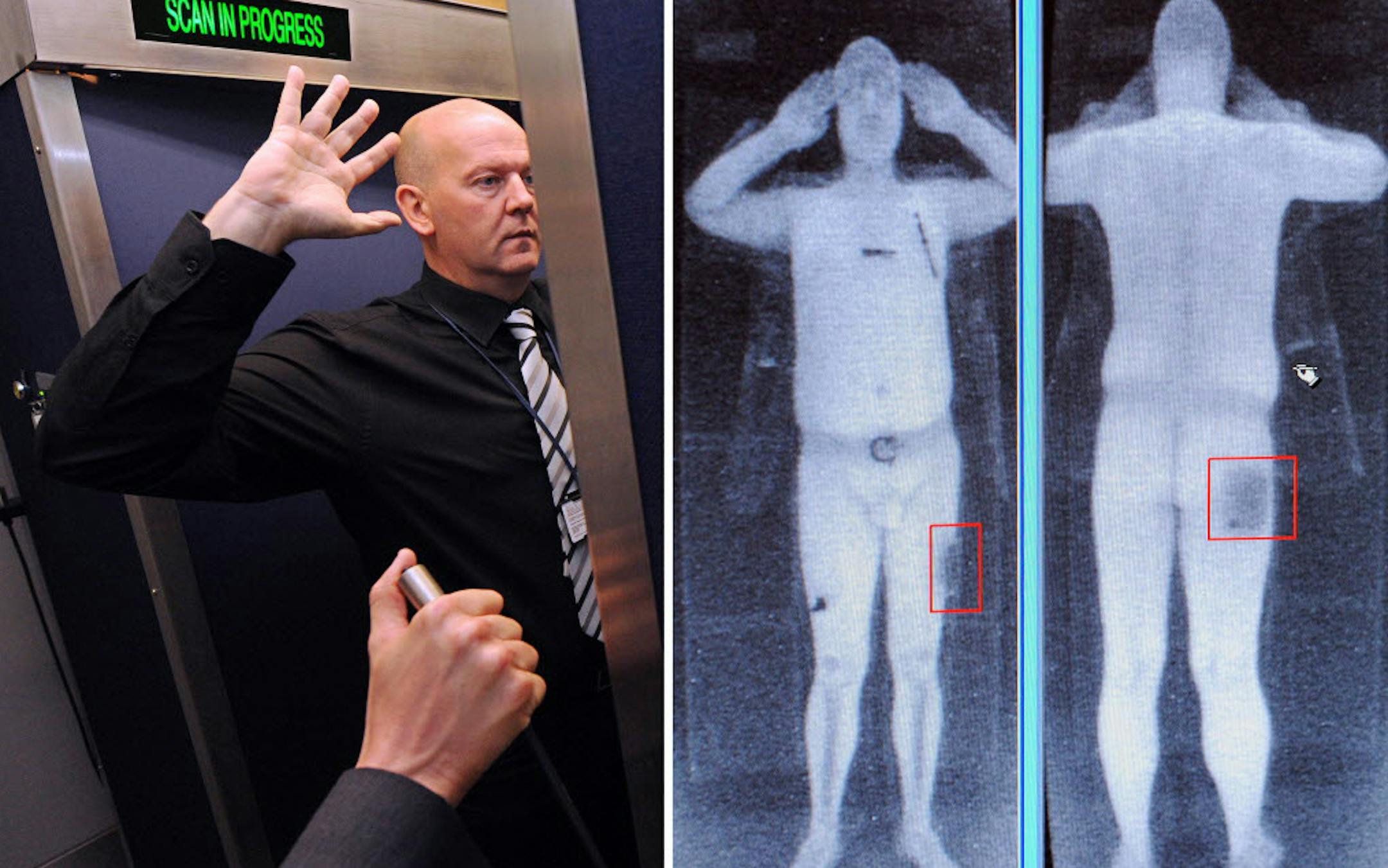
Q Is Minneapolis-St. Paul International Airport using those new airport screeners for passengers? Will they expose us to radiation? Does it present a health or safety concern?
A Although whole-body imaging is being used at 19 U.S. airports, it is not at MSP, said Carrie Harmon, spokeswoman for TSA Regional Public Affairs. Advanced imaging technology will be deployed to MSP, but the schedule isn't finalized yet, she added.
There are two types of advanced imaging technology: millimeter wave and backscatter. Both technologies screen passengers for metallic and nonmetallic threats, including weapons, explosives and other objects concealed under layers of clothing.
Millimeter wave technology passes electromagnetic waves over the body to create a three-dimensional image that looks much like a fuzzy photo negative with facial features blurred for privacy. It is safe -- the energy emitted by millimeter wave technology is 10,000 times less than a cell phone.
Backscatter technology uses low-level X-rays to create a two-sided image. Each full body scan produces less than 10 microREM of emission, the equivalent of the exposure each person receives in about 2 minutes of airplane flight at altitude. Backscatter technology produces an image that resembles a chalk etching.
Besides safety, another issue for passengers is lack of privacy. But Harmon states that privacy is ensured through the anonymity of the image.
"The officer attending the passenger cannot view the image, and the officer viewing the image is remotely located and cannot see the passenger. Additionally, the image cannot be stored, transmitted or printed and is deleted immediately after being viewed. Finally, the facial area of the image is blurred to further ensure privacy."
It's important to know that advanced imaging technology -- millimeter wave or backscatter -- is optional for all passengers. Those who do not wish to utilize this screening can elect to have a pat-down instead.


