
Advertisement

Fifty years ago, Curt Flood started a fight he lost, and it led to baseball's free agency

Fifty years ago, Curt Flood wrote a letter that led to free agency in baseball.

The Associated Press
December 25, 2019 at 4:47AM
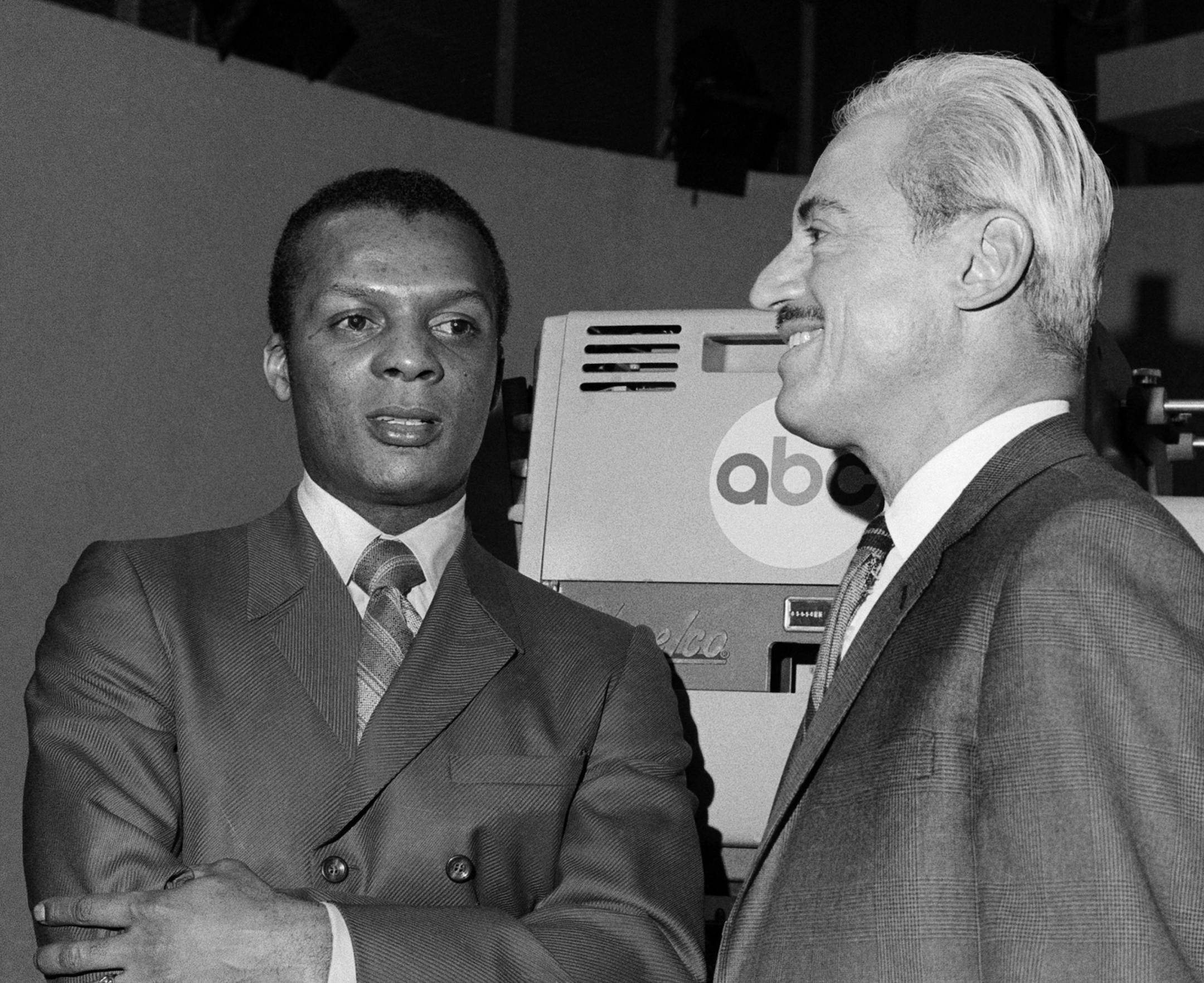
FILE - In this Jan. 3, 1970, file photo, baseball player Curt Flood, left, and Marvin Miller, Executive Director of the Baseball Players Association, wait inside ABC Television Studio before an appearance in New York. Flood set off the free-agent revolution 50 years ago Tuesday, Dec. 24, 2019, with a 128-word letter to baseball Commissioner Bowie Kuhn, two paragraphs that pretty much ended the career of a World Series champion regarded as among the sport's stars but united a union behind his cau
Curt Flood, left, joined with union leader Marvin Miller in 1970 in pursuit of freedom from what he called “involuntary servitude.” (The Minnesota Star Tribune)
Advertisement

NEW YORK – Curt Flood set off the free-agent revolution 50 years ago Tuesday with a 128-word letter to baseball Commissioner Bowie Kuhn, two paragraphs that pretty much ended the career of a World Series champion regarded as among the sport's stars but united a union behind his cause.

St. Louis had traded the All-Star center fielder to Philadelphia just after the 1969 season. Flood broke with the sport's culture of conformity and refused to accept the Cardinals' right to deal him, becoming a pioneer and a pariah.

After weeks of discussions with the Major League Baseball Players Association, Flood began the union's equivalent of Lexington and Concord, challenging the reserve clause — which stated clubs could renew an existing contract "for the period of one year on the same terms," making it a contract with no end date for the player, "involuntary servitude," as Flood called it. It became the first shot of a labor war that would consume the sport for more than a quarter-century.

"After 12 years in the major leagues, I do not feel that I am a piece of property to be bought and sold irrespective of my wishes," Flood wrote in his Dec. 24 missive. "I believe that any system which produces that result violates my basic rights as a citizen and is inconsistent with the laws of the United States and of the several states.

"It is my desire to play baseball in 1970 and I am capable of playing. I have received a contract offer from the Philadelphia club, but I believe I have the right to consider offers from other clubs before making any decisions. I, therefore, request that you make known to all the major league clubs my feelings in this matter, and advise them of my availability for the 1970 season."

Flood and the union lost that fight in a lawsuit that went to the U.S. Supreme Court, but the union's fight went on.

"If there had not been the person who was going to step out there and take the bullets, there wouldn't have been anything," Flood's widow, the actress Judy Pace, said last weekend. "So he was the man who stepped out of the foxhole to go and challenge."

The reserve clause was struck down in 1975 by arbitrator Peter Seitz in the case of pitchers Andy Messersmith and Dave McNally, and it took eight work stoppages from 1972 through 1995 to achieve long-term labor peace.

Advertisement

Flood, a .293 career hitter, was long gone from the field by then. After sitting out the 1970 season, he had 40 more plate appearances in 1971 for Washington and told the Senators he was retiring via telegram sent from John F. Kennedy Airport in New York en route to Spain. His only further employment with a major league team before his death from throat cancer in 1997 was as an Oakland Athletics radio broadcaster for part of the 1978 season.

"All the groundwork was laid for the people who came after me. The Supreme Court decided not to give it to me, so they gave it to two white guys," Flood once said. "I think that's what they were waiting for."

Baseball's average major league salary has risen from just under $25,000 at the time of Flood's letter to just over $4 million this year, an escalation testament to the power of free agency. When Gerrit Cole signed his $324 million, nine-year contract with the New York Yankees last week, the pitcher paid tribute to Flood and to Marvin Miller, the transformative union head finally elected to baseball's Hall of Fame on Dec. 9.

"Challenging the reserve clause was essential to the blossoming sport we have today," Cole said, later adding: "I just think it's so important that players know the other sacrifices that players made in order to keep the integrity of the game where it is, and so I hope everybody has that conversation about Curt Flood on the bus."

Once the reserve clause was killed by the Supreme Court in 1976, Nolan Ryan broke the $1 million average salary mark after the 1979 season, Roger Clemens $5 million after 1990, Albert Belle $10 million following 1996, Alex Rodriguez $20 million after 2000 and Clayton Kershaw $30 million after 2013. In the Curt Flood Act of 1998, Congress made major league contract negotiations subject to antitrust law, granting more power to the players.

"He did draw that line in the sand," current union head Tony Clark said of Flood. "If he hadn't been willing to do that. I think all of our histories change in our sport and others."

Advertisement
about the writer

about the writer

Ronald Blum

More from Minnesota Star Tribune

See More
card image
Provided/Sahan Journal

Family members and a lawyer say they have been blocked from access to the bedside of Bonfilia Sanchez Dominguez, while her husband was detained and shipped to Texas within 24 hours.

card image
Advertisement