

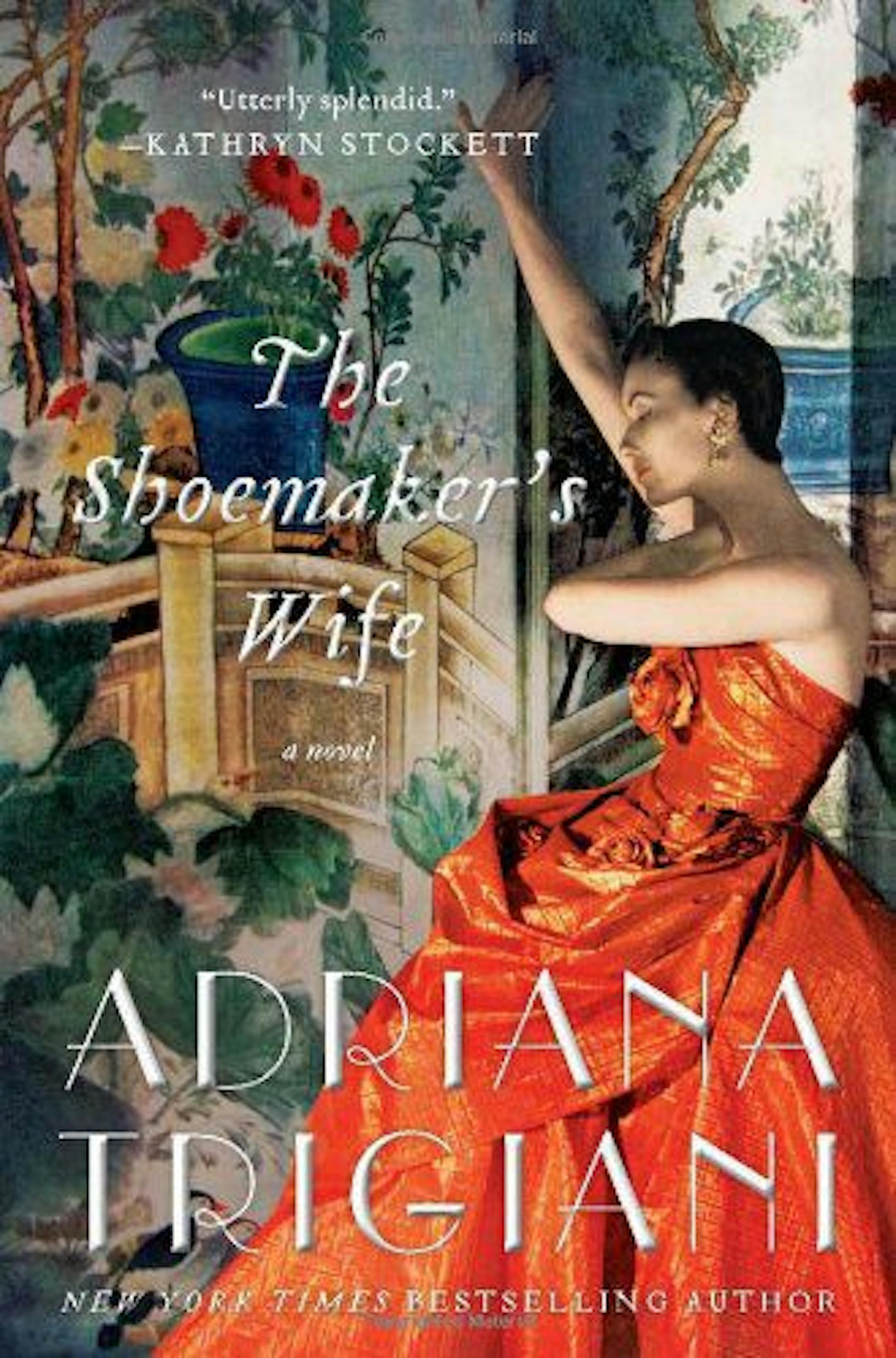
From the opening description of the "scalloped hem of Caterina Lazzari's blue velvet coat" to Enza Ravanelli, a talented seamstress and Italian immigrant, observing the icicles dressing trees "like silver lamé evening gloves," Adriana Trigiani's "The Shoemaker's Wife" is narrated with the opulent detail and the lush imagery deserving of the creative sensibilities of Enza and her soul mate, Ciro Lazzari.
Trigiani has patterned this elegant historical love story after the lives of her own grandparents, who came from the Italian Alps and settled on Minnesota's Iron Range, where they ran the Progressive Shoe Shop, making boots for miners. The story weaves in and out of the lives of Enza and Ciro, following Enza to the costume department at the Metropolitan Opera in New York, Ciro to a cobbler's apprenticeship on Mulberry Street, and eventually together to the Iron Range.
The descriptions of Hibbing and Chisholm, Minn., between the wars are fascinating, especially from a seamstress' point of view -- the snow tracked with "gray zippers on the ground" from the trucks carrying out ore, the mannequins in the Hibbing department store outfitted in "the couture of subzero living," the "steel frames of unfinished buildings" set "against the sky like pencil slashes," and local women selling "flannel buntings" to the crowds celebrating Serbian Days on the Mesabi Range.
The story's heart is revealed in a stolen moment in a Renaissance mansion while Enza listens to tenor Enrico Caruso. Enza notes "the beauty of the antiques," the "imposing statuaries carved of milk granite" and "the glorious tones of the music" and she remembers the "Italy that fed her soul," the Italy where "broken hearts were mended in the hands of great artists," and she suddenly realizes "how to marry American ambition to Italian artistry."
Trigiani does the same, revealing to us how the imaginations of immigrants shaped modern America as much as their hard work. A "full purse" has "power and voice," but that doesn't mean it can't be adorned with beadwork and layered in satin.
As is sometimes the case with chronicles based on real lives, the narrative's strengths reveal its minor flaws. Intriguing plot threads (Ciro's ambition to make women's shoes) are cut off and the final pages, in which lives are tied up too swiftly and neatly, made me wonder if Trigiani did these things to keep her characters faithful to her family's history rather than freeing them to follow their own fictional journeys.
Carole E. Barrowman teaches at Alverno College in Milwaukee and blogs at carolebarrowman.com.


