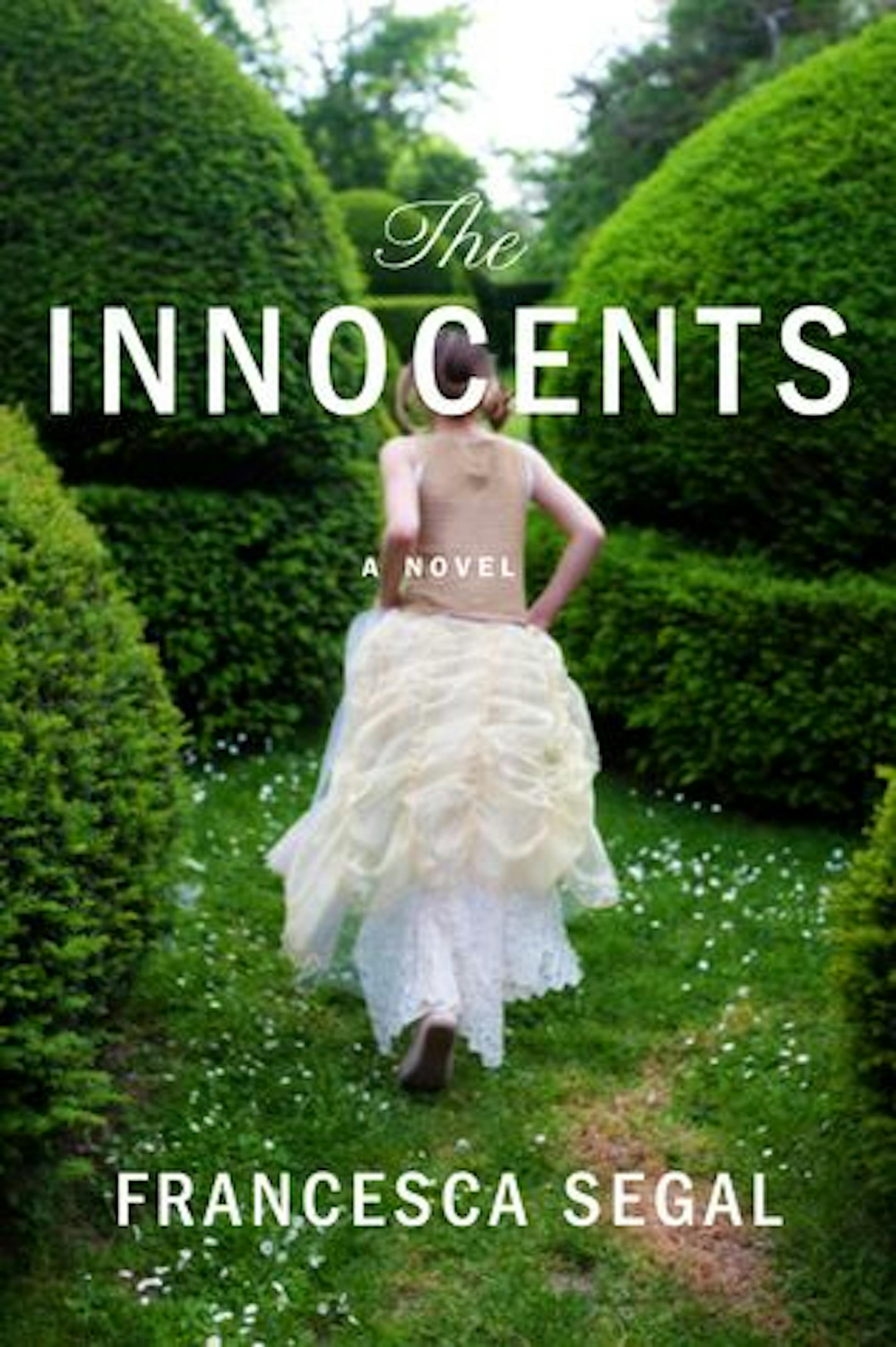
There may be such a thing as too much innocence. And it may be on display in Francesca Segal's debut novel, "The Innocents." In an update of "The Age of Innocence," Edith Wharton's novel of manners and mores in the Gilded Age, Segal moves the story from upper-crust East Coast America to a tightly knit Jewish community in contemporary North West London.
The story is one of the strengths (or constraints) of convention tested by the imperatives of passion, of the security of community vs. the rewards of independence, and Jewish North West London seems a likely place for it to play out. It is a place, the narrator tells us, "where no one ever disappeared. Instead [Adam's] contemporaries circled in its gravity returning from college to rent houses in Hendon, or buy first flats in West Hampstead, held in orbit by the hot sun of the community. ... It had only been at university that he had understood just how unusual it was that he could list the whereabouts of all his nursery school classmates."
Into this community, on the eve of Adam's engagement to Rachel -- the sweet, innocent, lovely, ever-so-appropriate girl he's loved since childhood -- comes Rachel's cousin Ellie, trailing a whiff of scandal. College dropout, star of an "art" film that fuels his cohorts' fantasies, mistress to a married man, the beautiful Ellie is everything Adam disapproves of. She embodies "inappropriate." But, as his fiancée's cousin, she is also family, so he must make an effort to accommodate her.
You can probably guess where this is going (especially if you've read "The Age of Innocence"). Ellie, of course, proves irresistible, and her worldliness reveals the limitations that had once seemed so charming in Rachel. In fact, it's likely that you'll figure out where this is going from virtually the first page, since, for it to work, Adam is depicted as such a patsy -- the true "innocent" of the novel -- that his doting reverence for his fiancée's innocence reads like nothing so much as a set up.
And there's the problem with borrowing from Wharton. In the community where Segal chooses to set her story, there may be an equivalent to the convention-bound wealthy of East Coast America in the late 1800s. But in the character bound by those conventions, there's less interest; his coming-of-age, in our age, is coming a little late to be believable. Or, if it's believable, he's just a dork.
Wharton's Adam-ish character has his dorkish aspect; but he also has Wharton's extraordinary narrative voice, which somehow manages to caricature and care about him at the same time. Segal's writing, however good it sometimes is, never quite achieves that balance, which may have more to do with our time, in which innocence and foolishness are often indistinguishable, than with the author's limitations.
Ellen Akins is a writer in Wisconsin. She teaches in the MFA program at Fairleigh-Dickinson University.