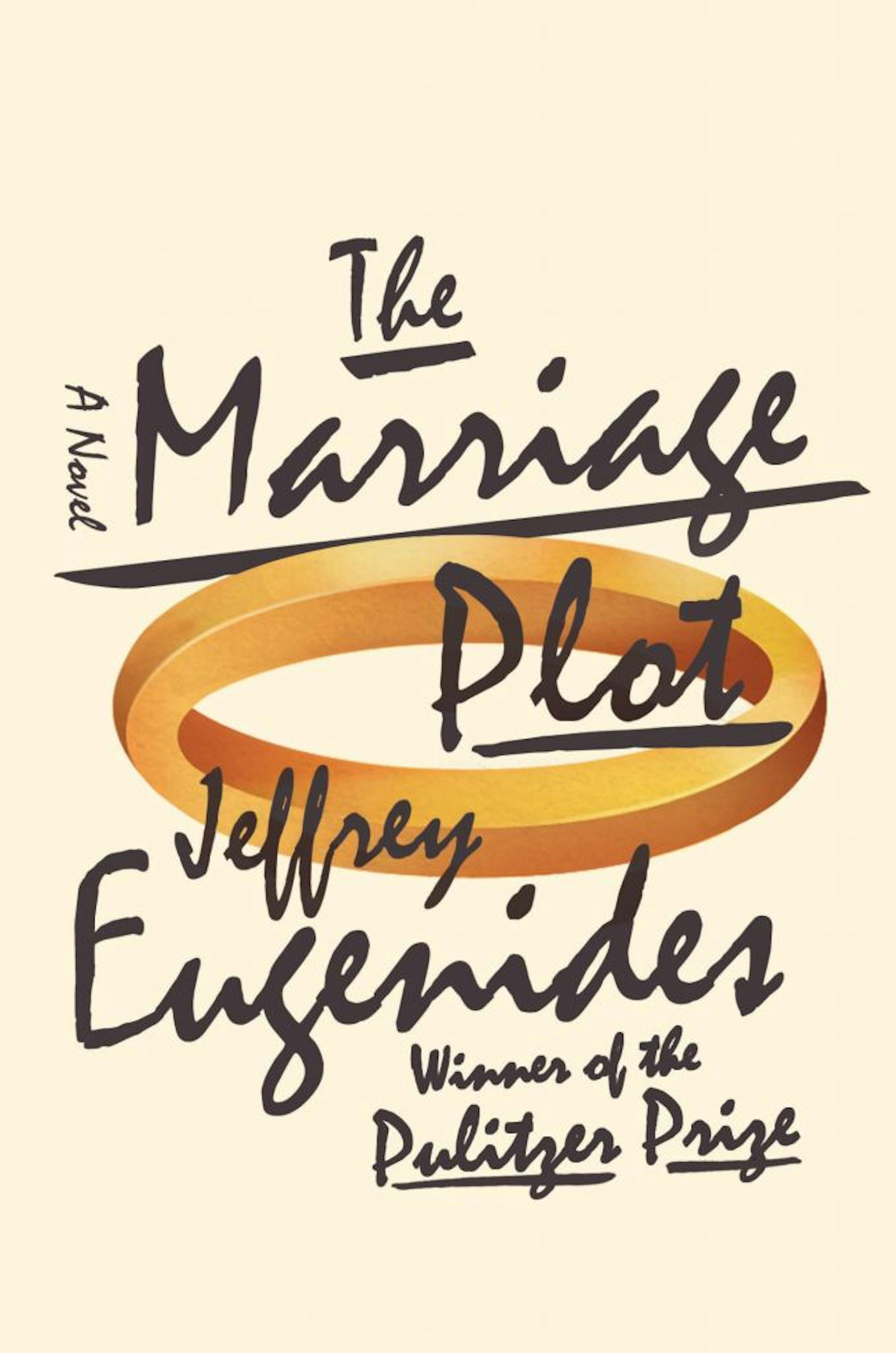
Jeffrey Eugenides' "The Marriage Plot" shares characteristics of his previous novels -- but not enough, unfortunately. His debut, "The Virgin Suicides," offered lush prose and a suburban setting, and "Middlesex" won a Pulitzer for its rich language and massive scope. "The Marriage Plot" is flat, diffuse and populated with characters nowhere near as compelling as those Eugenides has created in the past.
Madeleine Hanna, Leonard Bankhead and Mitchell Grammaticus are the trio the reader is invited to care about as "The Marriage Plot" opens on graduation day 1982 at Brown University. Madeleine, hung over from trying to party her way toward forgetting the broken heart she's suffered at the hands of Leonard, meets up with her parents in the book's first pages, and, with her folks, runs into Mitchell -- an old friend from whom she had grown distant.
The reader is given the next year in the life of each of these characters, from Paris to Calcutta, Cape Cod to Monaco to New York. Madeleine, the English major and reader of the group, attempts to revise a chapter of her college thesis to make it suitable for publication. Leonard, the scientific genius, is offered a fellowship at Pilgrim Lake, where he helps run studies on yeast. Mitchell, the religious seeker, gallivants for months in Europe before ending up in Calcutta, confronted with exactly who he is and is not. The story lines -- Leonard and Madeleine's conjoined story, Mitchell's wandering one -- eventually converge. There are mental breakdowns, long back stories regarding various families (nuclear and otherwise) and significant questions of faith, love and finding satisfaction in life.
"Books are generated by other books," Eugenides has said, and "The Marriage Plot" has obviously been very generated -- Barthes' "A Lover's Discourse" is a critical text to Madeleine, as is Salinger's "Franny and Zooey" to Mitchell. In fact, "The Marriage Plot" is, as Eugenides has said, an attempt to see if the literary device of a marriage plot is still feasible in 21st-century American fiction, though that aspect of the book makes for weird reading. Is the book ultimately asking to be judged as literary commentary? Is it even fair to feel the book hasn't delivered the flesh-and-blood characters and deeply felt story that those of us inclined toward realist fiction crave?
Ultimately, "The Marriage Plot" is a letdown: The reader is never compelled to feel much for these characters. There are some lovely moments, and there are a few passages gorgeous and compelling enough to keep the reader going, but the book seems to be answering Eudenides' question in the negative: Is a marriage plot still feasible in 21st-century American fiction? Not in this case.
- Weston Cutter is from Minnesota and the author of "You'd Be a Stranger, Too."