

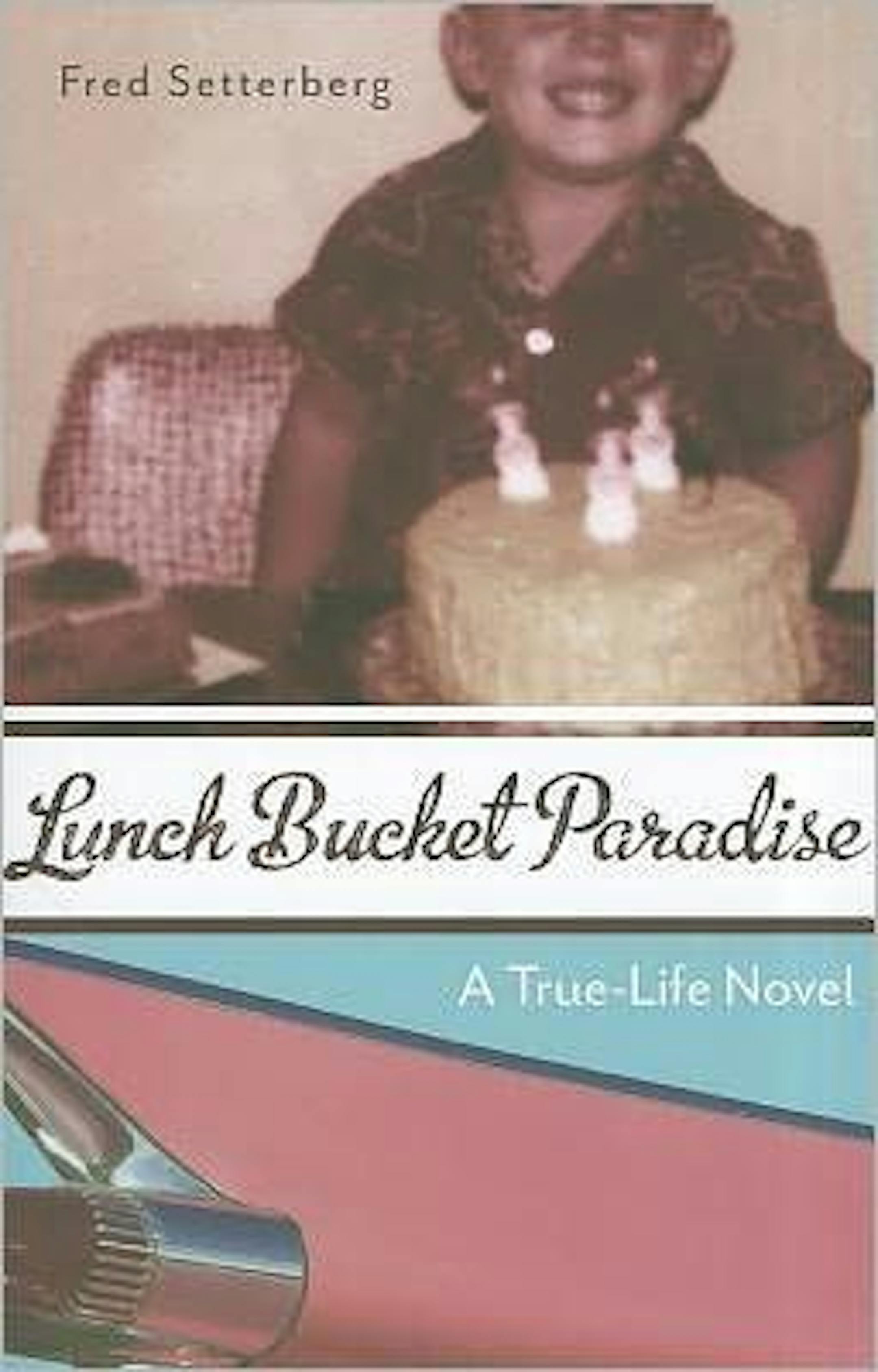
Heyday Books of Berkeley intends to celebrate "California's many cultures, landscapes and boundary-breaking ideas."
Fred Setterberg's "Lunch Bucket Paradise" (256 pages, $15.95), a smart, funny, endearing example of Heyday's mission, examines the life of one post-World War II family living in a new housing tract near Oakland. Work is plentiful for the young narrator's father and his uncle Win. They "possess ample credit, thanks to the GI Bill and the FHA." Technology improves their lives. "Beyond the cannery, the factories and warehouses of the East Bay slathered the skies with Kodachrome effluence, the low-lying fog of manufacture and transport signifying a future of steady work, a life you could bet on."
As the Great Depression and war fade from view, "working people never had it so good." The same can be said for their children. The unnamed narrator's Italian mother and Scandinavian father indulge him with transistor radios, TV dinners, Betty Crocker cake mixes, Boy Scout membership and with "nylon, Dacron, rayon, Zylon. ... We were becoming new people in the new nation without even trying. The dangers were immense."
These dangers increase for Setterberg's "pioneers." Partly as a result of the sociopolitical upheaval brought on by various forces, the working stiffs' paradise changes. Moreover, as life in the post-World War II decades has grown easier, suburban youth have grown lazier. They could never endure the hardships their parents and grandparents endured. At the end of one rollicking, harrowing chapter, the narrator senses something amiss in the world. Mr. Barnes, a scoutmaster and "one of the neighborhood's eternal veterans," allows a grass fire to get out of control while hiking with several scouts. Frustrated, he strikes his innocent son.
Observing this, the narrator understands, or intuits, the pressures lurking beneath the surface of workingmen's lives. "The smoke and ash billowed back into our faces. The air stung from cinders ... I could barely hear the approaching roar of flames as the world of our fathers and their fathers before them receded further and further from our comprehension and grasp."
Finally, the Jefferson Manor housing development where his family, the Barneses and others live doesn't reflect the values its namesake championed. The narrator's father, aptly named Franklin, knows that Thomas Jefferson desired a nation of landed-yeomen, not coddled city-dwellers. The narrator's generation has become less vital, less yeoman-like. "That was the shame of my life. I had been spared everything. But wasn't that a good thing?" the narrator wonders as he faces the troubled 1960s and the Vietnam War. Such insights grace Setterberg's lovely book, though I'm left wondering about the subtitle, "A True-Life Novel." To me, "Lunch Bucket Paradise" reads more like a memoir, a very beautiful memoir.
Anthony Bukoski, author of five short-story collections, lives in Superior, Wis.


