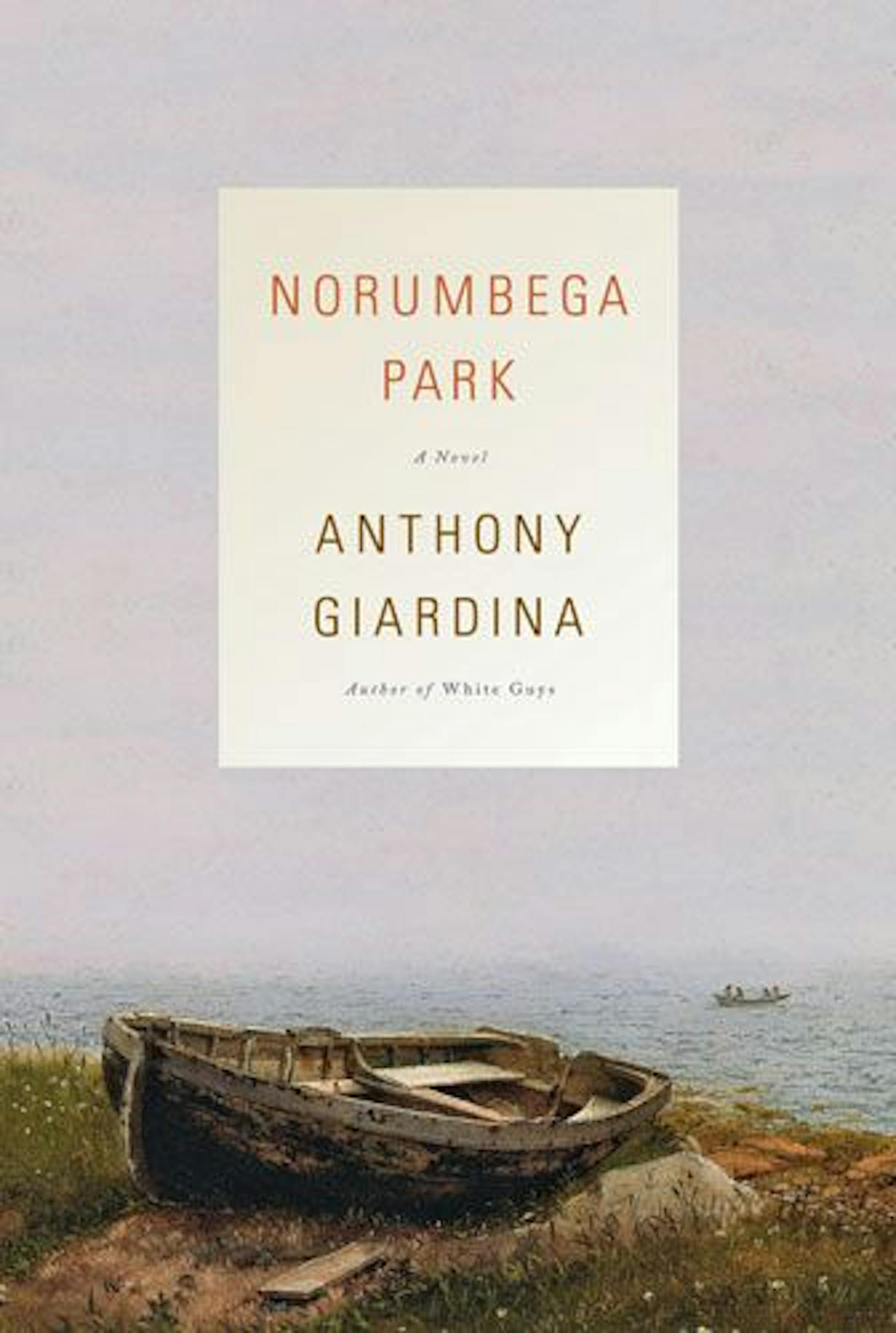
According to a recent study, men and women think about sex somewhere between 18 and 35 times a day. So how realistic can literary novels claim to be if their characters only get around to thinking about it every hundred pages or so?
Anthony Giardina's sprawling fifth novel, "Norumbega Park," bears the ferocity of an author eager to correct a problem in fiction: Because sex is so essential to our being, the novel tacitly argues, it deserves to be more than fodder for a titillating scene or two. Early on, one of the story's leads imagines that the kind of book he'd want to read would be a "good, serious, complicated novel about a young man in the world dealing with temptation and desire." That's what Giardina's book strives to be.
Which isn't to say that "Norumbega Park" is an erotic novel. Its tone is too restrained for that, and sex scenes are actually rare. For Giardina, sex is more of a prism -- as characters' attractions wax and wane, their personalities more fully emerge. Jack Palumbo, the heartbeat of the book, is a ladies' man practically from tweendom, and over the novel's five sections -- covering the late '60s to the present day -- he veers from coke-fueled abandon to a family man's restraint. Taking a very different path is his sister, Joan, who becomes a nun but over time carves out small acts of disobedience, sexual and otherwise.
Depicting a Don Juan in parallel with the ultimate symbol of sexual suppression makes for a setup that's a little too conveniently polarized. But Giardina complicates the story in surprising ways. Their mother contemplates Jack with a borderline incestuous attraction -- "She wanted to ask him things. ... How to inhabit proudly the sensual realm" -- and later Jack's wife will wrestle with her own illicit feelings. Nobody, even Joan, fits a convenient archetype, and Giardina is at his best describing discomfiting moments when the moral self collides with the sexual one.
Still, though Giardina's intelligence and daring are clear, "Norumbega Park" never quite convinces you that it deserves its family-saga bulk. (The title refers to an idyllic Boston suburb where Jack and Joan's parents settle in the '60s.) Broader themes addressing class, family and addiction are overwhelmed by the book's one-track mind, which leaves the book feeling like a small novel tucked into a large one. "If you didn't embrace the sordid in life, you never got to life," Jack thinks to himself toward the novel's end. Perhaps. But the sordid in life, in the context of this book, comes at the expense of a sense of a bigger picture.
Mark Athitakis is a reviewer based in Washington, D.C. He blogs at americanfiction.wordpress.com