

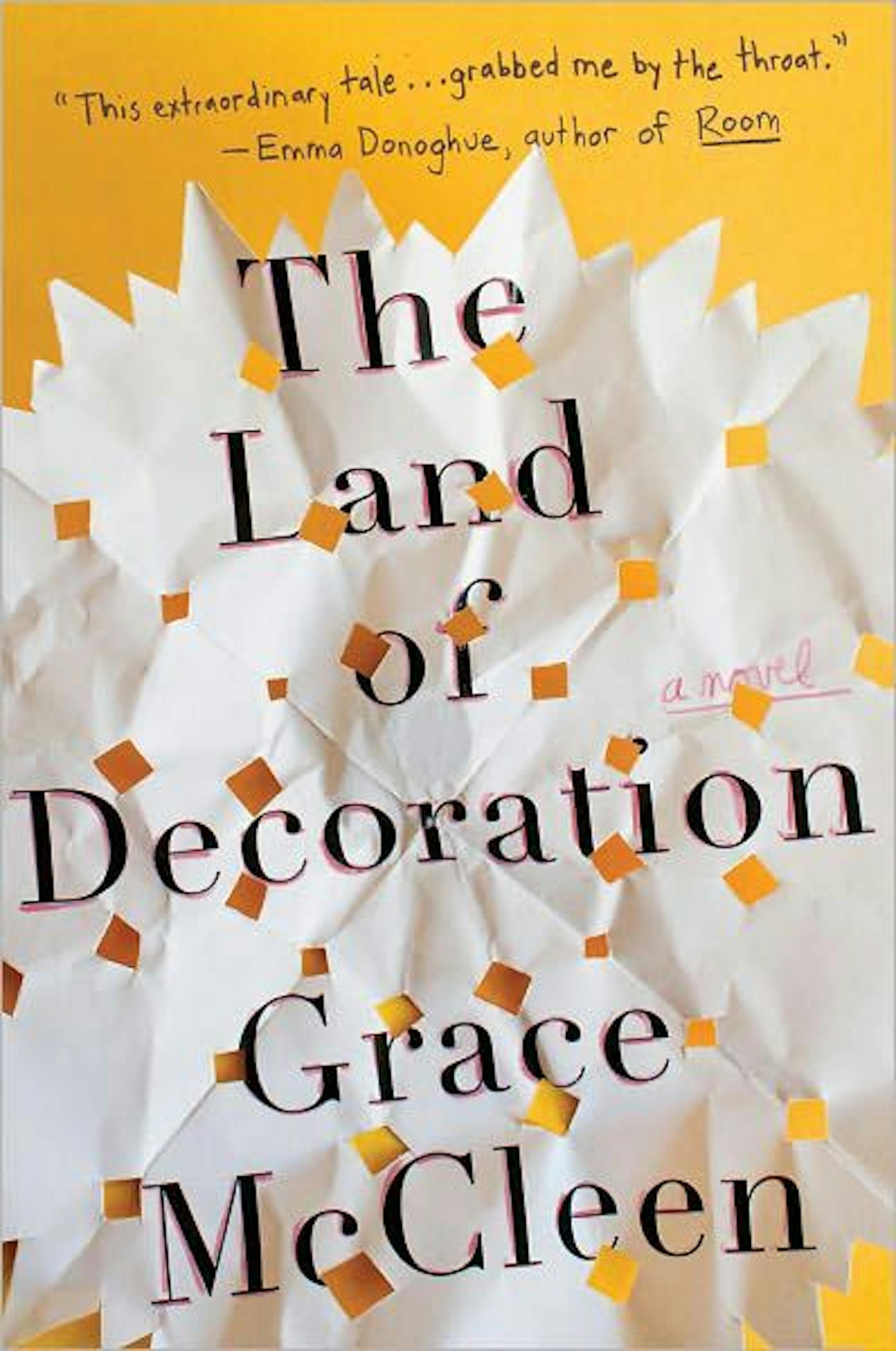
Child narrators are almost by definition unreliable, which in the literary sense of the term doesn't mean that they are untrustworthy, but that you, the reader, know things that they don't. Depending on the author, this strategy can lead to anything from amusing to infuriatingly claustrophobic. Sometimes the reader wants to scream, "No, you're not spying on a primal ritual of writhing spiritual possession; that's your parents having sex!" But when the device is employed correctly, as first-time novelist Grace McCleen does in "The Land of Decoration" (Henry Holt, 308 pages, $25), readers will find themselves drawn into the narrator's worldview, even while sometimes dreading its consequences.
McCleen's protagonist, 10-year-old Judith McPherson, is twice unreliable, first as a 10-year-old, then as a very young cult member. Judith's father, and, by extension, Judith, is a Jehovah's Witness who believes this is the "end times," that everything outside their narrow circle is damned and iniquitous, and that God is on his way -- at any moment now -- to whisk them to the land of milk and honey while everyone else goes to hell.
This exciting and terrifying idea functions as a form of child abuse, putting young Judith in a dreamlike state of ecstatic anxiety. Naturally, this puts her at odds with the world, so when she's not in the enervating bosom of her father's church circle, she's abused by her peers at school: One little boy in particular is terrorizing her with all of the viciousness of which we don't like to believe children capable.
Judith, like almost all child narrators, is an especially creative and intelligent child, so she's built an oasis -- a model "world" constructed out of bits of rubbish and carpet squares she calls the Land of Decoration. When real life becomes too frightening, however, her fear and anger begin to take the form of a voice in her head calling itself God. And this, as always, is when the trouble starts. In this case, while Judith accepts the voice as God, the reader will strongly suspect it is something quite the opposite.
As the plot unfolds, McCleen skillfully keeps us in a state of suspense; we root for Judith even while we are aghast at her conclusions and actions. McCleen never condescends to her main characters; we end up also fearing for Judith's Bible-thumping father, a man of fundamental decency whose faith is sorely tested by the world's realities, and who doesn't know how to nurture and protect the daughter he clearly cares for. Likewise, the teachers, students and cult members who encircle Judith may be archetypal, but they are also total individuals.
By the time Judith is talking to "God" regularly, we are caught up in all the dilemmas, struggles and deceptions in her world, and as the advice and instruction Judith receives become increasingly dangerous, the book becomes something even the Bible can't always be: a page turner.
Emily Carter is the author of "Glory Goes and Gets Some."


