

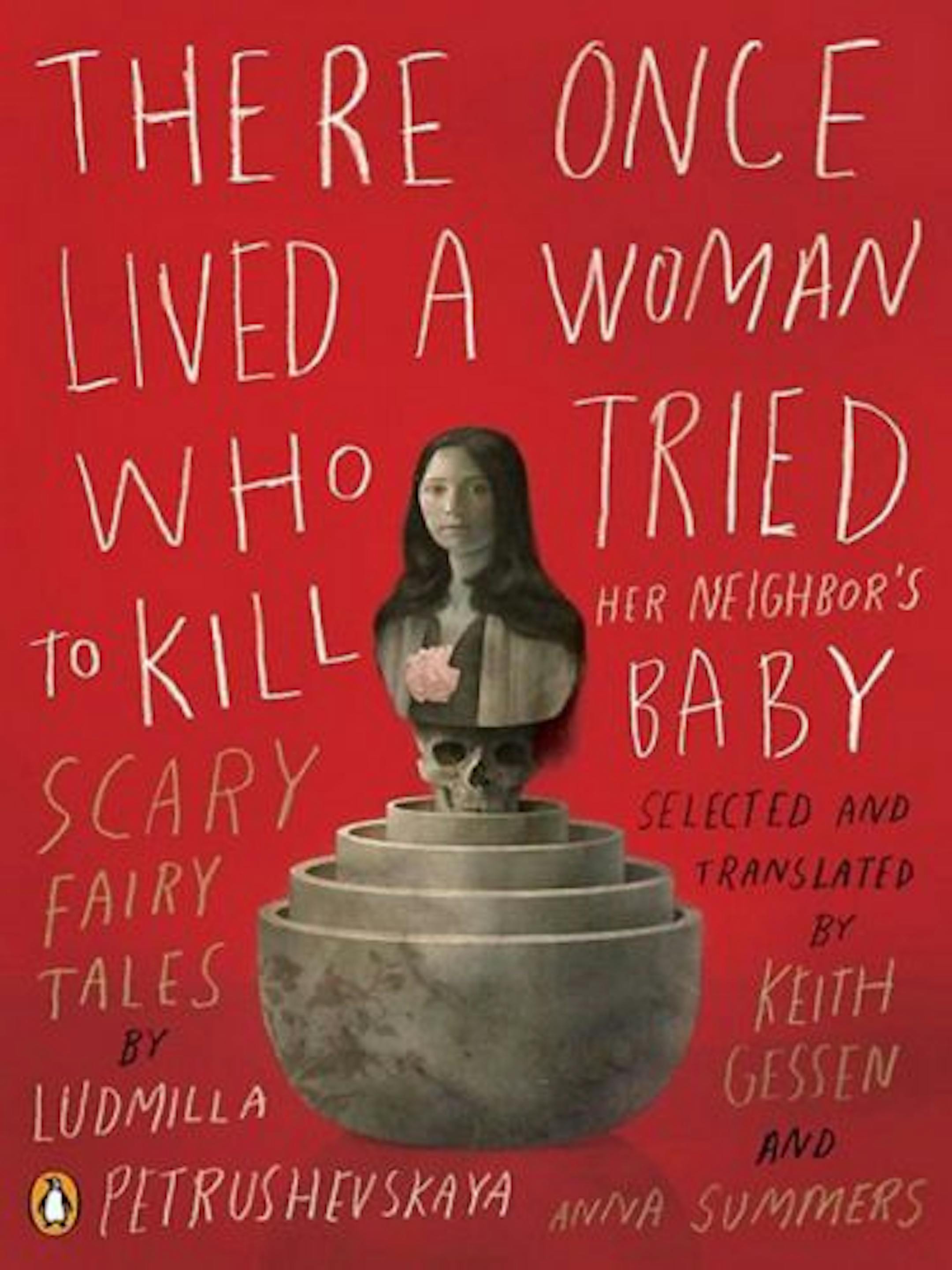
In "There Once Lived a Woman Who Tried to Kill Her Neighbor's Baby: Scary Fairy Tales" (Penguin, 224 pages, $15), Keith Gessen and Anna Summers bring together their new translations of 19 short stories by Ludmilla Petrushevskaya, who may be Russia's best known living writer. Although Petrushevskaya has also written plays and novels, including realistic pieces, the stories in this collection (written over the past 30 years, and most appearing in English for the first time) share uncanny, fantastical elements.
Petrushevskaya's writing has had a difficult reception in Russia, from Soviet times up through the present, with her stories often being perceived as too dark or bleak, even by Russian standards. It's true that negative themes run through virtually every story in "There Once Lived." Unhappy marriages and troubled family lives abound; people die tragically, come back to life, hover in between, or simply disappear; others are trapped in relationships, in the woods or even inside their apartments.
Despite all this, the experience of reading "There Once Lived" is actually, somehow, not all that depressing. Petrushevskaya's casual manner of storytelling has a way of making the eerie and impossible seem plausible. Just as some people tell stories as though regular, straightforward life on Earth is the norm, Petrushevskaya tells stories as though nothing but a kind of shady, dreamlike area between life and death is the norm -- a norm that makes lines like the declaration of the narrator at the very end of "The Fountain House" especially striking: "It was in a dream, though, that it happened, and dreams don't count."
Additionally, most characters end up finding some sort of pinprick of light or redemption (albeit muted or unconventional). In the strangely, almost refreshingly positive "There's Someone in the House," a woman is convinced that some sort of entity, "some kind of living emptiness ... sneaking and slithering along the floor," has moved into her apartment. Afraid of what this mysterious force might do to her, she makes preemptive strikes against it by wrecking her furniture (including her beloved TV), throwing out her nice clothes, and all but putting herself on the street. Eventually she decides to stay in the apartment, and finds that she now sees her home through newly optimistic, appreciative eyes -- simply happy to be alive and have shelter.
Petrushevskaya has referred to her stories as not simply "fairy tales," but rather "real fairy tales." Indeed, the pieces in "There Once Lived" are not so much scary as they are darkly human. Rather than spooking us with strange monsters, Petrushevskaya's stories are filled with sentiments that are all too familiar, but presented in contexts that are skewed just enough to be disquieting.
Kim Hedges is a reviewer in San Francisco.


