

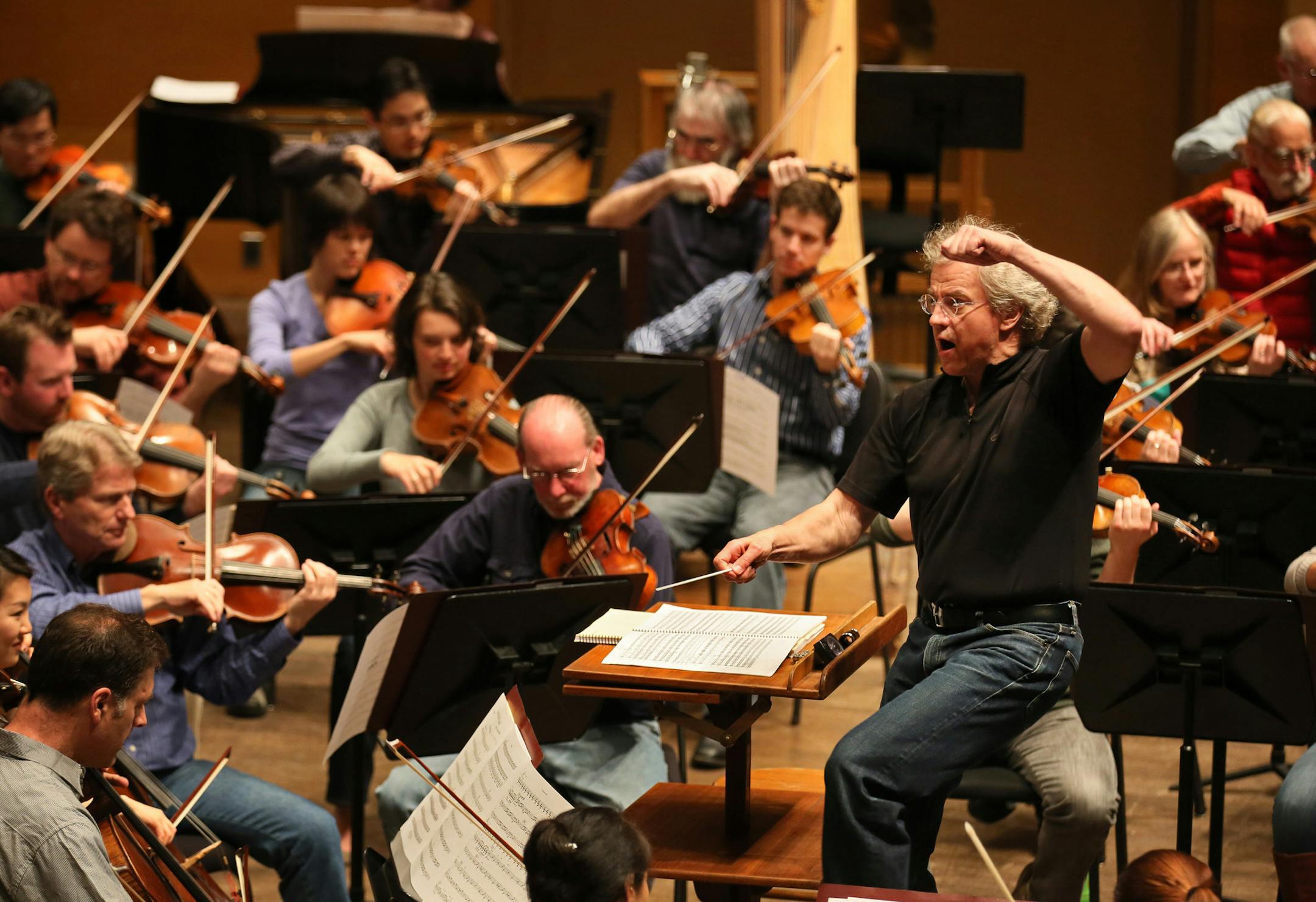
Although Osmo Vänskä was a rising star in Europe when the Minnesota Orchestra engaged him in 2003, many orchestra patrons had never heard of him. In the 10 years since, Vänskä has made indelible impressions on many Minnesotans, including musicians, concertgoers and Star Tribune writers who joined the orchestra on European tours. As a farewell gesture, he conducted three concerts this weekend by the orchestra's locked-out musicians. Here are some recollections.
'SUCH A PRIVILEGE'
Few conductors have ever have worked as hard on the podium as Osmo Vänskä. In 2010, he brought the Minnesota Orchestra to the BBC Proms in London and played the prestigious Saturday night Beethoven program. Vänskä and the ensemble soared through the Ninth Symphony, and 6,000 listeners roared their approval. Afterward, Vänskä wore one of those grins that come from an exhausted sense of accomplishment as he spoke to supporters and musicians at a post-concert party. "It is such a privilege to be a conductor when you are standing in front of the Minnesota Orchestra," he said.
My sweetest moment with Vänskä, though, was a ride through the Minnesota countryside in February 2008. The orchestra was on a state tour and would play in Marshall, a community suffering from the recent deaths of four children in a bus accident. As a gesture, the orchestra had added Samuel Barber's "Adagio for Strings" for the Marshall audience. As we rode in his car through the dark night, Vänskä talked about his belief in music as a healing balm. "It will be very sad at Marshall; there will be many tears. But music can speak. Music goes deeper than any words. It really takes care of the spirit." Even now, this memory brings tears to my eyes.
— Staff writer Graydon Royce
THE TASKMASTER
Everyone talks about how exacting he is, but when we first started working together there was this amazing confluence. He was so demanding, and we were so hungry for that. We had energy and passion, but lacked discipline. Once he ran us through a section three or four times, then stopped and looked at the strings. "I'm sorry," he said. "I do not accept that we cannot play both beautifully and in rhythm, just because it's hard." He expected both, and would not give up till he got it. That has stuck with me.
— Sam Bergman, Minnesota Orchestra violist
You really had to be right with his stick, his beat. He constantly harped on the horns for being behind. "I am not saying this because I'm angry," he'd say. "But it is behind." I'll bet I heard that 30,000 times over the last 10 years. We sit so far back that if we play what we hear, you are behind, so you have to anticipate. One time we were playing a Copland piece with a trombone solo. I was literally the only one playing, and he cut me off and said, "Doug, you are behind." Behind who? Everyone just burst out laughing.
— Doug Wright, Minnesota Orchestra principal trombone


