

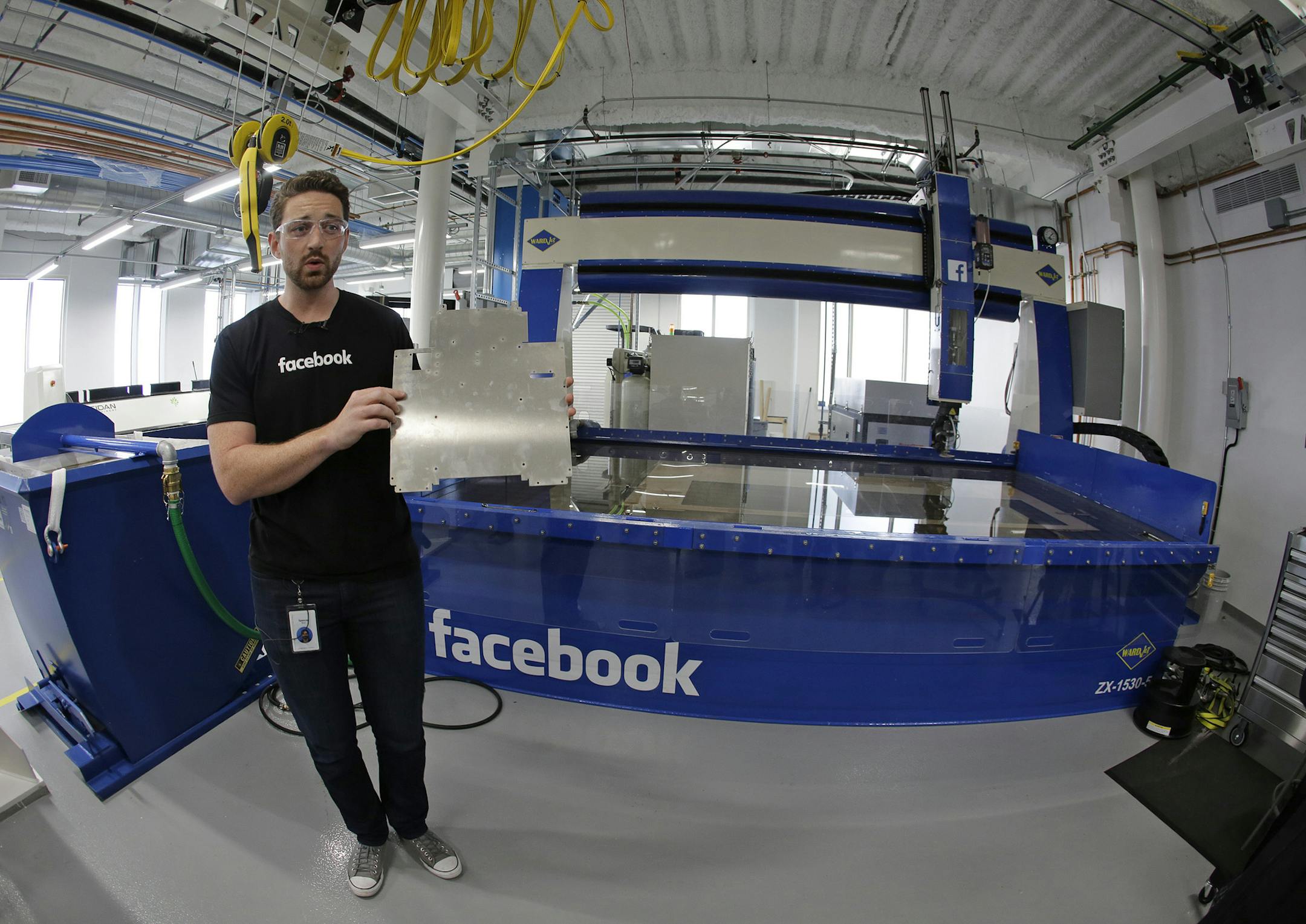
MENLO PARK, Calif. – Facebook built its fortune on the internet, that non-physical space where people share updates and digital videos with friends. But deep inside its Silicon Valley headquarters, engineers have stocked a new lab with computerized lathes, industrial mills and tools for making physical goods.
It's not a factory for mass-producing smartphones or other consumer products. Rather, it's where engineers will be working on some of the high-tech gadgetry needed for the company's long-term plans to connect people through smart devices, virtual-reality headsets and high-flying drones that deliver internet signals via laser to remote parts of the world.
And like Google's celebrated X lab, where the internet search giant pursues "moonshot" projects such as self-driving cars, Facebook's new research facility demonstrates that leading tech companies are rarely content to keep doing the same thing.
The lab will be a space for engineers to design energy-efficient servers for data centers, test new laser mounts and drone propellers and perfect a prototype 360-degree video camera that Facebook unveiled in April.
Facebook announced the lab's opening Wednesday. It's been dubbed Area 404, an inside joke that plays off the "error 404" message internet users see when they try to visit a web page that can't be found. Facebook says its engineers had long talked about wanting such a workspace, but it couldn't be found because it didn't exist until now.
The company won't say how much it spent on the lab, but it took months to build the facility, which is about a third the size of a football field, inside a refitted office building on its main campus.
Facebook became a Silicon Valley powerhouse and Wall Street darling because its vast online network is a mecca for digital advertisers. The company sold more than $6 billion in ads in the April-June quarter, reaping more than $2 billion in profit.
That offers plenty of leeway to invest in new ventures. Facebook says it spent $4.8 billion on research and development in 2015, nearly doubling its budget from 2014.


