

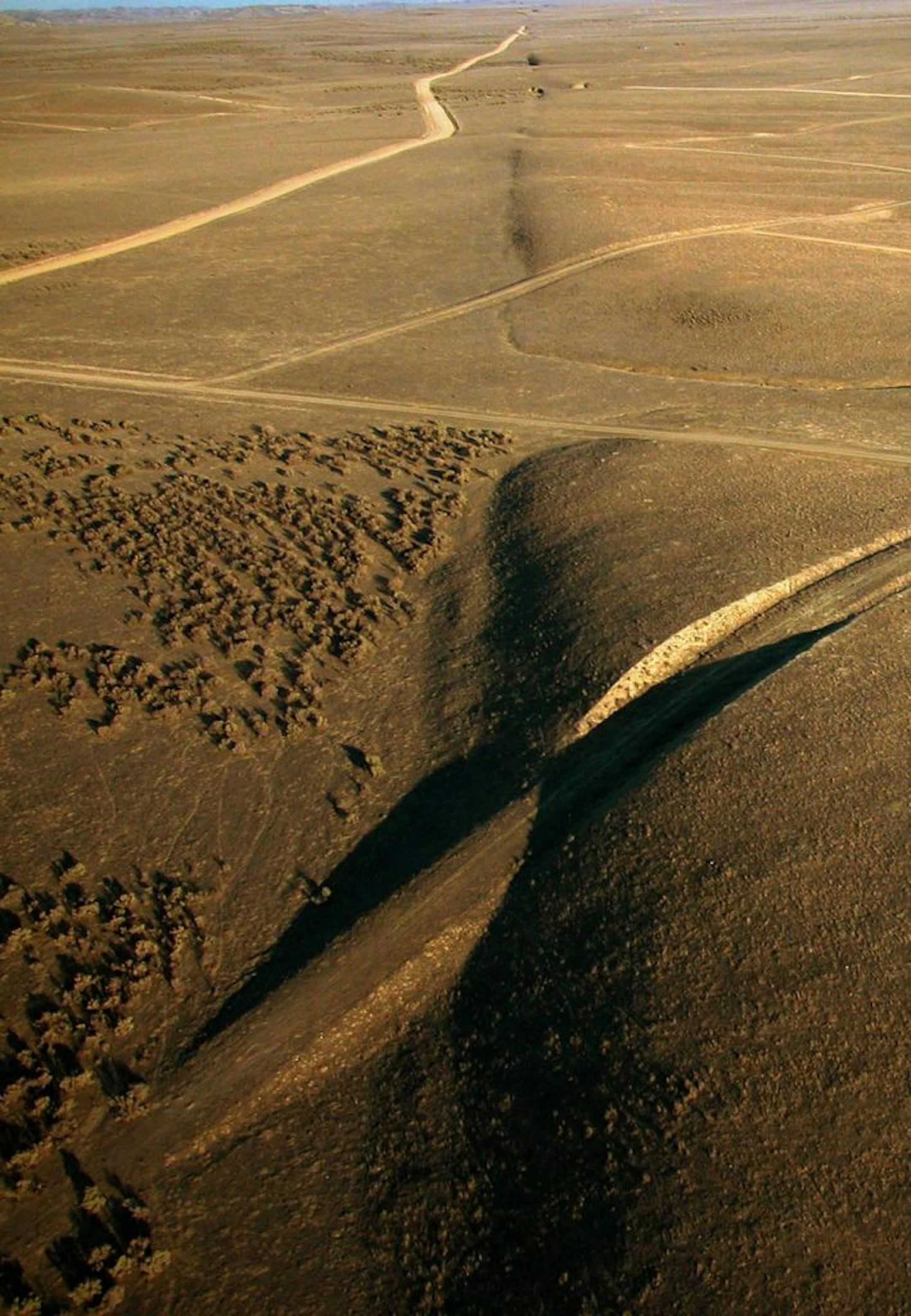
I stood in a long, shallow valley in a remote spot of Southern California. I could have been lulled into spending the entire day there, soaking up the springtime sun, enjoying the silence. I decided to text my family and share the bliss.
"Standing in the San Andreas Fault," I told them. "Eat your heart out."
I should have been thinking about the Big One, but mostly I was thrilled that I could get cellphone reception. If I had been thinking about the last big earthquake to strike this place, now known as the Carrizo Plain National Monument, I might not have had the courage to linger. In that 1857 quake -- the largest ever to strike the continental United States -- the earth jumped 30 feet.
I was in California with a group of geology enthusiasts from Minnesota, where our 10,000 lakes sometimes get in the way of seeing great rocks. We stocked up on gas and supplies, and caravanned to the plain, 100 miles northwest of Los Angeles. We were pulled by the San Andreas Fault. It slices across the Carrizo Plain, and nothing stands between you and the telltale signs of geologic power except, perhaps, the whimsical names assigned to those features.
We crisscrossed the fault by car and on foot. Right away, we noticed an occasional pond in the fault valley, something we hadn't expected to see. The area had just received torrential spring rains, but the ponds were there for another reason, as well.
All along the San Andreas, the Pacific and the North American plates grind past each other in a northwest-southeast direction. But things aren't that simple. Sometimes the plates pull away from each other, and the land between them often sags below the water table. That's when you get "sag" ponds.
We ventured off the main route, Soda Lake Road, and headed into the foothills of the Temblor Range, which parallels the fault on the east side of the plain. The dirt road with its boulders and washouts was a little hard on our vehicles (my companions' Toyota Corolla was definitely out of its league). People started to lose low-hanging car parts. It quickly became a trip ritual to stop and evaluate the mechanical necessity of lost or broken parts. Fortunately, we didn't lose anything essential.
Like the ponds, the straight-as-an-arrow Temblors also owe their name and their presence to the motion of the plates. But here, the two plates push toward each other and thrust the Earth's crust into mountains. Streams have cut into them and what's left is a spiky spine known as "the dragon's back."


