
Exploring heart and soul of Budapest

The city on the Danube lives up to its nickname of "Paris of the East" for its lavish architecture, lively cafes and music scene.

April 23, 2011 at 6:09PM
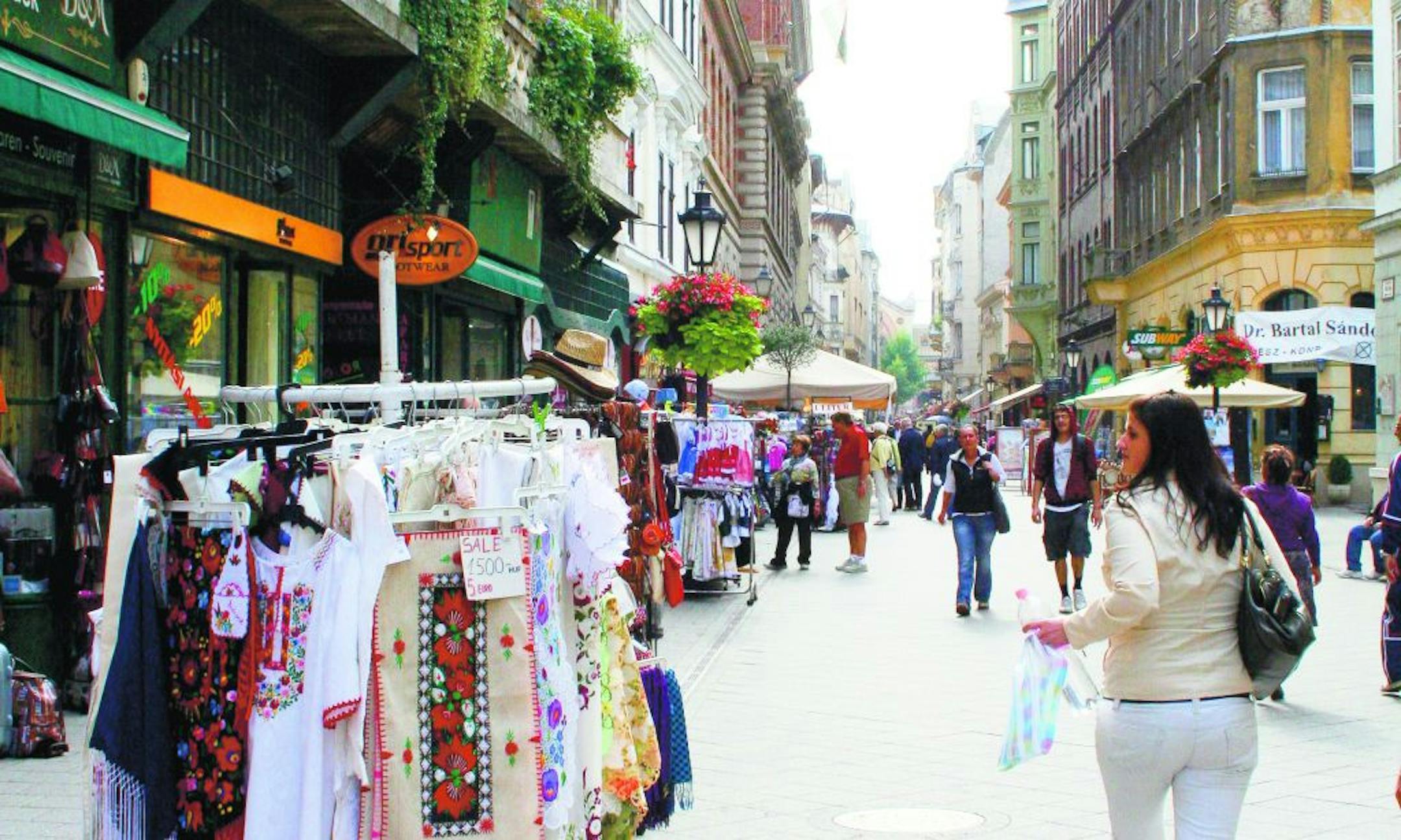
Shoppers can find locally made gifts, one-of-a-kind clothing and intricately beaded linens along the narrow streets of Budapest. The city is perfect for exploring by foot.
Shoppers can find locally made gifts, one-of-a-kind clothing and intricately beaded linens along the narrow streets of Budapest. The city is perfect for exploring by foot. (MCT/The Minnesota Star Tribune)

'Hey!" an almost-naked man cheerily called to me.

"Um, hey, back at you," I couldn't help but giggle as I answered, waving with one hand, my camera in the other.

"You take my picture," he commanded in halting, Hungarian-accented English before a striking a Schwarzenegger-like Mr. Universe pose. Click. Click, click, click. Then, with once last slightly embarrassed glance, I rushed away quickly, both of us laughing and waving to one another.

The jokester was waist-deep in one of Budapest's medicinal baths. And, yes, he was wearing a bathing suit.

The Turks occupied Hungary in the 16th and 17th centuries, and with them they brought the now famous medicinal baths. Relics of the past, the baths are good for what ails you through hydrotherapy, aromatherapy and physiotherapy. Swimming pools are a rarity in Budapest, so the locals and tourists alike come to the beloved baths as a substitute.

In post-Communist Hungary, somehow it seems remarkable that it was only just over two decades ago in 1989 that the Iron Curtain, in a sense the ultimate of metaphors, came tumbling down.

That signaled the beginning of hope for Eastern Europeans, and in Hungary, where the first cracks in the curtain actually began with the removal of its fearsome border fences, cities like Budapest began their phoenix-like rise from the ashes of the Cold War.

With the end of communism came the beginning of tourism, and Budapest, nicknamed the "Paris of the East" for its eclectic collection of churches, outdoor cafes and music, began to open wide its arms to the world.

And like Paris, which is ribboned by the River Seine, part of Budapest's scenic glory comes from the romance of the River Danube that lazily flows through the city.

A tale of two cities

Budapest, with is population of about 2 million, actually is two cities. Buda, surrounded by and lifted onto a natural pedestal by the Buda Hills, is etched with venerable outlines of the Royal Palace and Buda Castle and gothic-like cobbled streets. Pest, on the eastern side of the Blue Danube, lies on flatter land and is the lively center, with restaurants, bars, cafes and boutiques.

"In the case of Budapest," says Mihaly Hardy, a local whom I befriended, "you have to dig in and find all the different levels."

As for those baths, Pul Kis of the Danubius Grand Hotel Margitsziget explains that Hungary is in a volcanic valley, underscored by geothermic heat. Water from the springs can be very hot, so it must be mixed with cooler water.

Kis explains, "Everywhere in Hungary, if you stick a stick in the ground, water comes up. We use the water for treatments, wellness, and fitness. Come to us for 14 days, and you go home 14 years younger."

And when you get hungry in Hungary, try goulash, an iconic dish. The cuisine is influenced by all of Europe because of its closeness to other countries, and goulash, a spicy, hearty meat-and-vegetable soup, is a staple at every restaurant.

Your tummy full, try a night on the town. Budapest is known as the City of Ruin Pubs, from "romkocsma," a word that translates to "ruin pub," and is a mecca of sorts for nightlife. Even with crumbling facades and sometimes even bullet holes from a war here and there, these pubs are great places to drink and get to know locals. Two to definitely try: Szimpla Kert, the first ruin pub in the city, and Otkert, opposite Danube Palace.

Also find time to squeeze in a lunch or dinner cruises along the Danube. Our group took a night cruise, and the city glimmered under golden light.

Sights, tastes and sounds

Known for its architectural lavishness of Heroes Square, Andrassy Avenue, St. Stephen's Basilica, the Parliament, Fisherman's Bastion, the Opera House, the entire Castle District, and Dohany Street Synagogue, the largest synagogue in Europe, Budapest is a big, walkable city.

A favorite stop is Central Market. First built in 1897 and restored in 1994, the always buzzing market is strung with fresh produce, meats, and cheeses. There are restaurants, gift shops and clothing boutiques. This place is sensory overload in a good way.

Wine has flourished in the region for hundreds, possibly a couple of thousand years. From bold reds that pair well with goulash to fruity, delicate whites, Hungarian wine is all about the aroma and taste.

Try your own wine tasting with music -- whether it's the soothing strains of the Danube Symphony Orchestra, the world-renowned folk-and-rock Sziget Festival in August -- "It's sort of the Woodstock of Hungary," says Hardy -- the beat of a local band at a ruin pub, or a traditional folklore play.

As you explore Budapest, give yourself a break along the way by having a sumptuous pastry at Muvesz Cafe on Andrassy Avenue or joking with a half-naked man at Turkish bath. Either way, it's a real treat.

about the writer

about the writer

MARY ANN ANDERSON, McClatchy News Service

More from Minnesota Star Tribune

See More
card image
J. SCOTT APPLEWHITE, ASSOCIATED PRESS/The Minnesota Star Tribune

The "winners" have all been Turkeys, no matter the honor's name.

In this photo taken Monday, March 6, 2017, in San Francisco, released confidential files by The University of California of a sexual misconduct case, like this one against UC Santa Cruz Latin Studies professor Hector Perla is shown. Perla was accused of raping a student during a wine-tasting outing in June 2015. Some of the files are so heavily redacted that on many pages no words are visible. Perla is one of 113 UC employees found to have violated the system's sexual misconduct policies in rece