
Exorcism films fear no evil

Hollywood is obsessed with the Catholic ritual, the latest example being "The Rite."

January 27, 2011 at 10:32PM
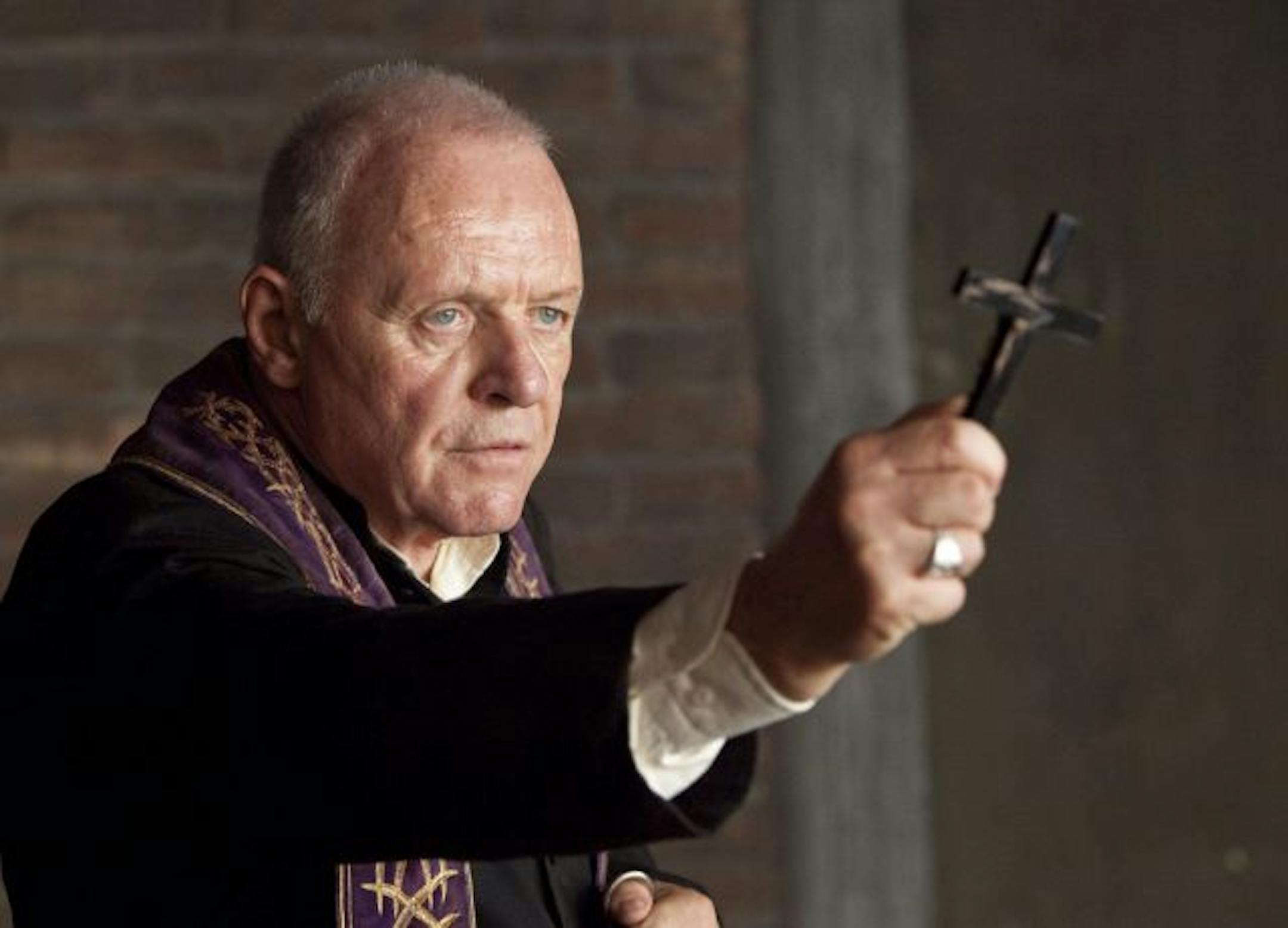
Anthony Hopkins stars as Father Lucas in New Line Cinema's psychological thriller "The Rite."
Anthony Hopkins stars as Father Lucas in New Line Cinema's psychological thriller "The Rite." (New Line Cinema/The Minnesota Star Tribune)

For nearly 40 years, Hollywood has been obsessed with the possessed.

Since the 1973 blockbuster "The Exorcist" unleashed a head-spinning, pea-soup spewing, foul-mouthed and demon-possessed girl on the American imagination, a host of films featuring exorcisms have hit the silver screen.

And why not? To date, "The Exorcist" franchise -- two sequels and two prequels -- has grossed nearly $500 million worldwide.

"Exorcism is Hollywood's wet dream," said Diane Winston, an expert on religion and the media at the University of Southern California. "It's taking on the most fundamental questions of good vs. evil and doing it in a way that's titillating and vaguely scandalous. How could that go wrong at the box office?"

The latest film to test that premise is "The Rite," which opens in theaters Friday. The film is loosely based on a nonfiction book by American journalist Matthew Baglio and stars Anthony Hopkins as an aging exorcist who might be possessed by demons himself.

Baglio's book follows the Rev. Gary Thomas, a Silicon Valley priest who was sent to Rome in 2005 by his bishop to train as an exorcist. Thomas and Baglio consulted on the film, visiting the set in Budapest to ensure accuracy.

"They were really anal about wanting the exorcisms to appear accurate," Thomas said. "And it is. Nothing in the movie is far-fetched, impossible or something that hasn't already happened."

Exorcist movies have become a mini-genre in Hollywood, said Robert Thompson, an expert on pop culture at Syracuse University. But unlike most horror movies, exorcist films possess a hair-raising dose of realism -- after all, the Roman Catholic Church still performs exorcisms.

"What's so incredibly scary about exorcism is that it has the church's theological underpinning," Thompson said. "It gives the movies a sense of legitimacy, which makes the whole thing seem real."

Besides launching a genre, "The Exorcist" fixed in the public mind the Roman Catholic rite of exorcism as the paragon of demonic expulsion, media experts say.

"There's something iconic about the priest standing there," wearing his clerical collar and reciting ancient prayers, Baglio said. "It's not as dramatic if you just have a guy wearing a sweater and slacks in a conference room."

Baglio says film producers bought the movie rights to his book before he'd even started writing it. All he had was an outline and a few sample chapters.

"The Rite" isn't the only media project on exorcism in the works.

Last month, the Discovery Channel announced "The Exorcist Files," a show that plans to pull the curtain from exorcism by presenting "real-life" cases of possession. Media reports said the Vatican was cooperating and would even open its case files.

Katherine Nelson, a spokeswoman for Discovery Channel, said: "The implication about the Vatican is not accurate, though we do have cooperation from people in the church."

The show's premiere has not been scheduled yet, she said.

Demonic possession and expulsion turned heads long before "The Exorcist." In fact, exorcisms were one of Jesus' most common miracles, scholars say. When Jesus commanded the Apostles to cast out demons in his name, their exorcisms gained much-needed publicity for his fledgling church.

"In the early church, exorcisms were big crowd-pleasers that attracted a lot of converts," said Nancy Caciola, expert on the history of demonic possession and a scholar at the University of California, San Diego.

about the writer

about the writer

DANIEL BURKE, Religion News Service

More from Minnesota Star Tribune

See More
card image
J. SCOTT APPLEWHITE, ASSOCIATED PRESS/The Minnesota Star Tribune

The "winners" have all been Turkeys, no matter the honor's name.

In this photo taken Monday, March 6, 2017, in San Francisco, released confidential files by The University of California of a sexual misconduct case, like this one against UC Santa Cruz Latin Studies professor Hector Perla is shown. Perla was accused of raping a student during a wine-tasting outing in June 2015. Some of the files are so heavily redacted that on many pages no words are visible. Perla is one of 113 UC employees found to have violated the system's sexual misconduct policies in rece