
'Exergames' are no cure for young couch potatoes

Those playing 'active' video games fail to stick with the regimen or reduce other exertion, studies found.

July 4, 2012 at 3:28AM
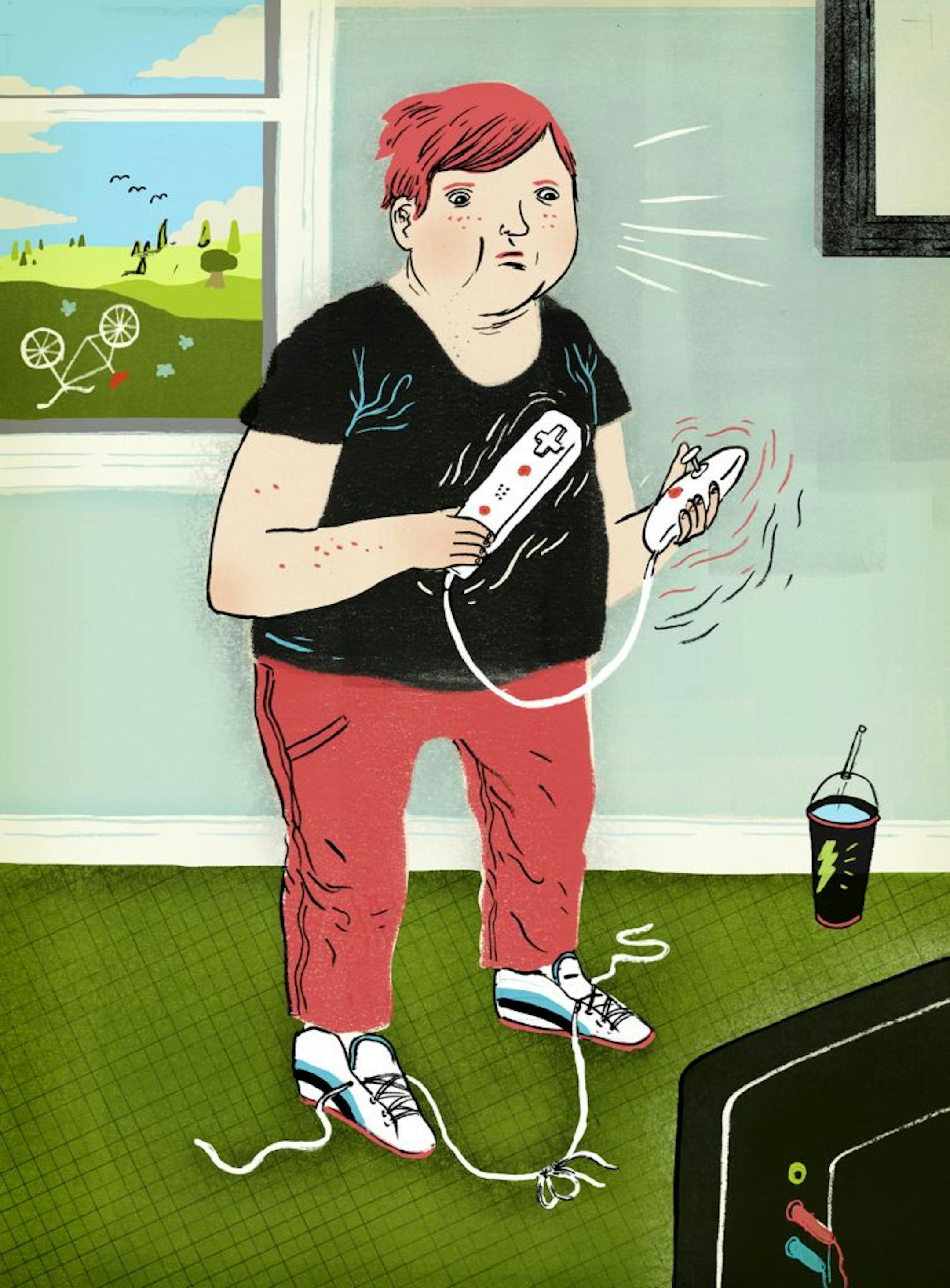
Researchers found �no evidence� that children who received active video games were more active than children who received inactive video games. (Byron Eggenschwiler/The New York Times) -- NO SALES; FOR EDITORIAL USE ONLY WITH STORY SLUGGED EXERGAMES-INACTIVITY-ADV24. ALL OTHER USE PROHIBITED. -- PHOTO MOVED IN ADVANCE AND NOT FOR USE - ONLINE OR IN PRINT - BEFORE JUNE 24, 2012.
Researchers found �no evidence� that children who received active video games were more active than children who received inactive video games. (Byron Eggenschwiler/The New York Times) -- NO SALES; FOR EDITORIAL USE ONLY WITH STORY SLUGGED EXERGAMES-INACTIVITY-ADV24. ALL OTHER USE PROHIBITED. -- PHOTO MOVED IN ADVANCE AND NOT FOR USE - ONLINE OR IN PRINT - BEFORE JUNE 24, 2012. (New York Times/The Minnesota Star Tribune)

Getting our sedentary, overweight children off the couch is a challenge. That's why the Nintendo Wii game console, which arrived in the United States six years ago, was such an exciting prospect. It offered the chance for children to get exercise without leaving the house.

Tennis was one of the games in the Wii Sports software that came right in the box with the console. This was the progenitor of "exergames," video games that led to hopes that fitness could turn into irresistible fun.

But exergames turn out to be much digital ado about nothing, at least as far as measurable health benefits for children. "Active" video games distributed to homes with children do not produce the increase in physical activity that naïve parents (like me) expected. That's according to a study undertaken by the Children's Nutrition Research Center at Baylor College of Medicine in Houston, and published early this year in Pediatrics, the official journal of the American Academy of Pediatrics.

Previous studies have shown that adults and children who play active video games, when encouraged in an ideal laboratory setting, engage in moderate, even vigorous physical activity briefly. The Baylor team wanted to determine what happened when the games were used in actual homes.

The participants in this study were children age 9 to 12 who had a body mass index above the median and whose households did not already have a video game console. Each was given a Wii. Half were randomly assigned to a group that could choose two among the five most physically demanding games that could be found: Active Life: Extreme Challenge; EA Sports Active; Dance Dance Revolution; Wii Fit Plus; and Wii Sports. The other half could choose among the most popular games that are played passively, like Madden NFL 10.

Participants agreed to wear accelerometers periodically to measure physical activity over the 13-week experiment. To observe how well the intrinsic appeal of active games changed children's behavior, the researchers distributed the consoles and games without exhortations to exercise frequently.

They found "no evidence that children receiving the active video games were more active in general, or at any time, than children receiving the inactive video games."

How is it possible that children who play active video games do not emerge well ahead in physical activity? One of the authors of the Pediatrics article, Anthony Barnett, an exercise physiologist who is a consultant at the University of Hong Kong, explains that the phenomenon is well known in the field: "When you prescribe increased physical activity, overall activity remains the same because the subjects compensate by reducing other physical activities during the day," he says.

Changing sedentary behavior is extremely difficult, says Dr. Charles Cappetta, an executive committee member of the American Academy of Pediatrics' Council on Sports Medicine and Fitness. "It may seem that active video games are an easy solution to getting kids off the couch," he says. "But as this study and others show, they do no such thing."

He says that "live sports" -- the kind that are outside the home, without controllers and TV monitors -- "remain the gold standard to get cardiovascular benefit."

Last year, the Journal of Strength and Conditioning Research published a small-scale study of use of Wii Fit by adults and kids in homes over three months and its impact on physical activity and fitness.

"When the Wii Fit was introduced in 2008, it targeted fitness instead of just entertainment," says Scott G. Owens, an associate professor of exercise science at the University of Mississippi and the lead author. "This caught our attention. Anything that comes out that might help kids be more physically active would be of interest to us."

Owens and his colleagues offered Wii Fit games to eight households that responded to advertisements seeking study participants. Before the games arrived, the researchers used accelerometers to set the baseline of the participants' physical activity and ran fitness tests. Measurements were taken again six weeks and 12 weeks after.

"A major finding was the dramatic drop in daily use after the first six weeks," Owens says. The Wii Fit was used an average 22 minutes a day by everyone in the household the first six weeks, but only 4 minutes a day the second six weeks. At the end, health fitness measures were essentially unchanged.

Owens says he presented the findings at the 2010 meeting of the Games for Health conference, which focuses on video games. "The academics who presented at the meeting tended not to be surprised by our findings. But the exergame developers and marketers were disappointed, I think."

Asked about this study and the one at Baylor, a Nintendo spokesman issued this statement: "While Nintendo does not make any health claims with active-play games like Wii Sports and Wii Fit Plus, we hope that the games encourage users to be more physically active. They are designed to get people up off the couch and to have fun."

For physical activity that brings measurable health benefits, kids need things like real balls, real rackets and real courts.

Randall Stross is an author based in Silicon Valley and a professor of business at San Jose State University.

about the writer

about the writer

RANDALL STROSS, N ew York Times

More from Minnesota Star Tribune

See More
card image
J. SCOTT APPLEWHITE, ASSOCIATED PRESS/The Minnesota Star Tribune

The "winners" have all been Turkeys, no matter the honor's name.

In this photo taken Monday, March 6, 2017, in San Francisco, released confidential files by The University of California of a sexual misconduct case, like this one against UC Santa Cruz Latin Studies professor Hector Perla is shown. Perla was accused of raping a student during a wine-tasting outing in June 2015. Some of the files are so heavily redacted that on many pages no words are visible. Perla is one of 113 UC employees found to have violated the system's sexual misconduct policies in rece