

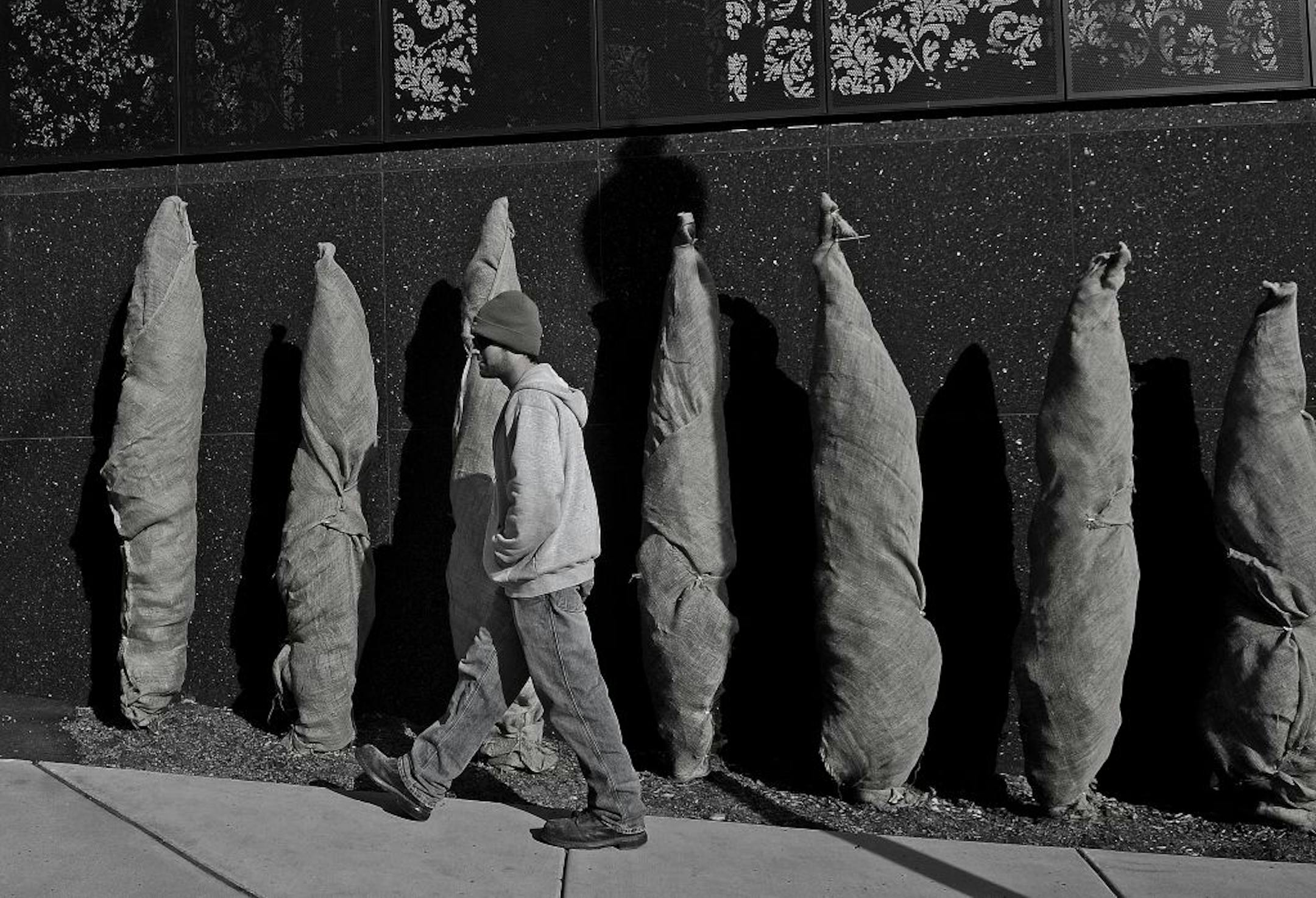
Winter can be a tough time for plants. The extreme temperatures and brisk winds can damage the stems and leaves of plants.
Deciduous trees lose their leaves, which can limit some of the damage. But conifers don't have that luxury. They continue to lose moisture through their needles all winter.
Spruce, arborvitae and other popular evergreens are particularly susceptible to wind damage. As cold, dry wind flows through their needles, it sucks away moisture. Often, the damage won't be visible until spring. When the trees begin to grow again, areas that were dehydrated can turn brown and die.
Here are a few things you can do to help your evergreens get through winter in the best shape possible.
DON'T WRAP
Wrapping evergreens in burlap to protect them from the ravages of drying winter winds has become an accepted fall chore in many Minnesota households.
Unfortunately, it's not a good tradition to keep because burlap wraps aren't very effective. They may even be detrimental to the health of conifers.
When it's wrapped around a tree, burlap acts like a towel, wicking away moisture and making the tree even drier. In addition, burlap wraps limit air circulation around the branches, which can lead to disease. The wraps also may cause conifers to warm up too early in the spring, which can trigger new growth that could be vulnerable to late frosts.
There are other, better ways to protect your trees.


