

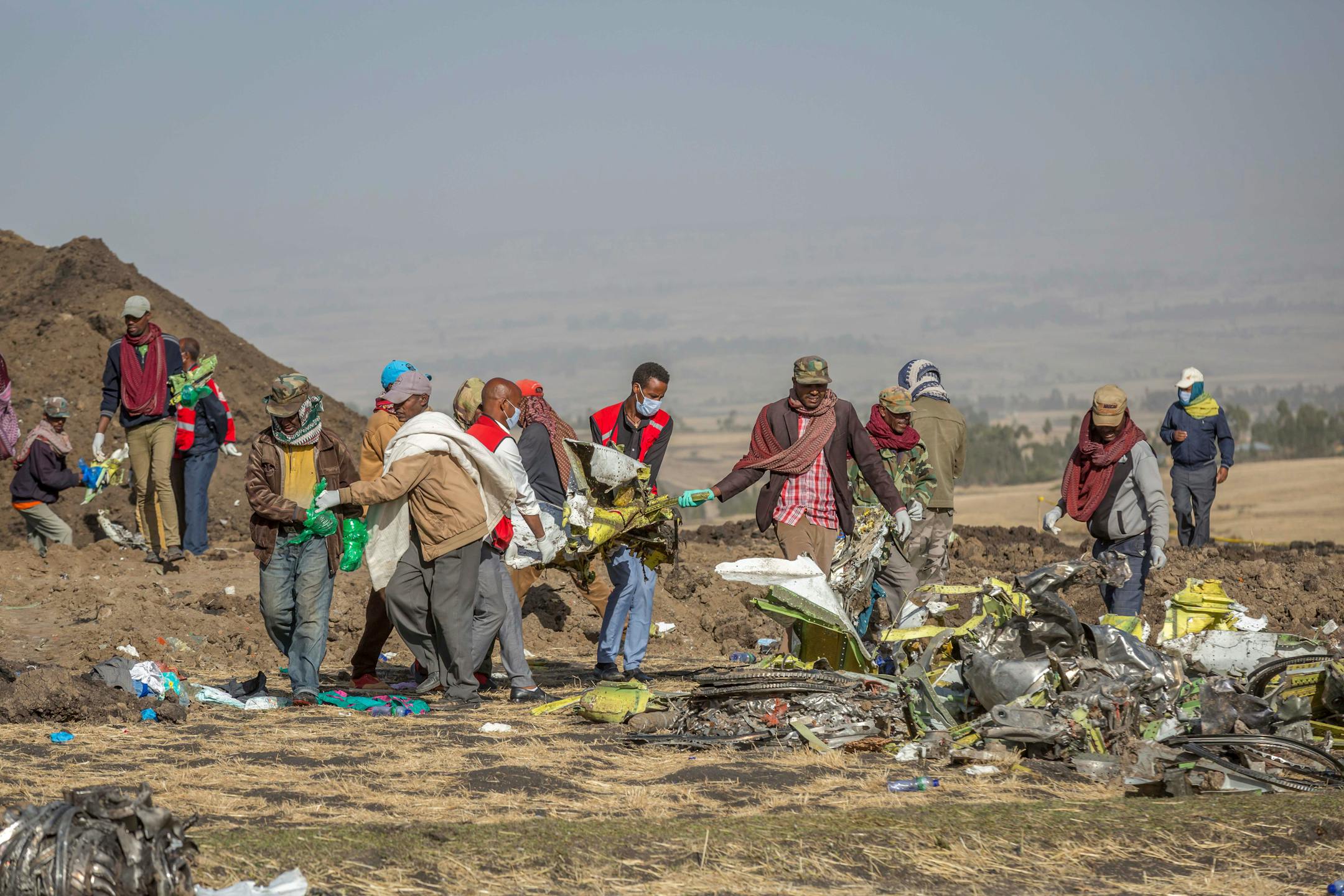
ADDIS ABABA, Ethiopia — A doomed Ethiopian Airlines jet suffered from faulty readings by a key sensor, and pilots followed Boeing's recommended procedures when the plane started to nose dive but could not avoid crashing, according to a preliminary report released Thursday by the Ethiopian government.
The findings draw the strongest link yet between the March 10 crash in Ethiopia and an October crash off the coast of Indonesia, which both involved Boeing 737 Max 8 jetliners. All 346 people on the two planes were killed.
Both planes had an automated system that pushed the nose down when sensor readings detected the danger of an aerodynamic stall, and it now appears that sensors malfunctioned on both planes.
Boeing acknowledged that the sensor malfunctioned and CEO Dennis Muilenburg said Thursday a new software update would prevent future incidents. "It's our responsibility to eliminate this risk," Muilenburg said in a video statement. "We own it, and we know how to do it."
Thursday's preliminary report, based on flight data and cockpit voice recorders on the Ethiopian Airlines jetliner, showed that the faulty sensor touched off a series of events that caused the pilots to lose control of the plane. The report from Ethiopia's Aircraft Accident Investigation Bureau said the sensor problems began about a minute after the plane was cleared for takeoff.
It said air speed and altitude values on the left side of the Ethiopian Airlines 737 Max conflicted with data from the right sensor, causing flight control problems. Eventually the pilots couldn't keep the plane from plummeting to the ground, killing all 157 people on board.
The problems are similar to those reported on the Indonesian Lion Air flight that crashed last October. Investigators found that software on that plane took readings from the sensor and pointed the nose down. Thursday's revelations raise questions about repeated assertions by Boeing and U.S. regulators that pilots could regain control in some emergencies by following steps that include turning off an anti-stall system designed specifically for the Max, known by its acronym, MCAS.
The Max has been grounded worldwide pending a software fix that Boeing is rolling out, which still needs to be approved by the U.S. Federal Aviation Administration and other regulators.


