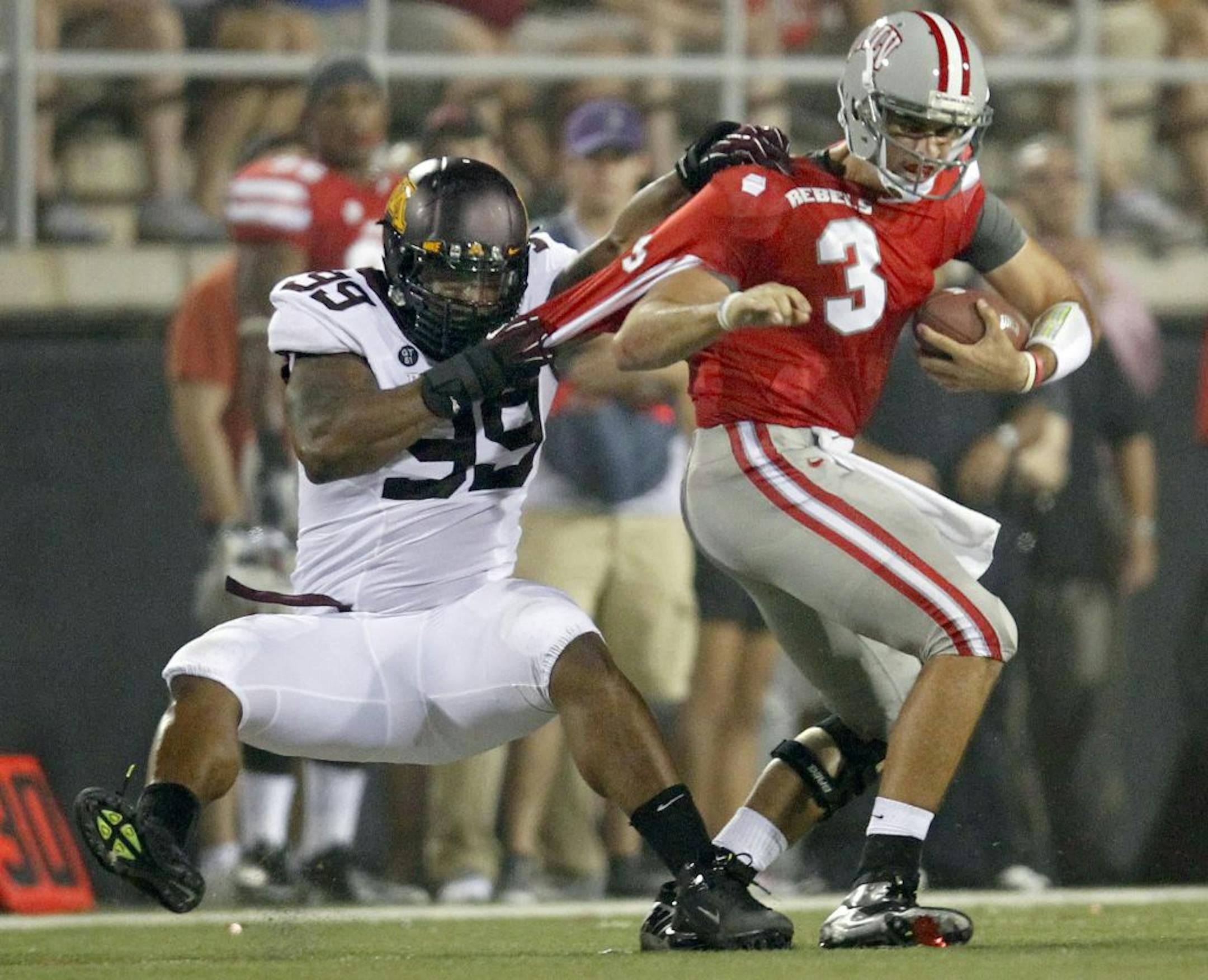
The improvement in the Gophers' defensive pressure is caused by a lot of factors, the architect of that defense believes, stuff like better depth and weight-room discipline and better playbook comprehension.
But really, Tracy Claeys said, it mostly boils down to basic human nature.
"Eventually," the Gophers defensive coordinator says, "you get tired of getting your butt kicked."
The Gophers must have been exhausted.
It's a phenomenon Claeys has witnessed in previous stops on Jerry Kill's staff, and one that finally materialized, the coach said, during red-zone drills in spring camp. Coaches would put the football on the 5-yard line and issue a challenge: Score, and the defense does extra sprints. Hold, and the offense runs. "There's a winner and a loser in everything," Claeys said, "and eventually, you have to decide whether you're going to compete."
The defense did, and the defense has so far this year, and that improvement is largely responsible for the 2-0 record that the Gophers will put on the line Saturday against Western Michigan. The Gophers defense has allowed exactly half as many rushing yards as its offense has gained, allowed quarterbacks to complete only half their passes, and surrendered only one touchdown in regulation time in each of the first two games.
"We're definitely better this year," said sophomore end Michael Amaefula, one of eight defensive linemen who rotate in and out during the game. "On film, we can see a great push. We're moving people back 2 or 3 yards. And we're getting hits on quarterbacks when they use three-step drops, which usually doesn't happen much. But we're getting into the backfield to make those plays."
As everyone around the Gophers is quick to acknowledge, however, the defense's success has come against UNLV and New Hampshire, likely the two least talented teams on Minnesota's schedule, both of which used underclassmen at quarterback.