

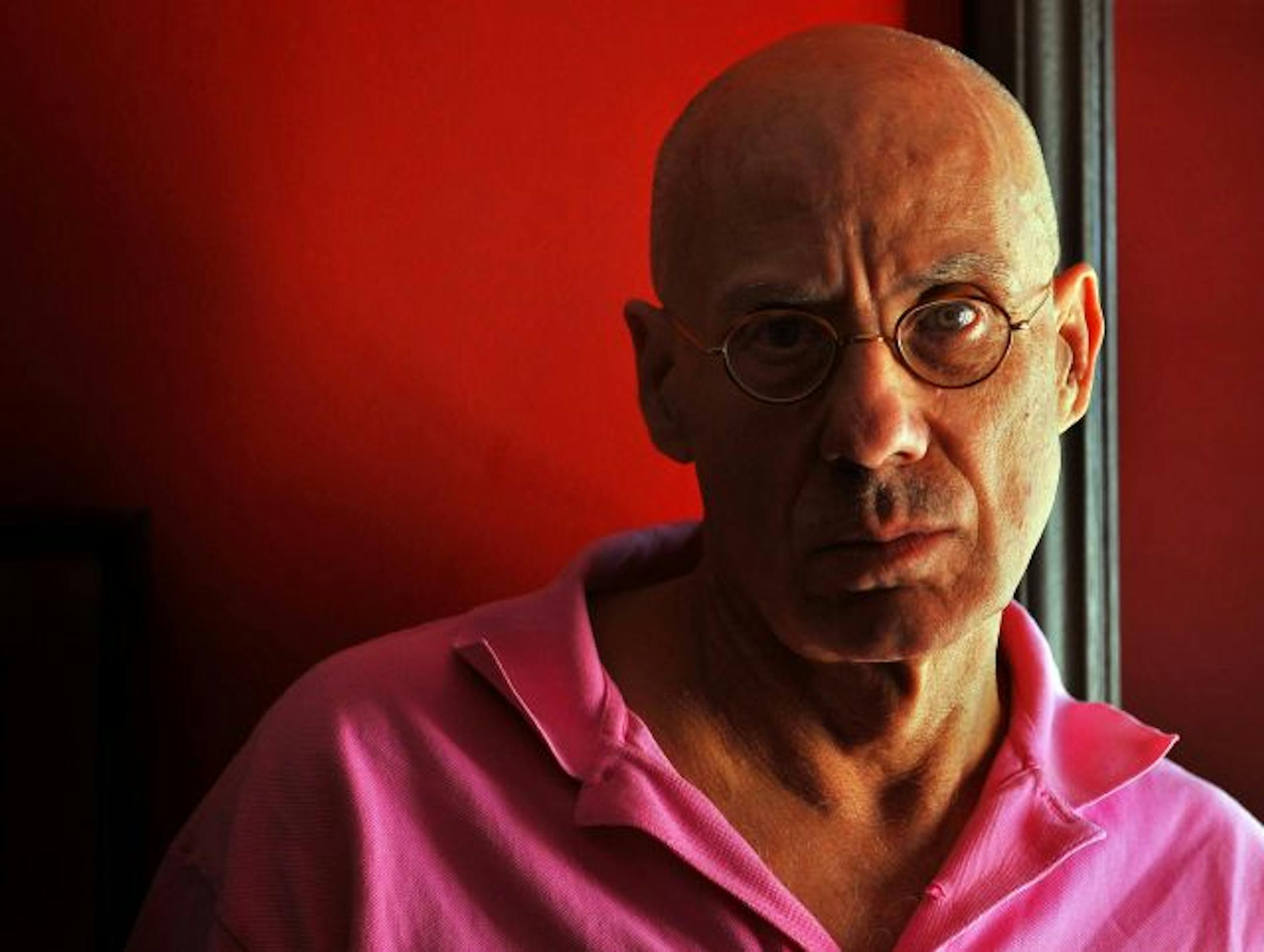
LOS ANGELES - The most important writing tool in James Ellroy's apartment is his leather couch. For hours every day, the author of such high-octane action novels as "L.A. Confidential" and "The Black Dahlia" stretches over its sturdy, cool surface and broods. No pillow, no notebook, no tape recorder, no music, no lights. Just him and a steady stream of perverted thoughts.
He broods about an era 40 years past, infested with fictionalized versions of Howard Hughes and Richard Nixon reimagined as supervillains who would make Batman urinate in his codpiece. He broods about conflicted antiheroes who talk tough and act even tougher, emerging from drug-induced hazes and acts of random violence with cries for absolution that may or may not be heard. He broods about femmes fatales, fragile enough to need rescuing, strong enough to live for another pack of cigarettes. He broods about finally being heralded as the most powerful writer of his generation, literature's equivalent of his hero, tortured composer Ludwig van Beethoven.
It's the centerpiece of a self-contained, lonesome process that almost killed him a decade ago, makes him nearly impossible to live with and seals him off from the contemporary world. It's also what makes his latest novel, "Blood's a Rover," one of the crudest, most compelling, comical and complex thrillers of the season.
"The price to be James is high, and the price to be around him is pretty high," said novelist Helen Knode, who divorced Ellroy in 2001 after 14 years of marriage, but remains a friend and fan. "I don't think he feels that artists have to suffer to be great. I think he's just that way. It's not the healthiest thing in the world."
Few get a chance to plop down on Ellroy's couch.
He's not known for entertaining, either inside or outside the red-painted walls of his art deco pad, next door to suites once occupied by Judy Garland and Mae West. His idea of graciousness is offering his guest a mug of cold, black coffee and showing off a photo shrine in his bedroom to the women who have loved and left him.
He's never used the complex's swimming pool and has visited the beach only 10 times in his 61 years. He avoids restaurants with TV sets and hates going to concerts and movie theaters. The sight of blockheads on their cell phones and the smell of Velveeta cheese from soggy nachos make him nauseated. His numerous shelves are filled, but only with titles of his own books. He doesn't read a newspaper or pay attention to anything that would be mistaken as modern.
Ellroy, the loner


