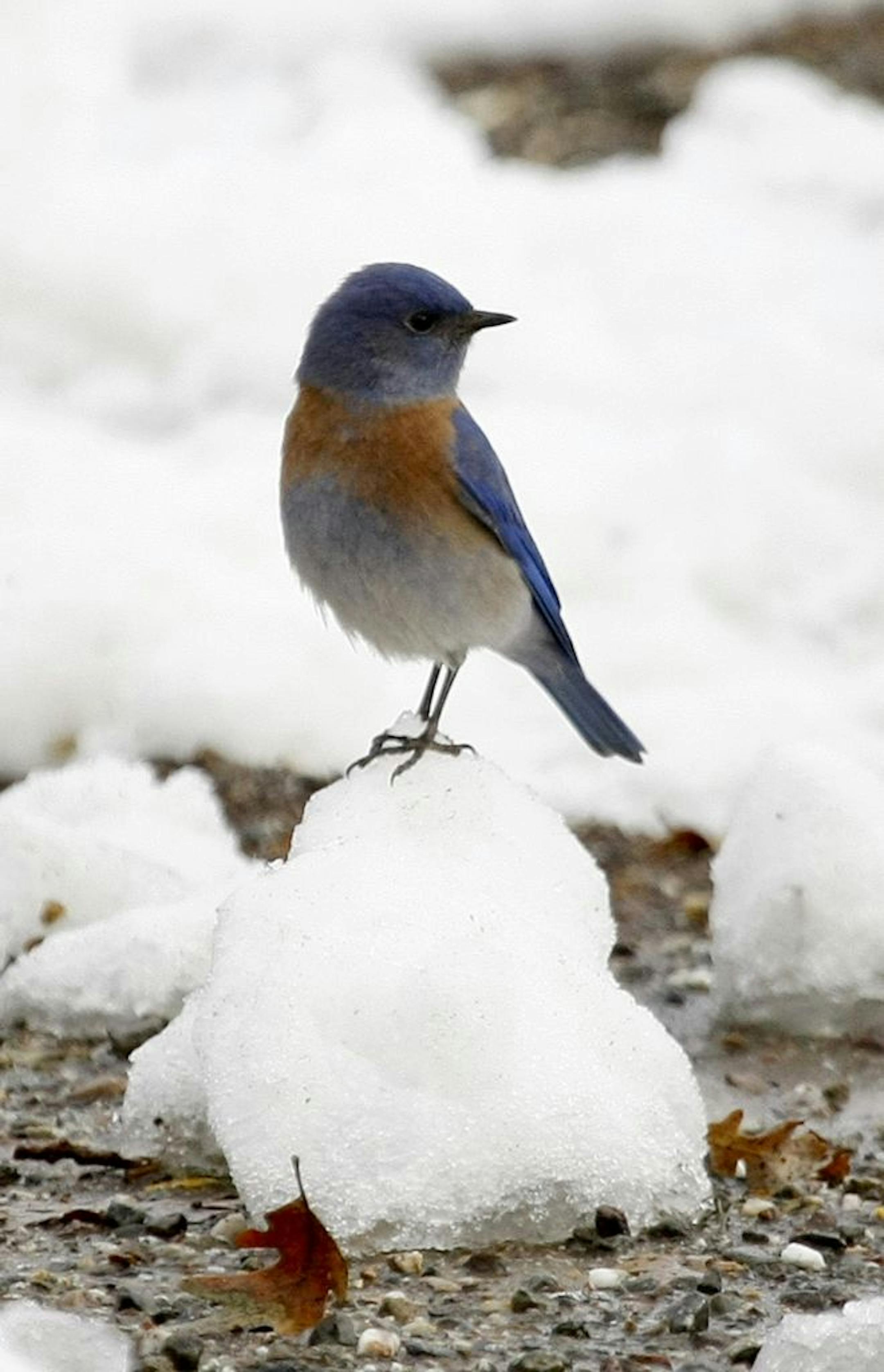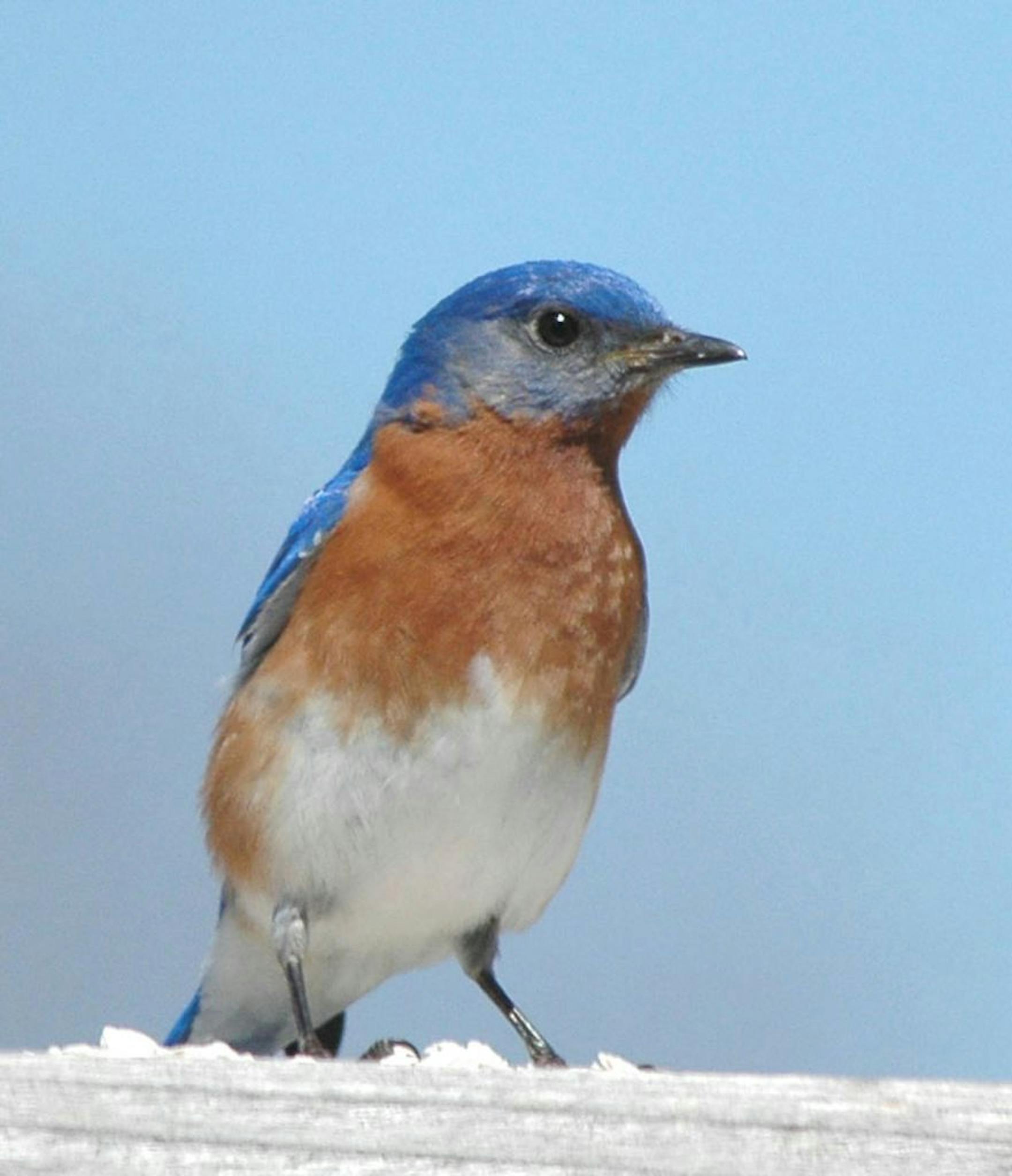
Q We see lots of bluebirds in our suburb and yesterday we saw a family of Western bluebirds. Are they common around here?
A Almost anything is possible in the world of birds, but Western bluebirds live and nest in the West and along the West Coast. There don't seem to be any reports of anyone ever seeing this species of bluebird in our area. So for a male and female to be so far out of their range, and then to find each other and raise a brood seems to enter the realm of the impossible. I wonder if what you saw was a particularly bright and handsome family of Eastern bluebirds -- the two species do look much alike.
A too-sweet treat?Q My neighbor feeds hummingbirds all summer long with a mixture of half sugar, half water, instead of the recommended 1 part sugar to 4 parts water. Is this mixture harmful to hummingbirds?
A The homemade nectar that your neighbor is feeding hummingbirds is much more concentrated than the nectar found in flowers, which makes me think it's not a good idea. That 1 to 4 recommendation is based on years of experience, although there are few studies in this area. So I visited the website of hummingbird expert Lanny Chambers, www.hummingbirds.net. He wonders if such a high sugar concentration could cause liver damage in hummingbirds and concludes: "I stand by the opinion of the majority of hummingbird researchers, that a 1:4 mixture has been shown to do no harm, and any other formula must remain suspect."
Mystery eggsQ A little bird built a nest in my mom's rosebush this summer, then laid tiny, bluish eggs. My mom lives on a farm, if that helps, but we don't know what kind of bird this was.
A We know it wasn't either of the two birds famous for laying blue eggs: Robin eggs are quite large, and bluebirds don't nest out in the open. I suspect this bird might have been either a house finch or a goldfinch. The females of these species are fairly drab and they do lay bluish eggs.
Family dynamicsQ Watching young Canada geese grow up at our local park this summer, I'm wondering: Do they recognize their parents as they get older?
A Canada geese do seem to recognize their family group, even after reaching maturity, which is fairly unique in the world of birds. Most birds go their separate ways after they can take care of themselves, but geese and cranes do continue to remember their parents and siblings. Crows and blue jays, too, seem to recognize their families throughout their lives.