

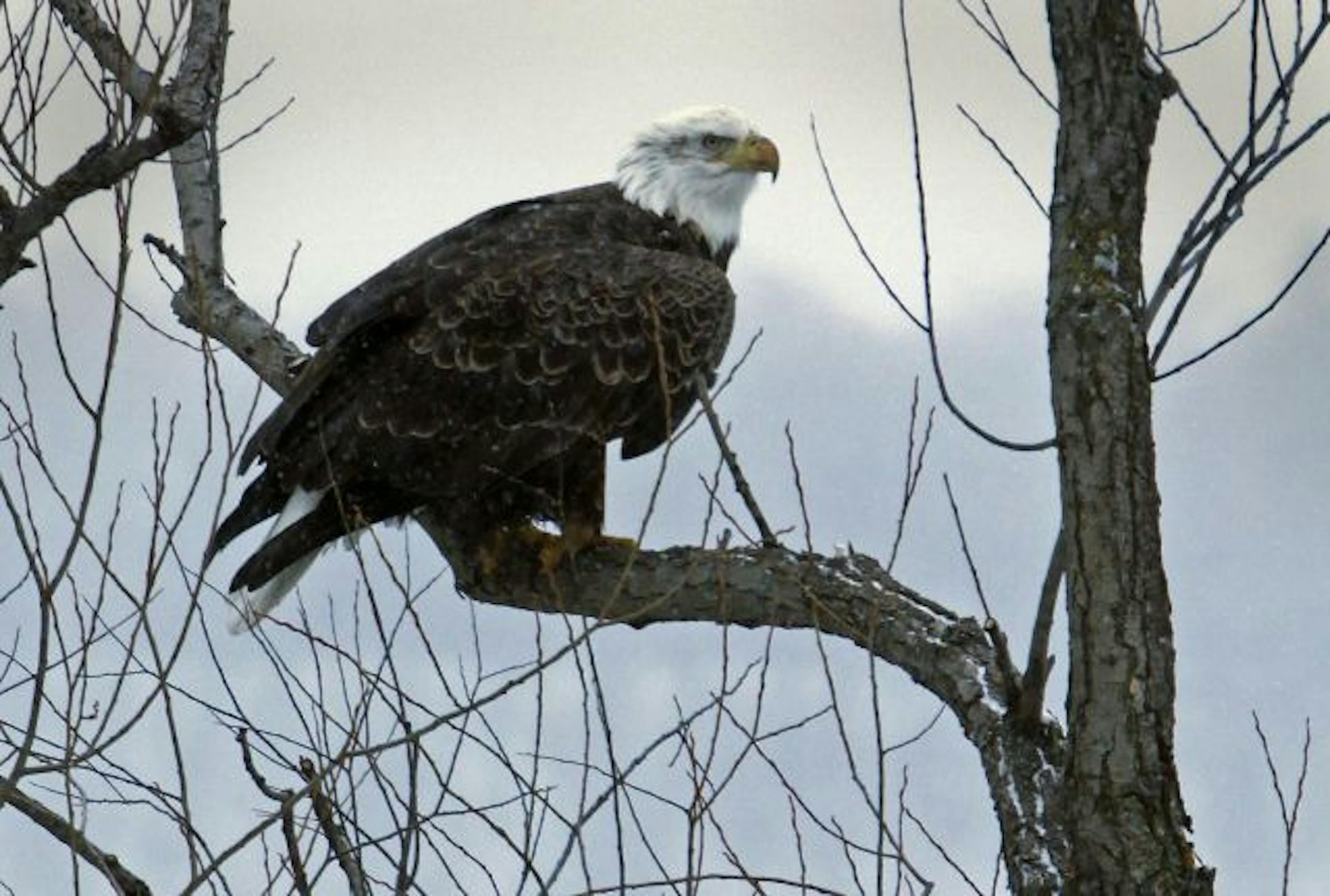
Bald eagles wheel across city lakes, fly above urban freeways and perch near the top of tall trees in our parks, nature areas and riversides. These majestic birds, with wings that stretch up to 7 feet from tip to tip, can make us stop in our tracks and watch them soar.
To most of us, these massive raptors are a symbol of the wilderness. And, indeed, most of Minnesota's 1,300 breeding pairs of eagles raise their young in northern areas. But while they'll never become as ubiquitous as crows, eagles in the Twin Cities area are seen on a regular basis.
Wildlife researchers and park staffers estimate that there are as many as 90 bald eagle nests in the seven-county metro area. That makes ours one of the nation's few urban areas where the national bird is seen often.
It hasn't always been this way.
In the early 1960s, bald eagle numbers dwindled to just over 400 nesting pairs in the contiguous United States. Decades of illegal hunting, habitat loss and exposure to the pesticide DDT had taken their toll. Working together, a whole host of government agencies, American Indian tribes, conservation organizations, private landowners and volunteers were able to bring eagles back.
Now, after four decades of federal protection, there are eagle nests in every state. It's been estimated that there are 9,800 pairs nationwide today. With its 1,300 nesting pairs, Minnesota tops the list. Florida and Wisconsin are just behind it.
Visible, vulnerable nests
In an urban area, eagles tend to nest near lakes or rivers in trees tall enough to offer a good view of the surrounding area. Their nests aren't hard to spot, because eagles not only build high, they build big.


